
Earnest money in California is refundable as long as you cancel while a valid contingency is still active and you follow the contract’s cancellation steps. Once you remove contingencies and back out anyway, the seller can often keep some or all of the deposit. Buyers typically put down 1% to 3% of the purchase price, and the funds sit in escrow, not with the seller, governed by California Civil Code §1057.3 and the CAR purchase contract. The details on formatting, deadlines, and forfeiture risk follow below.
TL;DR:
- In competitive markets, offering closer to 2% or 3% of the purchase price increases the likelihood of acceptance and signals stronger commitment.
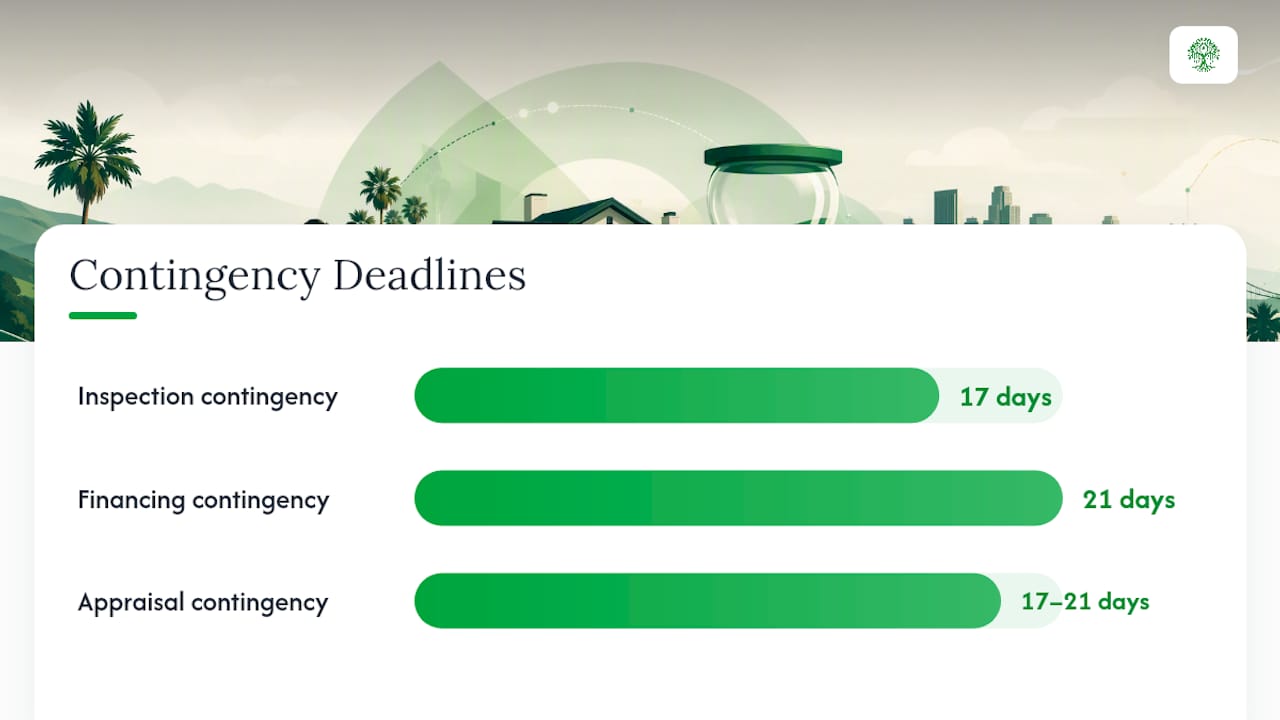
- Contingency deadlines, typically 17 to 21 days, must be actively monitored and canceled in writing before expiration to keep your deposit refundable.
- Proper documentation and timely withdrawal of contingencies prevent disputes that could lead to losing your earnest money, especially when a clause isn’t initialed correctly.
- Since earnest money must be held in escrow and cannot be released without joint instructions or court order, timely and clear communication is essential during cancellation.
- A deposit below 1% may make your offer less attractive and could risk your earnest money being viewed as insufficient for a serious offer.
Table of Contents
- What Is Earnest Money in California, and Who Holds It?
- How Much Earnest Money Do You Actually Need in California?
- When Can You Get Your Deposit Back? Contingencies and Deadlines
- When Can a Seller Keep Your Deposit? Liquidated Damages Explained
- How to Protect and Recover Your Earnest Money Deposit
- Do Force Majeure Clauses Cover Pandemic-Related Delays?
- Earnest Money vs. Security Deposits and Option Fees: What’s the Difference?
- What Do California Courts Say About Earnest Money Disputes?
- Does Earnest Money Affect Your Loan Approval?
- Ficustree’s View: Pair Your Deposit Strategy With a Contingency Calendar
- Get Guided Support Through Escrow With Ficustree
- Sources
- FAQ
What Is Earnest Money in California, and Who Holds It?
Earnest money is a good-faith deposit that shows the seller you’re serious, and it gets credited toward your purchase price at closing rather than sitting off to the side as a separate fee. It never goes to the seller directly. It goes to a licensed escrow holder, a neutral party required under California’s escrow rules to protect both sides until the deal closes or falls apart.
The CAR Residential Purchase Agreement sets the default: your initial deposit must reach escrow within three business days of acceptance. You have a couple of routing options:
- Deliver the deposit check or wire directly to escrow yourself.
- Hand it to your agent, who must log it in the broker’s trust fund account before forwarding it.
Escrow will not release a dollar of that deposit to anyone without joint written instructions from both buyer and seller, or a court order. That neutrality is the whole point. It’s also why disputes tend to drag on when one side refuses to sign off.
How Much Earnest Money Do You Actually Need in California?
There’s no legal minimum. The customary range across California is 1% to 3% of the purchase price, and your actual number should reflect your market and your comfort level, not a rule carved into the contract.
Here’s what that looks like in real dollars:
- $400,000 home: $4,000 to $12,000
- $700,000 home: $7,000 to $21,000
- $1,200,000 home: $12,000 to $36,000
In competitive submarkets like parts of the Bay Area or coastal Los Angeles, sellers often expect offers closer to the 2% to 3% end, since a bigger deposit signals a buyer who’s less likely to walk. In slower markets, 1% to 2% is usually plenty. The number is negotiable, but treat it as a floor you can comfortably fund. If your offer gets accepted and you later need to increase the deposit as part of a counteroffer or contingency negotiation, you’ll want cash ready, not scrambling.
When Can You Get Your Deposit Back? Contingencies and Deadlines
Your earnest money stays refundable as long as a contingency protecting you is still active and you cancel before it expires. The CAR RPA builds in three standard windows:
- Inspection contingency, typically 17 days from acceptance, covering your right to investigate the property’s condition.
- Financing contingency, typically 21 days, protecting you if your loan falls through.
- Appraisal contingency, usually 17 to 21 days, protecting you if the home appraises below the purchase price.
The rule that trips up first-time buyers most often: a contingency has to still be “active” when you cancel. Once you sign a removal (the CR form) or the deadline passes without action, that protection disappears, and canceling afterward puts your deposit at risk. Cancellation itself has to be timely and in writing, using the CAR Contingency Removal or Cancellation of Contract forms, not a text to your agent.
Before you cancel, gather your paper trail:
- The inspection report showing the defect or concern.
- Written loan denial from your lender if financing fell through.
- The appraisal report if the value came in low.
- The HOA or title document revealing a problem you didn’t know about.
Build a simple calendar the day you go into contract. Mark each contingency deadline, then set a reminder three days ahead so you’re never removing or canceling at the last minute.
Pro Tip: Always ask escrow for a written confirmation once your cancellation and deposit release request are submitted. Verbal assurances from an agent don’t hold up if the seller later disputes the release.
When Can a Seller Keep Your Deposit? Liquidated Damages Explained
California law lets sellers keep a defined slice of your deposit as “liquidated damages” only when the contract’s clause meets specific formatting rules, and even then, it’s capped. Civil Code §1675 creates a rebuttable presumption that a liquidated damages clause is valid in a qualifying residential transaction, but only up to 3% of the purchase price.
That presumption isn’t automatic. §1677 requires:
- The clause be printed in a specific format (often bold or set apart from surrounding text).
- Both buyer and seller separately initial the liquidated damages provision, not just sign the overall contract.
- The amount stay within the 3% ceiling to get the legal presumption of validity.
A larger deposit does not hand a seller automatic rights to keep it. If a clause is missing initials, buried in fine print, or the amount exceeds what the statute presumes reasonable, the seller has to prove actual damages instead of relying on forfeiture.
If the clause is invalid or missing, the seller can’t simply pocket the money. They have to prove actual financial harm from your default, a much higher bar than pointing to a signed line in the contract. Forfeiture disputes most commonly arise when a buyer removes all contingencies, then gets cold feet or a better deal elsewhere and refuses to close.
How to Protect and Recover Your Earnest Money Deposit
Most disputes over an earnest money deposit come down to missed paperwork, not a fight over who’s right. Handling the process correctly from day one solves most of the risk before it starts.
- Before you sign: Read the liquidated damages clause line by line. Ask your agent or a real estate attorney to explain it in plain terms, and don’t offer a deposit larger than you’re prepared to lose if something goes sideways.
- Right after acceptance: Get your deposit to escrow within the three-business-day window. Keep the wire confirmation or check receipt. If your agent is handling delivery, confirm it was logged in the trust account.
- If you cancel during a contingency: File the correct CAR cancellation form, attach your supporting documents (inspection report, lender denial, appraisal), and get escrow’s written confirmation that the release instructions were received.
- If escrow or the seller withholds your deposit: Send a written demand under Civil Code §1057.3, which gives the holder 30 days to respond. If they withhold funds without a good-faith dispute, you may be entitled to treble damages. Try mediation before filing suit. It’s faster and cheaper than litigation, and most escrow disputes resolve there.
Pro Tip: Save every document related to your deposit in one folder from the day you open escrow: receipts, contingency removal forms, inspection reports, all of it. If a dispute arises six weeks later, that folder is what settles it fast.
Do Force Majeure Clauses Cover Pandemic-Related Delays?
Force majeure language rarely appears in the standard CAR Residential Purchase Agreement, and where it doesn’t exist, buyers have to rely on the built-in contingencies instead of a separate “act of God” clause. The pandemic caused some California transactions to be delayed when lenders slowed underwriting, appraisers couldn’t access properties, or a buyer’s job situation changed overnight.
In practice, financing and appraisal contingencies did most of the protective work during COVID-era disruptions. A buyer who lost income and couldn’t get a loan approved usually still qualified for a refund under the standard financing contingency window, as long as they canceled before removing it. The pandemic didn’t require a special clause. It just made the financing contingency far more important than usual.
Some agents added custom addenda referencing pandemic-specific delays (closing extensions, remote appraisal access, delayed inspections), but these were negotiated case by case rather than standardized. If a future disruption, public health related or otherwise, threatens your closing timeline, the fix is the same: don’t remove a contingency until you’re certain the underlying condition is satisfied, and put any extension request in writing before a deadline passes.
The lesson holds beyond COVID: contingency deadlines are your real safety net, not a hope that some emergency clause will bail you out later. If your transaction timeline looks tight for any reason, ask your agent about extending a contingency rather than letting it expire.
Earnest Money vs. Security Deposits and Option Fees: What’s the Difference?
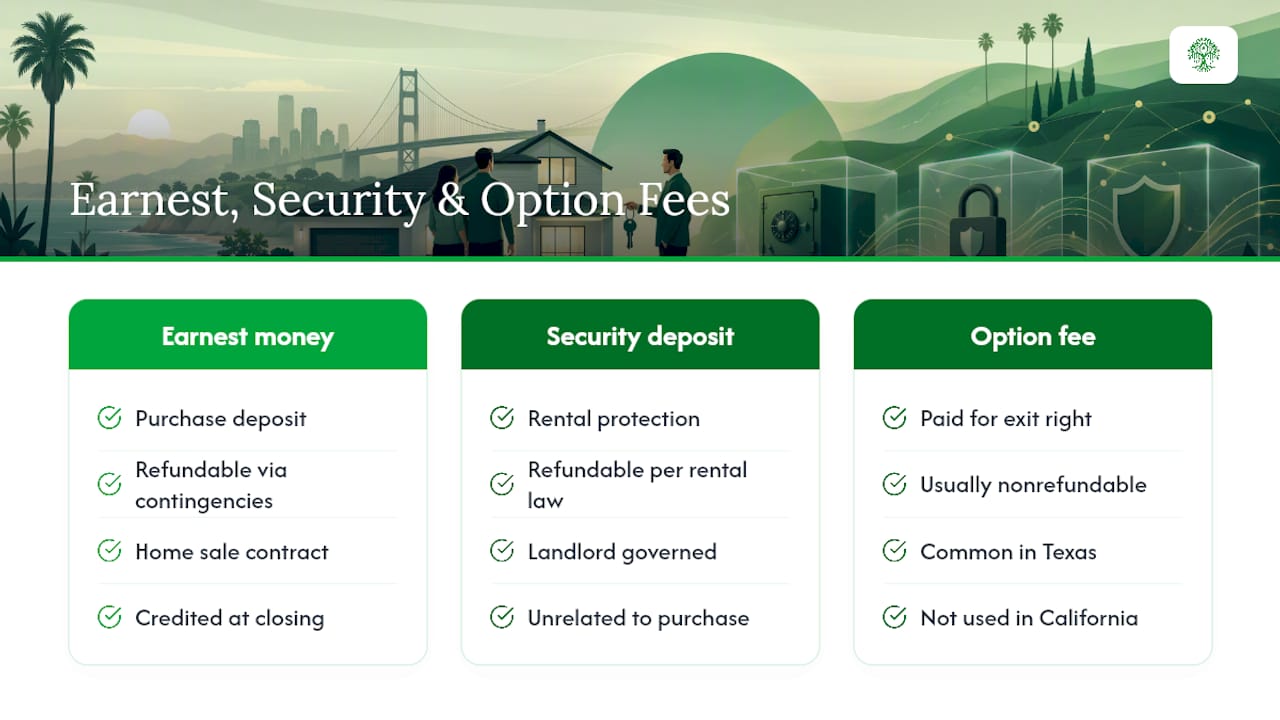
Earnest money, security deposits, and option fees all involve handing over cash early, but they protect completely different things and follow different rules.
Earnest money is a purchase deposit tied to a home sale contract. It gets credited toward your down payment or closing costs at closing, and it’s refundable under the contingency rules described above.
A security deposit belongs to the rental world entirely. It’s collected by a landlord to cover potential damage or unpaid rent, governed by different statutes than a real estate purchase, and it has nothing to do with buying a home.
An option fee is more common in states like Texas, where buyers pay a small, usually nonrefundable fee for the right to walk away from a contract during a set period, no reason required. California’s CAR contract doesn’t use this structure. Instead, California buyers get contingency periods (inspection, financing, appraisal) that function similarly, letting you exit for cause, but the deposit tied to those contingencies is still refundable when you cancel correctly, unlike a true option fee, which you pay regardless of outcome.
Confusing these three trips up buyers moving from other states. If you’re used to a Texas option fee, don’t assume your California earnest money works the same way. It’s fully tied to the purchase agreement’s contingency structure, not a flat, nonrefundable access fee.
What Do California Courts Say About Earnest Money Disputes?
Most earnest money disputes in California never reach a courtroom. They get resolved through mediation, an escrow interpleader, or a simple written demand once one side realizes their position won’t hold up. The disputes that do escalate tend to follow a familiar pattern: a buyer removed contingencies, then tried to back out and claimed the removal was invalid or coerced, or a seller tried to invoke a liquidated damages clause that was never properly initialed under §1677’s formatting rules.
When escrow can’t get both parties to agree on releasing funds, the holder can file an interpleader action, essentially handing the decision to a court and stepping out of the middle. This happens more often than buyers expect, and it’s slow. It can take months to resolve, which is exactly why a written demand under §1057.3 before things reach that point matters so much.
The recurring theme in these cases is procedural, not dramatic. A seller who wants to claim forfeiture but skipped separately initialing the liquidated damages clause usually loses that claim, or has to fall back on proving actual damages instead. A buyer who canceled one day after a contingency deadline passed usually loses their refund claim, even if the underlying reason for canceling was legitimate. Timing and paperwork decide these disputes far more often than who was “more right.”
Does Earnest Money Affect Your Loan Approval?
Your earnest money deposit shows up on your loan application as part of the funds you’re bringing to the transaction, and underwriters do check it. Lenders want to see that the deposit came from a legitimate, documented source, not a cash gift you can’t explain or a loan from an undisclosed party.
Underwriters typically ask for:
- A copy of the canceled check or wire confirmation showing the deposit left your account.
- Bank statements showing the funds were already sitting there (this is the “sourced and seasoned” requirement most lenders apply).
- An explanation and paper trail for any large, sudden deposit into your account in the weeks before you made the offer.
A deposit that can’t be traced to a documented source can slow down or even jeopardize your loan approval, because unexplained funds raise red flags around undisclosed debt or borrowed down payment money. Keep your earnest money in the same account for at least two months before you go into contract if you can, and avoid moving cash between accounts right before you write your offer. It makes the underwriting process considerably smoother, since your lender won’t need extra letters of explanation for money that just appeared.
Ficustree’s View: Pair Your Deposit Strategy With a Contingency Calendar
The buyers who lose earnest money almost never lose it over bad luck. They lose it because nobody built a calendar, nobody tracked the escrow paperwork, and a deadline slipped past unnoticed. Getting your affordability and pre-approval numbers locked before you write an offer changes how much deposit risk makes sense for your budget in the first place.
A contingency calendar tied to your actual escrow file, not a mental note, closes most of the gap between “the law protects you” and “you actually kept your money.” That’s the difference between theory and outcome in nearly every dispute this guide covers.
— Anand
Get Guided Support Through Escrow With Ficustree
Ficustree exists because most first-time buyers don’t need another listings site. They need someone tracking contingency deadlines and escrow paperwork so a missed form never turns into a lost deposit. Ficustree pairs you with direct buyer representation, on-demand showing agents, and a decision-intelligence platform that flags contingency windows before they close, all built around the goal of getting you to closing without the six-month scramble.

Under Ficustree’s model, buyers pay a $1,000 fee at closing plus 1% commission, and keep a rebate of roughly 2% where California law allows it, while the platform itself stays free to use. If you’re heading into contract soon, start by reviewing how the offer process works so your deposit strategy and contingency timeline line up from day one. Ready to move forward with representation that tracks your escrow deadlines directly? Start with Ficustree’s buyer platform and get your contingency calendar built before you write your next offer.
Sources
- California Civil Code §1057.3
- CAR Residential Purchase Agreement form excerpts (RPA)
- Earnest money disputes in California — BayLegal explainer
FAQ
What Is the Earnest Money Rule in California?
California requires earnest money to be held in a neutral escrow account, not with the seller, and released only through joint written instructions or a court order. Deposits typically reach escrow within three business days of acceptance under the CAR Residential Purchase Agreement, and the deposit stays refundable as long as an active contingency covers your cancellation.
How Much Is Earnest Money on a $400,000 House?
On a $400,000 home, typical earnest money in California runs $4,000 to $12,000, reflecting the customary 1% to 3% range. Competitive markets tend to push toward the higher end, while slower markets often see offers closer to 1%.
What States Require Earnest Money?
No state legally requires earnest money, including California. It’s a customary practice sellers expect as proof of a serious offer, and the amount and terms are set by the purchase contract rather than statute.
Is $500 Earnest Money Good?
A deposit much lower than the customary 1% to 3% of the purchase price could make your offer look less competitive to a seller weighing multiple bids.
Recommended
- First Home Buying California Guide: Steps That Work
- Escrow Process for First-Time Buyers: California Guide
- California Closing Costs Breakdown for First-Time Buyers
- First-Time Homebuyer Mistakes California Buyers Must Avoid

Leave a Reply