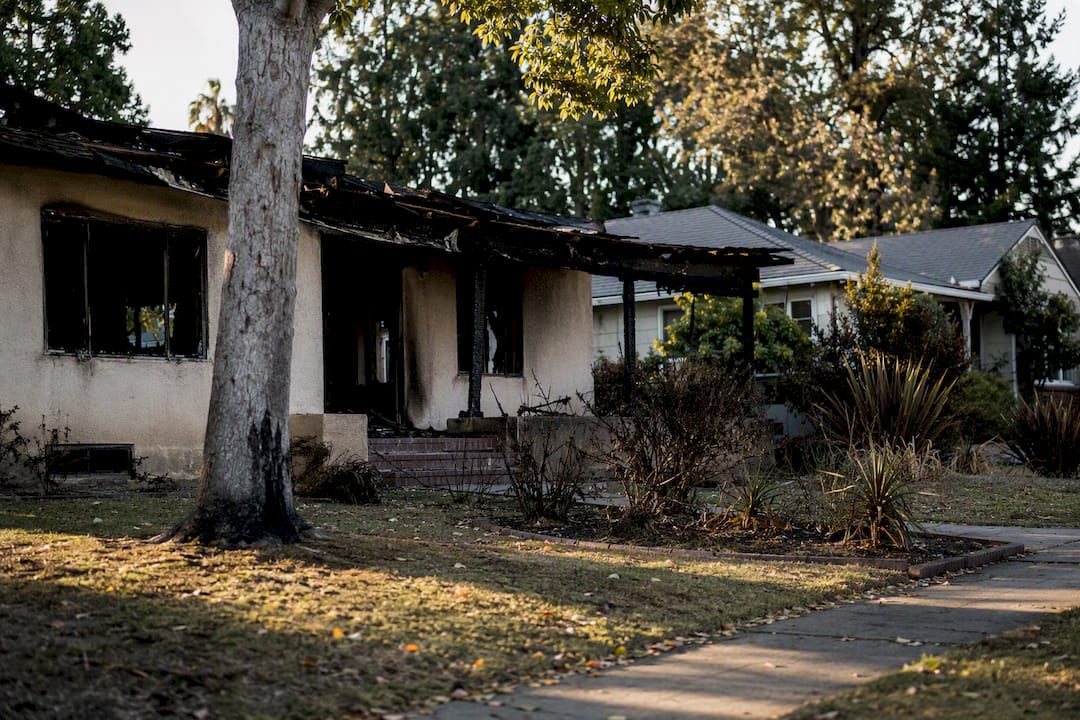
The California FAIR Plan is the state’s insurer of last resort for basic fire coverage. It exists for one reason: to make sure homeowners who cannot find a standard policy on the open market still have some way to insure their property against fire. If you have been turned down by admitted carriers, or you’re buying a home in a high-wildfire zone where nobody will write a policy, the FAIR Plan is very likely your next move.
But it comes with a catch that surprises a lot of people. The FAIR Plan only covers fire and a handful of related perils. It does not include liability protection, and it offers little to no coverage for water damage or theft. That means most homeowners who go this route also need a companion policy, called a Difference-in-Conditions wrap, to fill the gaps.
Here’s what to do right now, in order:
- Confirm you actually have documented declines from admitted carriers, since you’ll need proof of a “diligent search” before applying.
- Call a licensed FAIR Plan broker rather than trying to apply directly, since the process runs through broker submissions.
- Start gathering mitigation documentation (defensible space, roof condition, recent upgrades) since it affects your premium and your path back to the private market.
TL;DR:
- The FAIR Plan only covers fire, lightning, smoke, and limited vandalism or theft endorsements, requiring a DIC wrap to cover liability and water damage gaps.
- Premiums in high-risk wildfire zones typically range from $5,000 to $12,000 annually, depending on property value, fire-hazard severity, and mitigation efforts.
- Applicants must provide three documented declines from admitted carriers, with a licensed broker managing the diligent search and application process.
- Most mortgage lenders require proof of both FAIR Plan and DIC coverage, and gaps in insurance can delay or jeopardize escrow closing.
- Buying in fire-prone areas benefits from early insurance screening, with platforms like Ficustree helping buyers assess affordability and coverage options before making an offer.
Table of Contents
- What Is the California FAIR Plan and Why Does It Exist?
- Who Qualifies for the California FAIR Plan?
- What Does a FAIR Plan Policy Actually Cover?
- How Much Does the California FAIR Plan Cost?
- Do You Need a DIC Wrap With Your FAIR Plan?
- How Do You Apply for the California FAIR Plan?
- Will Your Lender Accept a FAIR Plan Policy?
- How Do You Get Off the California FAIR Plan?
- What the FAIR Plan Means for California Home Buyers
- Get Insurance Clarity Before You Offer, With Ficustree
- Key Takeaways
- Sources
- FAQ
What Is the California FAIR Plan and Why Does It Exist?
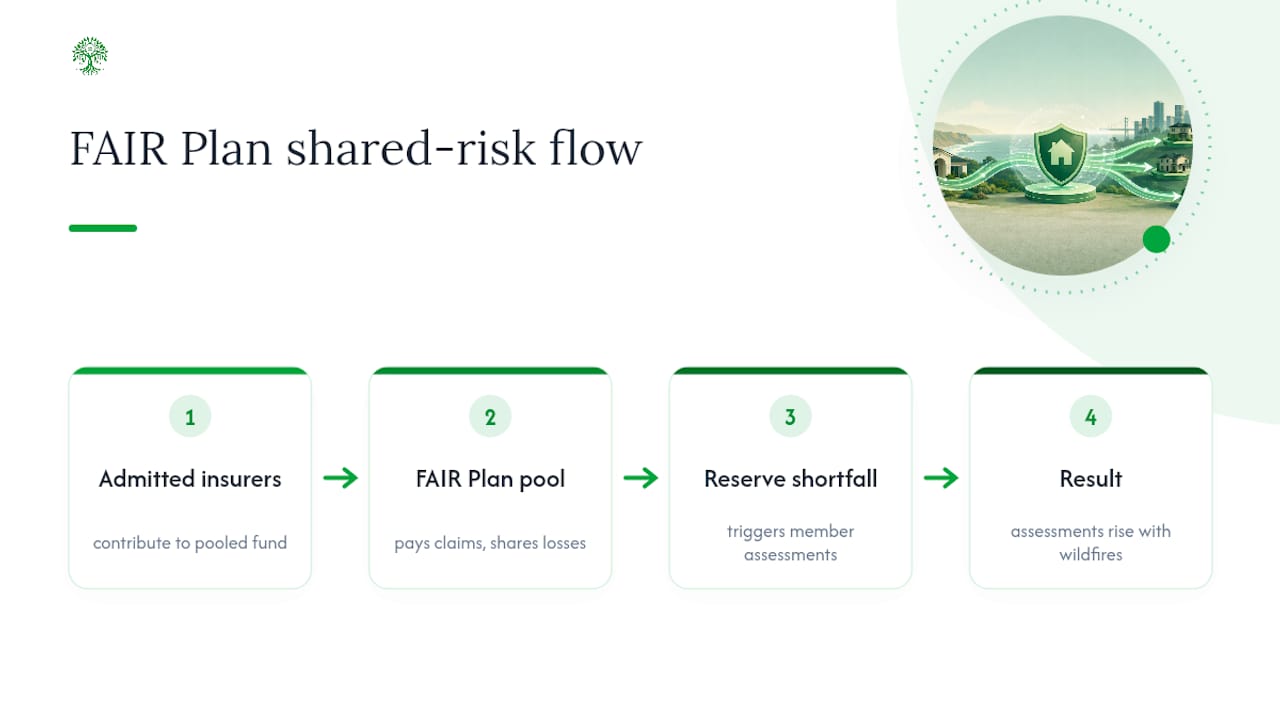
The California FAIR Plan Association is not a government program, even though it’s often mistaken for one. It’s a private, non-profit pool created under California Insurance Code section 10090, funded entirely by California’s admitted property insurers rather than taxpayer dollars. Every licensed insurer doing business in the state contributes to the pool, and those same companies share in its losses.
The FAIR Plan Association operates as a shared-risk mechanism: member insurers split profits and losses proportionally, and when wildfire claims outpace reserves, the association can assess member companies to cover the shortfall. Those assessments have grown more frequent as major wildfire seasons have hit the reserve fund hard.
The California Department of Insurance regulates the FAIR Plan and sets the rules for who can access it, but the demand driving its growth is a market story, not a bureaucratic one. Private insurers have pulled back from wildfire-exposed ZIP codes across the state, and homeowners who used to have several carrier choices now sometimes have exactly one option left: the FAIR Plan. That shift, more than any policy change, explains why FAIR Plan enrollment has climbed steadily in recent years.
Who Qualifies for the California FAIR Plan?
Eligibility isn’t automatic, and it isn’t based on need alone. The FAIR Plan requires proof that you tried the normal market first and it failed you. Here’s the checklist a broker will walk through with you:
- Documented declines. You need at least three documented rejections from admitted carriers, known as a “diligent search,” and a licensed FAIR Plan broker has to perform and submit that search on your behalf. You cannot self-certify this step.
- Property type. Owner-occupied and tenant-occupied residential properties up to four units generally qualify, along with certain commercial property classes under the FAIR Plan’s commercial program.
- Property condition. Homes with more than 50% vacancy or unrepaired structural damage are typically excluded until the issues are resolved. Insurers want to know the risk they’re taking on is a stable one.
- Inspection readiness. Expect a property inspection as part of underwriting, particularly for older homes or properties in extreme fire-hazard zones.
Processing usually takes two to four weeks, depending on how quickly inspections get scheduled and how complete your paperwork is on the first submission. Missing documentation is the single biggest reason applications stall past that window, so having your declines letters, property photos, and any mitigation records ready before you apply saves real time.
What Does a FAIR Plan Policy Actually Cover?
This is where expectations and reality diverge most for new applicants. The FAIR Plan is a named-peril policy, meaning it covers a specific, limited list of causes of loss rather than everything not explicitly excluded (the way a standard HO-3 policy works).
Covered perils typically include:
- Fire and lightning
- Internal explosion
- Smoke damage
- Limited optional endorsements for vandalism and limited theft, added at extra cost
What it generally does not cover: liability if someone gets hurt on your property, most water damage, mold, theft beyond a narrow endorsement, and loss of use in many cases. Residential dwelling coverage typically caps out around $3 million, which covers the vast majority of California homes, while a newer Commercial High Value program extends higher limits for qualifying commercial properties through July 2028.
Think of two neighbors after a wildfire sweeps through. One loses the house to flames. That’s a clean, covered claim under the FAIR Plan. The other neighbor’s roof holds, but a burst pipe floods the kitchen during freezing temperatures that same winter. Under a FAIR Plan-only policy, that water damage claim likely gets denied, which is exactly the scenario a DIC wrap is built to catch.

How Much Does the California FAIR Plan Cost?
Premiums vary widely based on where the property sits and how much fire risk surrounds it. Statewide average annual premiums land in the low thousands, often around $3,000 to $3,200, while homes in high-wildfire ZIP codes commonly see $5,000 to $12,000 a year, and properties in the most extreme fire-hazard zones can run higher still.
Several factors drive where you land in that range:
- Replacement cost value. A higher rebuild estimate means a higher premium, independent of market value.
- Brush score and fire-hazard severity zone. State fire-hazard mapping plays directly into your rate.
- Roof and construction materials. Class-A fire-rated roofing and non-combustible siding tend to lower risk scores.
- Defensible-space documentation. Proof that you’ve cleared vegetation and hardened your property can meaningfully affect underwriting.
FAIR Plan premiums frequently run higher than what an equivalent admitted-market HO-3 policy would have cost, which is one reason the combined FAIR Plan plus DIC cost often exceeds a standard policy price by a noticeable margin. Recent wildfire-driven assessments on member insurers have also put upward pressure on the broader market, and homeowners should expect rate filings to continue reflecting that pressure over the next year.
Do You Need a DIC Wrap With Your FAIR Plan?
Almost certainly, yes. A Difference-in-Conditions policy is a companion insurance product that fills in exactly what the FAIR Plan leaves out: liability coverage, water damage, theft beyond the FAIR Plan’s limited endorsement, and loss-of-use coverage if you’re displaced after a covered loss.
Most FAIR Plan policyholders pair their fire policy with a DIC wrap to approximate a standard HO-3 policy, and for good reason: mortgage lenders almost always require liability coverage as a loan condition, something the FAIR Plan alone doesn’t provide.
Pro Tip: Get your DIC quote at the same time you apply for the FAIR Plan, not after. Brokers who handle both can often bundle the underwriting timeline, which shaves days off your total wait.
Your other option is a surplus lines policy, a single non-admitted policy that bundles fire and broader coverage into one product. It can simplify your paperwork, but surplus lines carriers operate outside California’s standard guaranty-fund protections, so you’re trading regulatory backstop for convenience. For most homeowners, FAIR Plan plus DIC remains the more transparent path, even if it means managing two policies instead of one.
How Do You Apply for the California FAIR Plan?
The application runs through a broker, not a direct portal, and the process follows a fairly predictable sequence:
- Hire a licensed FAIR Plan broker. They’ll run your diligent search, document the required declines, and submit your full application package.
- Gather your property facts. Have an accurate replacement-cost estimate ready, along with photos and any records of repairs or fire mitigation work you’ve completed.
- Schedule the inspection. Inspectors typically check roof condition, defensible space, proximity to vegetation, and overall structural upkeep.
- Wait out the underwriting window. Most applications process in two to four weeks, though incomplete documentation or a backlog of inspection requests can push that timeline longer.
Buyers in escrow should start this process the moment an offer gets accepted, not after. Insurance delays are one of the more common reasons closings slip past their original date, something covered in more detail in Ficustree’s guide on wildfire risk and home buying in California.
Will Your Lender Accept a FAIR Plan Policy?
Usually not on its own. Most mortgage lenders require liability coverage as a condition of the loan, and the FAIR Plan doesn’t provide it. That’s the practical reason most policyholders end up with a FAIR Plan plus DIC combination rather than the FAIR Plan alone.
To keep your loan on track:
- Send your servicer or underwriter proof of both policies together, not just the FAIR Plan declarations page.
- Confirm your combined coverage meets your lender’s minimum liability threshold before closing, not during final underwriting.
- Never let either policy lapse. A gap, even briefly, can trigger force-placed insurance, which lenders buy on your behalf at a cost that’s almost always higher than anything you’d choose yourself.
Mortgage details and insurance requirements often get missed during a fast-moving escrow. Options Home Loans covers how lenders evaluate these requirements in more depth if you want the underwriting side explained plainly.
How Do You Get Off the California FAIR Plan?
Regulators view the FAIR Plan as a temporary safety net, not a permanent home for your policy, and there’s a real path back to the private market if you’re willing to invest in mitigation.
The moves that actually change your underwriting profile: clearing defensible space around your structure, hardening vents and roofing against embers, and using certified contractors whose work insurers recognize during reassessment. Cosmetic landscaping doesn’t move the needle nearly as much as documented structural hardening does.
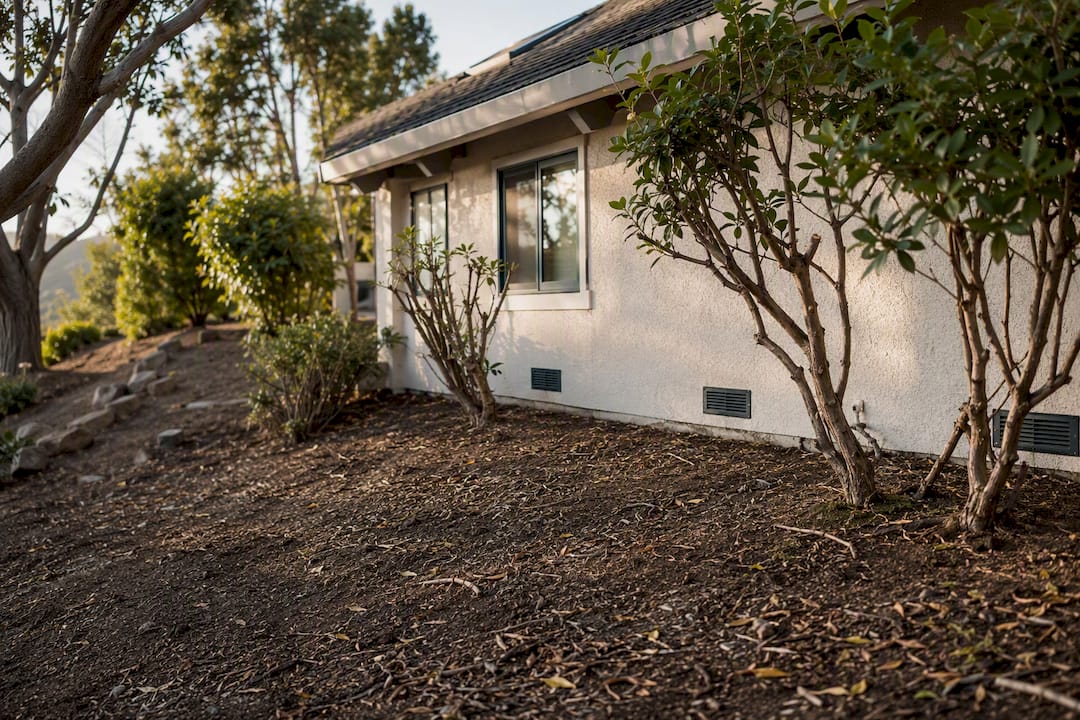
Keep a file. Photos before and after mitigation work, contractor invoices, and any defensible-space certification you receive all matter when a broker re-shops your policy.
Pro Tip: Re-shop your coverage annually, or immediately after completing a major mitigation project, whichever comes first. Waiting for your FAIR Plan renewal date to reconsider your options usually means leaving savings on the table for months longer than necessary.
What the FAIR Plan Means for California Home Buyers
Insurance status can quietly wreck a home purchase if it surfaces too late. If a property you’re bidding on can only get FAIR Plan coverage, your monthly PITI calculation needs to reflect the FAIR Plan premium plus a DIC wrap, not the admitted-market rate you might be assuming from a quick online estimate. That gap can run into hundreds of dollars a month, and it changes what you can actually afford.
The buyers who avoid last-minute scrambles are the ones who check insurance availability before writing an offer, not after it’s accepted. That single step should be part of your offer strategy the same way inspection contingencies are, because an insurance surprise during escrow can blow past your closing date.
This is exactly the kind of gap decision intelligence is built to catch. Ficustree’s buyer representation model pairs neighborhood-level wildfire data with real affordability modeling, so insurance-sensitive properties get flagged before you’re emotionally attached to them, not after.
— Anand
Get Insurance Clarity Before You Offer, With Ficustree
Ficustree gives California buyers something a listings site never will: a fixed-fee representation model that puts insurance risk into your affordability picture before you write an offer, not after you’re already in escrow scrambling for a FAIR Plan broker.

Buying in a wildfire-exposed neighborhood means your true monthly cost depends on more than the mortgage. It depends on whether your target property qualifies for admitted-market coverage or whether you’re heading straight into a FAIR Plan plus DIC combination, and what that actually adds to your PITI. You keep the premium platform free the entire time.
If you’re actively shopping in a fire-hazard zone, or you already have an offer in and need to move fast on insurance, start with Ficustree’s buyer platform and get a clear read on affordability before your contingency clock runs out.
Key Takeaways
The California FAIR Plan works as insurer of last resort only when paired with a DIC wrap, and buyers who check insurance eligibility before making an offer avoid the costliest closing delays.
| Point | Details |
|---|---|
| FAIR Plan is fire-only coverage | It covers named perils like fire, lightning, and smoke, not liability, most water damage, or theft. |
| Pair it with a DIC wrap | Most policyholders add a Difference-in-Conditions policy to get liability and water/theft coverage. |
| Expect $5,000 to $12,000 in high-risk ZIPs | Premiums vary by fire-hazard zone, roof materials, and defensible-space documentation. |
| Diligent search is mandatory | You need three documented carrier declines, filed by a licensed FAIR Plan broker, before applying. |
| Check insurance before you offer | Ficustree’s buyer platform flags insurance-sensitive properties early so affordability math stays accurate through closing. |
This article is general information, not a substitute for advice from a qualified financial advisor. Consult a qualified financial professional about your own circumstances before acting on anything here.
Sources
- California FAIR Plan — Wikipedia
- California FAIR Plan: Coverage, Cost & Alternatives (2026) | Latent Insurance
- Ready for Wildfire
FAQ
How Much Will California FAIR Plan Premiums Increase in 2026?
Exact statewide figures for future rate changes aren’t publicly finalized, but recent wildfire-driven assessments on member insurers point toward continued upward pressure on premiums, particularly in high-hazard ZIP codes already paying $5,000 to $12,000 annually.
Who Runs and Funds the California FAIR Plan?
The California FAIR Plan Association administers the program, and it’s funded entirely by California’s admitted property insurers rather than taxpayer dollars, with member companies sharing profits and losses proportionally.
Is the California FAIR Plan Still Available to New Applicants?
Yes, the FAIR Plan remains open to eligible homeowners and certain commercial property owners who can document a diligent search showing at least three declines from admitted carriers.
What Is the Average Cost of a California FAIR Plan Policy?
Statewide averages fall around $3,000 to $3,200 a year, while properties in high-wildfire zones commonly pay $5,000 to $12,000, with the highest-risk areas running even higher.
Does Ficustree Help With Insurance-Sensitive Home Purchases?
Yes. Ficustree’s buyer representation platform factors neighborhood-level wildfire and insurance data into affordability modeling, helping buyers spot FAIR Plan exposure before making an offer rather than discovering it during escrow.
Recommended
- Wildfire Risk and Home Buying in California: What to Do First – ficustree.ai
- California First-Time Buyer Programs Explained for 2026 – ficustree.ai
- California Property Taxes Explained: A Buyer’s Guide – ficustree.ai
- Why Are Home Prices So High in California? – ficustree.ai

Leave a Reply