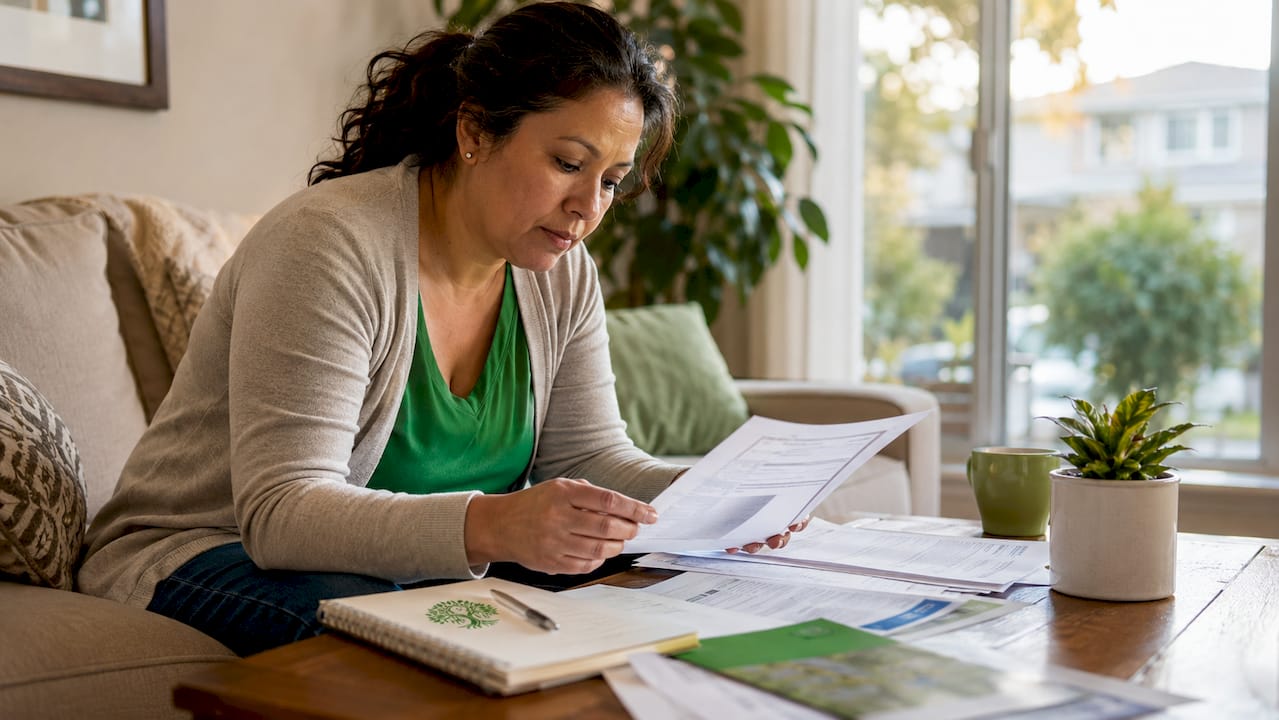
California home ownership costs fall into six distinct categories: mortgage principal and interest, property taxes, homeowners insurance, private mortgage insurance, HOA fees, and closing costs. Each one hits your budget differently, and first-time buyers who plan for all six avoid the most common financial surprises. Monthly ownership costs in California metros run 60% or more above comparable rent, which means the types of California home ownership costs you budget for today directly determine whether you can sustain the purchase long term.
1. What are PITI costs and how do they shape your monthly payment?
PITI stands for Principal, Interest, Taxes, and Insurance. These four components make up the core of your monthly mortgage payment and are collected together by your lender each month.

Your lender splits each payment into two buckets. The principal and interest go toward repaying the loan. The taxes and insurance go into an escrow account, which your lender uses to pay those bills on your behalf when they come due.
Understanding how each piece moves is critical:
- Principal: The portion that reduces your loan balance each month.
- Interest: The cost of borrowing, calculated on your remaining balance.
- Property taxes: Collected monthly via escrow, based on your assessed value.
- Homeowners insurance: Collected monthly via escrow, paid annually to your insurer.
Homeowners insurance premiums in California rose 16% in 2026, compared to roughly 4% nationally. Wildfire exposure drives that gap, and your ZIP code determines how aggressively your insurer reprices your policy.
Pro Tip: Ask your lender for an escrow analysis before closing. It shows exactly what your monthly tax and insurance contributions will be, so you are not surprised by an escrow shortage adjustment in year two.
| PITI Component | How it’s collected | Can it change? |
|---|---|---|
| Principal | Monthly payment | No (fixed-rate loan) |
| Interest | Monthly payment | No (fixed-rate loan) |
| Property taxes | Escrow account | Yes, annually |
| Homeowners insurance | Escrow account | Yes, at renewal |
2. How California property taxes work under Proposition 13
California property taxes start at 1% of your purchase price under Proposition 13, passed in 1978. The assessed value is locked in at the price you pay, and it can only increase by a maximum of 2% per year until you sell.
That sounds stable, but there is a critical trap for first-time buyers. The seller’s tax bill reflects their original purchase price, which could be decades old. Your tax bill resets to your purchase price the day you close. Never use the seller’s tax bill to estimate your costs.
Local bonds and Mello-Roos districts add to the base 1% rate. These special assessments typically add 0.5%–0.8% on top, depending on your city and school district. Effective property tax rates for new buyers in California commonly land between 1.0% and 1.25% of purchase price, plus local assessments.
Pro Tip: Search your county assessor’s website for the parcel’s tax rate area before making an offer. It takes five minutes and shows you exactly which local bonds apply to that address.
3. How HOA fees affect your total housing cost in California
HOA fees in California average around $278 per month statewide, based on 2024 American Community Survey data. Condominiums and newer planned developments often run $300–$400 or more monthly. That number sits entirely outside your PITI payment and outside your lender’s escrow account.
Your lender does not collect HOA dues. You pay them directly to the association, typically on a monthly or quarterly schedule. This means your true housing cost is PITI plus HOA, and lenders qualify you on both when calculating your debt-to-income ratio.
HOA fees cover shared expenses like exterior maintenance, landscaping, pools, and building insurance for common areas. What they do not cover is special assessments. When a roof needs replacing or a reserve fund runs short, the association can levy a one-time charge against every unit owner. These assessments can run into the thousands with little warning.
Before you make an offer on any HOA property, request these documents:
- The current budget and reserve study
- Meeting minutes from the past 12 months
- Any pending litigation or special assessment notices
- The CC&Rs (Covenants, Conditions, and Restrictions)
Pro Tip: A reserve study below 70% funded is a red flag. It signals the HOA may not have enough cash to cover major repairs without a special assessment.
4. What maintenance and utility costs should you budget for?
Annual maintenance costs for California homeowners are typically budgeted at 1% of the home’s value per year. On a $700,000 home, that is $7,000 annually, or about $583 per month. Older homes often exceed that figure.
Maintenance is not optional. Deferred repairs compound. A $500 roof repair ignored for two years can become a $12,000 replacement. The 1% rule is a floor, not a ceiling.
Common maintenance categories to plan for include:
- Roof: Inspections every 3–5 years; replacement every 20–30 years.
- HVAC: Annual servicing; replacement every 15–20 years.
- Plumbing and electrical: Older homes may need panel upgrades or repiping.
- Landscaping: Ongoing cost in California’s drought conditions.
- Pest control: Termite inspections are standard in California disclosures.
Utilities add another layer. Water, electricity, gas, and trash vary by region and home size. A larger home in the Central Valley will run higher cooling costs than a coastal condo. Budget utilities separately from your maintenance reserve.
Pro Tip: Build a dedicated savings account for home maintenance. Automate a monthly transfer equal to 1% of your home value divided by 12. Treat it like a fixed bill.
5. What closing costs and prepaid expenses do California buyers pay?
Closing costs in California average about $17,581, which represents roughly 3%–6% of the loan amount. California’s high home values push these figures well above the national average. This is a one-time expense paid at closing, separate from your down payment.
Typical closing cost line items include:
- Loan origination fee: Charged by your lender for processing the loan.
- Appraisal fee: Required by the lender to confirm the home’s value.
- Title insurance: Protects you and your lender against title defects.
- Escrow fee: Paid to the escrow company managing the transaction.
- Recording fees: Charged by the county to record the deed transfer.
Beyond fees, you also pay prepaid expenses at closing. These include the first year of homeowners insurance, several months of property taxes, and initial escrow funding. The closer your closing date falls to a property tax due date, the more prepaid taxes you will owe upfront.
The most common mistake first-time buyers make is planning only for the down payment. Your total cash to close equals the down payment plus closing costs plus prepaids. On a $700,000 purchase with 10% down, you might need $70,000 for the down payment and another $25,000–$35,000 for closing costs and prepaids. Review the California first-time buyer programs available in 2026, as some offer closing cost assistance.
Pro Tip: Request a Loan Estimate from your lender within three days of application. Federal law requires it. Compare the Closing Disclosure you receive three days before closing against that original estimate line by line.
6. How private mortgage insurance (PMI) works and when you pay it
PMI is required when your down payment is less than 20% of the purchase price. It protects the lender, not you, against default risk. You pay it monthly as part of your mortgage payment.
PMI adds a meaningful cost to your monthly budget. Once your loan balance drops to 80% of the original home value, you can request cancellation. Your lender must automatically cancel it when the balance reaches 78% based on the original amortization schedule.
Key facts about PMI for California buyers:
- PMI is separate from homeowners insurance.
- It does not build equity or provide you any direct benefit.
- Government-backed loans like FHA loans carry their own mortgage insurance, structured differently from conventional PMI.
- Budgeting for PMI upfront helps you qualify accurately and avoid payment shock.
The practical move is to factor PMI into your affordability calculation from day one. Use a home affordability calculator that includes PMI, PITI, and HOA together for a realistic monthly payment figure.
Key takeaways
California home ownership costs include six distinct expense types, and budgeting for all six, not just the mortgage, determines whether you can afford the home long term.
| Point | Details |
|---|---|
| PITI is your base payment | Principal, interest, taxes, and insurance form the core monthly cost collected by your lender. |
| Prop 13 resets at purchase | Your tax bill is based on your purchase price, not the seller’s, so never use their tax bill to estimate costs. |
| HOA fees sit outside escrow | Average $278 per month statewide; special assessments can spike costs without warning. |
| Closing costs exceed the down payment | California buyers average $17,581 in closing costs, plus prepaids that add thousands more. |
| Maintenance requires a dedicated reserve | Budget 1% of home value annually for upkeep; older homes often cost more. |
What I’ve learned about budgeting California ownership costs the right way
Most first-time buyers I talk to focus almost entirely on the mortgage rate. That is the wrong place to start. The rate matters, but it is one variable inside a much larger cost structure.
The buyers who get into trouble are the ones who calculate affordability based on PITI alone. They close, move in, and then discover the HOA has a pending special assessment, the insurance premium jumped 16% at renewal, and the water heater failed six months in. None of those were surprises. They were predictable costs that did not make it into the original budget.
Proposition 13 creates a specific trap I see repeatedly. A seller who bought in 2005 might pay $4,000 a year in property taxes on a home now worth $900,000. You will pay $9,000 or more. That $5,000 annual gap is $417 per month. It changes your qualification and your cash flow, and it is invisible if you rely on the listing’s tax history.
The other underestimated cost is the cash-to-close gap. Buyers plan for the down payment and forget that closing costs, prepaids, and escrow funding can add $25,000–$40,000 on top. That cash has to come from somewhere, and it cannot come from the loan.
My honest advice: build your budget from the outside in. Start with the total monthly number you can sustain, then work backward through PITI, HOA, maintenance, and utilities to find the purchase price that fits. The true cost of homeownership is always higher than the mortgage payment alone.
— Anand
How Ficustree helps you plan every cost before you commit
Buying your first home in California means managing six cost categories at once, and most buyers do not have a clear picture of all of them until after they close.

Ficustree is built specifically for this problem. The platform’s AI-powered tools cover PITI, PMI, HOA dues, maintenance reserves, and closing cost estimates in one place, so you see your real monthly number before you make an offer. Ficustree represents buyers directly, with buyers paying $1,000 at closing plus 1% commission and keeping a rebate of roughly 2% where legally permitted. That rebate can offset a significant portion of your closing costs. Start building your full cost picture at ficustree.ai/buyer and get to a confident decision faster.
FAQ
What does PITI stand for in a California mortgage?
PITI stands for Principal, Interest, Taxes, and Insurance. These four components form the core of your monthly mortgage payment, with taxes and insurance collected through a lender escrow account.
How much are closing costs for California home buyers?
Closing costs in California average about $17,581, roughly 3%–6% of the loan amount. This figure does not include prepaid expenses like property taxes and homeowners insurance, which add to your total cash to close.
What is Proposition 13 and how does it affect my property taxes?
Proposition 13 sets your property tax at 1% of your purchase price and caps annual increases at 2%. Your assessed value resets to your purchase price when you buy, so the seller’s tax bill does not reflect what you will owe.
When does PMI go away on a California home loan?
PMI cancels when your loan balance reaches 80% of the original home value, which you can request. Lenders must automatically cancel it at 78% based on the original amortization schedule.
Are HOA fees included in my mortgage payment?
HOA fees are not included in your mortgage payment or escrow account. You pay them directly to the homeowners association, typically monthly or quarterly, on top of your PITI payment.
Recommended
- First Home Buying California Guide: Steps That Work – ficustree.ai
- California First-Time Buyer Programs Explained for 2026 – ficustree.ai
- The Ultimate Home Affordability Calculator for Real-Life Budgeting
- How to Ask for Seller Concessions in California (2026)

Leave a Reply