
Home buying workflow automation tips give first-time buyers in California and Texas a real edge. The process of purchasing a home involves dozens of moving parts: contract intake, document generation, deadline tracking, offer submission, and stakeholder communication. Without a system, those steps pile up fast and errors creep in. Automation, in the real estate context, means using digital tools and AI-powered workflows to handle repetitive tasks so you can focus on decisions that actually require your judgment. Done right, it can compress months of confusion into weeks of clarity.
What key home buying tasks can you automate to save time?
The home purchase process contains several tasks that repeat in a predictable sequence. That predictability makes them ideal candidates for automation.
Contract intake and deadline management is where most buyers lose the most time. Manual contract intake typically takes 30–60 minutes per transaction. Automation eliminates that step entirely and calculates contingency deadlines from the contract date without any manual math. For a first-time buyer juggling a job and a home search, that time savings is real and immediate.

Document generation is another area where automation pays off fast. Tech-forward buyers now generate Letters of Intent in under 45 seconds using pre-configured AI prompt threads. That same approach works for purchase offer drafts, inspection request letters, and repair addenda. You set up the template once, and the AI fills in the property-specific details on demand.
Here are the core tasks worth automating early in your process:
- Deadline tracking. Set automated reminders for inspection contingency deadlines, loan commitment dates, and closing day. Missing one of these in California or Texas can cost you your earnest money deposit.
- Milestone progress updates. Buyer hubs now track four key milestones automatically: budget setting, home search, offer submission, and closing progress. Each step triggers the next task without you having to remember it.
- Stakeholder communications. Template-based messages sent to your agent, lender, and escrow officer at key trigger points keep everyone aligned without a single manual email.
- Offer generation. A saved AI prompt thread with your buyer profile and preferred offer structure lets you draft a competitive offer in under a minute when a good listing appears.
Pro Tip: Build your document templates before you start touring homes. When you find the right property in a competitive California or Texas market, speed matters. Having your offer template ready can mean the difference between submitting in 10 minutes or 90.
Which tools are essential for home buying automation?
The right tools depend on where you are in the process. Three categories cover most of what a first-time buyer needs.
Transaction management platforms handle file creation, task lists, and deadline tracking automatically. When a new contract is signed, these platforms create a file, populate key dates, and assign tasks to each party. You stop managing a spreadsheet and start managing decisions.
AI language models like ChatGPT and Claude handle document drafting and research. You can use them to draft offer letters, summarize disclosure documents, research neighborhood permit histories, and generate repair cost questions for your inspector. The key is saving your prompt threads so you are not starting from scratch each time.
Personalized buyer hubs sit at the intersection of both categories. These platforms guide buyers through budgets, offers, and closings with real-time updates and automated task triggers. Ficustree’s platform functions as this kind of decision intelligence layer, connecting your search, offer strategy, and closing milestones in one place rather than scattering them across email threads and sticky notes.
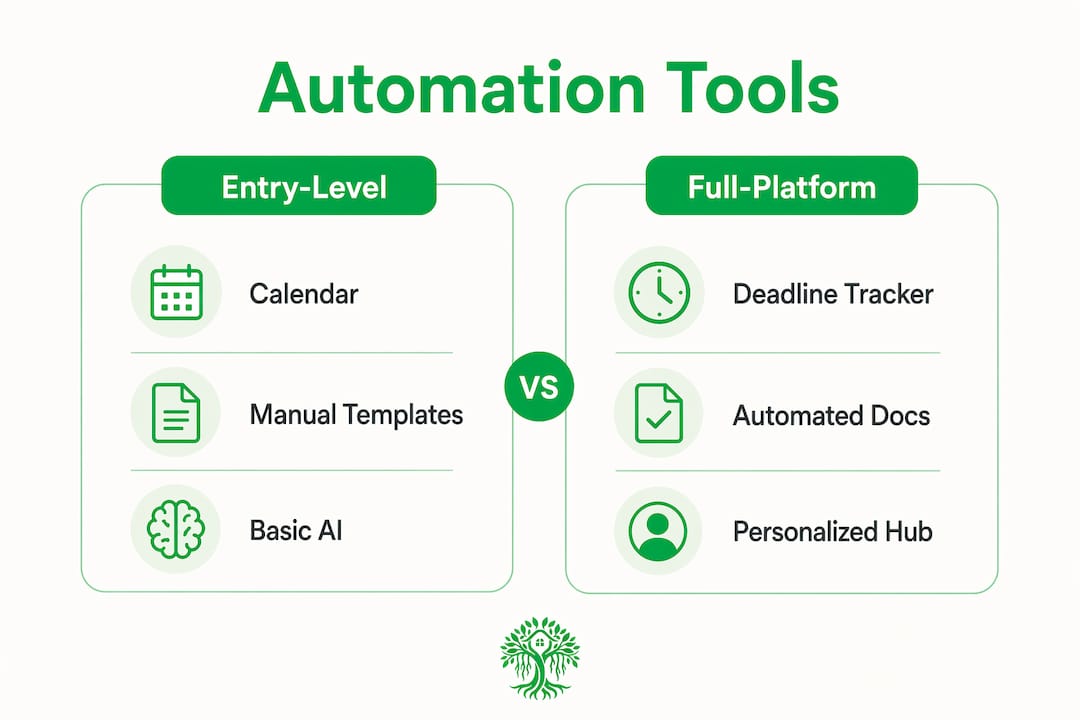
The table below compares automation approaches by feature category, so you can match tools to your actual needs.
| Feature category | Entry-level approach | Full-platform approach |
|---|---|---|
| Deadline tracking | Calendar reminders set manually | Automated alerts triggered by contract dates |
| Document generation | AI prompt with manual copy-paste | Saved template thread with auto-fill fields |
| Milestone updates | Buyer checks in manually | Hub pushes updates at each stage automatically |
| Stakeholder communication | Manual emails drafted per event | Triggered templates sent on key actions |
| Offer drafting | Generic AI prompt from scratch | Pre-configured buyer profile thread, ready in seconds |
Pro Tip: Start with one AI tool and one transaction platform. Buyers who try to adopt five tools at once usually abandon all of them within two weeks. Pick the combination that covers deadline tracking and document drafting first, then add layers.
Checking off a solid mortgage shopping checklist before you automate your offer workflow also matters. Your pre-approval terms directly affect what your offer templates should say.
How do you implement home buying automation step by step?
Setting up automation without a plan creates new problems. Automation accelerates existing gaps in your workflow rather than fixing them. Fix the process first, then automate it.
Before you automate a single step, write down every task you currently do manually, in the order you do it. If a step is broken or redundant, automation will not fix it. It will just make the broken step happen faster.
Follow this sequence to set up your automation correctly:
-
Map your current process. List every task from pre-approval to closing. Note which ones repeat, which ones require a decision, and which ones are purely mechanical. Mechanical tasks are your automation targets.
-
Set up automated contract intake. When your agent sends a signed contract, your transaction platform should automatically create a file, pull the key dates, and calculate your contingency deadlines. You should never calculate an inspection deadline by hand.
-
Create saved AI prompt threads. Open a new chat in your preferred AI tool and paste in your buyer profile: name, pre-approval amount, preferred contingencies, and offer structure. Save that thread. A saved LLM prompt thread lets you generate a full purchase offer in under one minute when you need it.
-
Configure milestone notifications. Set your platform to alert you and your agent when each milestone is reached or when a deadline is approaching. In Texas, option period deadlines are short. In California, contingency windows require active management. Automated alerts prevent both from slipping.
-
Build communication templates. Write one template for each key event: offer submitted, inspection scheduled, repair request sent, clear to close received. When the event happens, the message goes out automatically. Triggered communications reduce the risk of missing a critical update to your lender or escrow officer.
-
Test before you go live. Run a mock transaction through your setup using a past listing. Confirm that deadlines calculate correctly and that templates pull the right information.
Two mistakes first-time buyers make most often: automating a process they have not documented, and forgetting to recalculate deadlines after a contract amendment. Both are avoidable with the steps above.
What are best practices for combining AI with human expertise?
AI handles research and document work well. It does not handle negotiation, relationship access, or real-time market judgment. AI excels at data-driven research but human negotiation and local knowledge remain critical in competitive markets like the Bay Area or Austin.
Here is where the line falls in practice:
- Use AI for. Disclosure document summaries, permit history research, neighborhood comparison reports, offer letter drafts, and inspection question lists.
- Use a human agent for. Negotiation strategy, off-market access, reading a seller’s motivation, and responding to a competing offer in real time.
- Verify AI repair estimates locally. AI-generated repair cost estimates often use stale or generic data that does not reflect current labor and material costs in your specific market. Always confirm with a local contractor before using a number in a negotiation.
- Run AI due diligence before tours, not during. Conducting AI analysis the night before a property tour keeps you focused and present during the walkthrough. Buyers who scroll AI reports during a tour miss physical details that matter.
Pro Tip: Ask your AI tool to generate a list of questions for your home inspector based on the property’s age, location, and disclosed conditions. Then hand that list to your inspector before the inspection begins. You get a more thorough report without adding time to the process.
The negotiation mistakes that cost buyers the most money almost always happen when they rely on automated data without a human sanity check. Automation is a research accelerator, not a decision-maker.
Key Takeaways
Automating your home purchase process saves the most time when you fix your manual workflow first, then layer in tools for contract intake, document generation, and deadline tracking.
| Point | Details |
|---|---|
| Fix the process first | Document every manual step before automating to avoid amplifying existing errors. |
| Automate contract intake | Eliminating manual file creation saves 30–60 minutes per transaction and prevents deadline errors. |
| Use saved AI prompt threads | Pre-configured offer templates let you draft a purchase offer in under one minute. |
| Automate milestone alerts | Triggered notifications prevent missed contingency deadlines in California and Texas markets. |
| Keep humans in the loop | AI handles research and drafts; agents handle negotiation, access, and real-time market response. |
Why automation alone will not make you a confident buyer
I have watched first-time buyers in California and Texas fall into the same trap: they discover automation tools, get excited, and try to replace the entire buying process with software. Then a competing offer lands, the seller counters at 6 PM on a Friday, and the buyer freezes because no AI told them what to do next.
Automation is genuinely powerful for the mechanical parts of buying a home. The home buying timeline has dozens of steps that repeat in a predictable order, and those steps should absolutely be handled by tools rather than memory. But the moments that determine whether you get the house, and at what price, require judgment that no prompt thread can replicate.
My honest advice: adopt automation incrementally. Start with deadline tracking and one document template. Measure the time you save. Then add the next layer. Buyers who build their automation stack gradually actually use it. Buyers who try to set up everything at once usually revert to email and spreadsheets within a month.
The best outcome is a process where the tools handle the paperwork and the humans handle the decisions. That balance is what actually gets first-time buyers to closing without regret.
— Anand
How Ficustree supports your home buying automation
Ficustree is built specifically for first-time buyers in California and Texas who want the efficiency of automation without losing the guidance of real representation.

The platform functions as your decision intelligence layer across the full purchase process. Ficustree’s buyer hub tracks your milestones automatically, from budget confirmation through closing, and surfaces the right task at the right time. AI-assisted offer tools help you move fast when a listing fits your criteria. And because Ficustree represents buyers directly, you pay $1,000 at closing plus 1% commission and keep a rebate of roughly 2% where permitted. You get the automation, the representation, and the savings in one place. Start your search at ficustree.ai and see how far along you already are.
FAQ
What is home buying workflow automation?
Home buying workflow automation is the use of digital tools and AI to handle repetitive tasks like contract intake, deadline tracking, document drafting, and stakeholder communication automatically. It reduces manual work and prevents errors across the purchase process.
How much time can automation save in a home purchase?
Manual contract intake alone takes 30–60 minutes per transaction. Automating that step plus document generation can save several hours across a full transaction.
Can AI replace a real estate agent for first-time buyers?
AI handles research, document drafts, and process guidance well, but it cannot replace an agent’s negotiation skill, local market knowledge, or relationship access in competitive California and Texas markets.
What should I automate first as a first-time homebuyer?
Start with deadline tracking and one offer document template. These two automations cover the highest-risk manual tasks and take the least time to set up correctly.
Is it safe to use AI-generated repair estimates in negotiations?
AI repair estimates are a starting point only. Verify them with a local contractor before using any number in a negotiation, since AI data often does not reflect current local labor and material costs.
Recommended
- First Time Homebuyer Guide: Simple Steps for Your First Home
- Home Buying Timeline: A First-Time Buyer’s Guide – ficustree.ai
- Escrow Process for First-Time Buyers: California Guide – ficustree.ai
- First Home Buying California Guide: Steps That Work – ficustree.ai

Leave a Reply