
If a home was built before 1978, California sellers and landlords must disclose any known lead-based paint and hazards, hand over the EPA pamphlet and required contract attachments, and give buyers a 10-day inspection window. This obligation exists on top of California’s own transfer disclosure rules. Skipping any piece of it, from the Lead Warning Statement to the signed acknowledgment, exposes sellers and landlords to real legal and financial risk.
TL;DR:
- Sellers and landlords must provide the EPA pamphlet, disclose known lead hazards, and obtain signed acknowledgments before finalizing pre-1978 property transactions.
- California adds requirements by demanding a separate disclosure form and requires recordkeeping for three years, with lease renewals resetting disclosure duties.
- Buyers have a 10-day window to conduct lead testing, but a disclosure statement confirming no known hazards does not guarantee the absence of lead presence.
- Common compliance mistakes include missing the EPA pamphlet, failing to get signatures, or neglecting to follow the special timing rules for disclosures and inspections.
- Penalties for non-compliance can involve civil fines and legal damages, even if no lead hazards are found, emphasizing the importance of thorough documentation.
Table of Contents
- What Is Lead Paint Disclosure in California?
- The Federal Rule Behind Every Transaction
- How California Layers On Top of Federal Law
- Seller and Landlord Duties: What to Provide and Keep
- How Should Buyers Use Their 10-Day Inspection Window?
- Exemptions, Common Mistakes, and Enforcement
- A Step-by-Step Checklist and Where to Get the Forms
- How Ficustree Helps Buyers Verify Disclosures
- Why Documentation Beats Verbal Assurances
- Get Disclosure and Inspection Support From Ficustree
- Sources
- FAQ
What Is Lead Paint Disclosure in California?
Lead paint disclosure California requirements come from two overlapping layers of law: a federal rule that applies nationwide, and California-specific statutes that add extra paperwork and timing rules. Understanding both is the only way to actually get this right, because meeting one without the other still leaves you exposed.
The Federal Rule Behind Every Transaction
The baseline comes from the Lead-Based Paint Disclosure Rule under Title X, Section 1018. It applies to nearly every home and rental built before 1978, which the rule calls “target housing,” and it covers private sales, federally owned property, and most federally assisted housing. This rule does not require anyone to test for lead or fix anything they find. It only requires honesty about what the seller or landlord already knows.
Under Section 1018, sellers and landlords must:
- Disclose any known lead-based paint or lead hazards on the property.
- Hand over all available records and reports related to lead in the home.
- Include a signed Lead Warning Statement in the purchase contract or lease.
- Provide the EPA pamphlet, “Protect Your Family From Lead in Your Home.”
- Give buyers a 10-day period to test for lead before they’re locked into the deal.
Signed acknowledgment forms have to be kept for three years. Skip any one of these steps and the transaction is technically out of compliance, even if the house turns out to be lead-free.
How California Layers On Top of Federal Law
California doesn’t replace the federal rule. It adds to it. Under Civil Code Sections 1102 through 1102.19, sellers must complete a Real Estate Transfer Disclosure Statement (TDS) that covers known environmental hazards, lead included. Many sellers satisfy part of this obligation by providing California’s Residential Environmental Hazards booklet alongside the TDS.
A few things trip people up here:
- The TDS and the federal Lead Warning Statement are separate documents. Both are required, not one instead of the other.
- California Association of Realtors contract language often sets the specific timing for when disclosures land relative to offer acceptance, and that timing has to preserve the buyer’s federal inspection rights.
- Inspectors performing lead risk assessments in California need state certification, and the California Department of Public Health maintains a list of certified professionals.
Buyers reviewing these forms should read our guide to California buyer disclosures for a line-by-line breakdown of what’s at stake in each section.
Seller and Landlord Duties: What to Provide and Keep
Meeting your obligations comes down to a short, specific sequence:
- Hand the buyer or tenant the EPA pamphlet before they’re bound to a contract.
- Disclose any known lead paint or hazards, and attach whatever records or reports you have.
- Include the Lead Warning Statement directly in the purchase contract or lease addendum.
- Get signatures from every party acknowledging they received the disclosure.
- Keep copies of everything, signed and dated, for at least three years.
Electronic delivery is generally acceptable if the recipient has consented to it, but paper with a physical signature is still the safest default for landlords managing multiple units. If a tenant refuses to sign, document the delivery attempt anyway, ideally with certified mail and a return receipt, and file that proof with your transaction records. Multiunit buildings need to address common-area hazards too, and lease renewals can trigger a fresh disclosure requirement if the tenancy terms change materially.
Pro Tip: Set a calendar reminder for lease renewal dates. A surprising number of landlords disclose properly at move-in, then forget the obligation resets when a lease is renewed or a new tenant signs on.
How Should Buyers Use Their 10-Day Inspection Window?
Buyers get a reasonable inspection period, agreed in writing by both parties, to schedule a lead inspection or risk assessment before finalizing the deal. That window can be shortened, extended, or waived entirely, but the waiver has to be in writing to count.
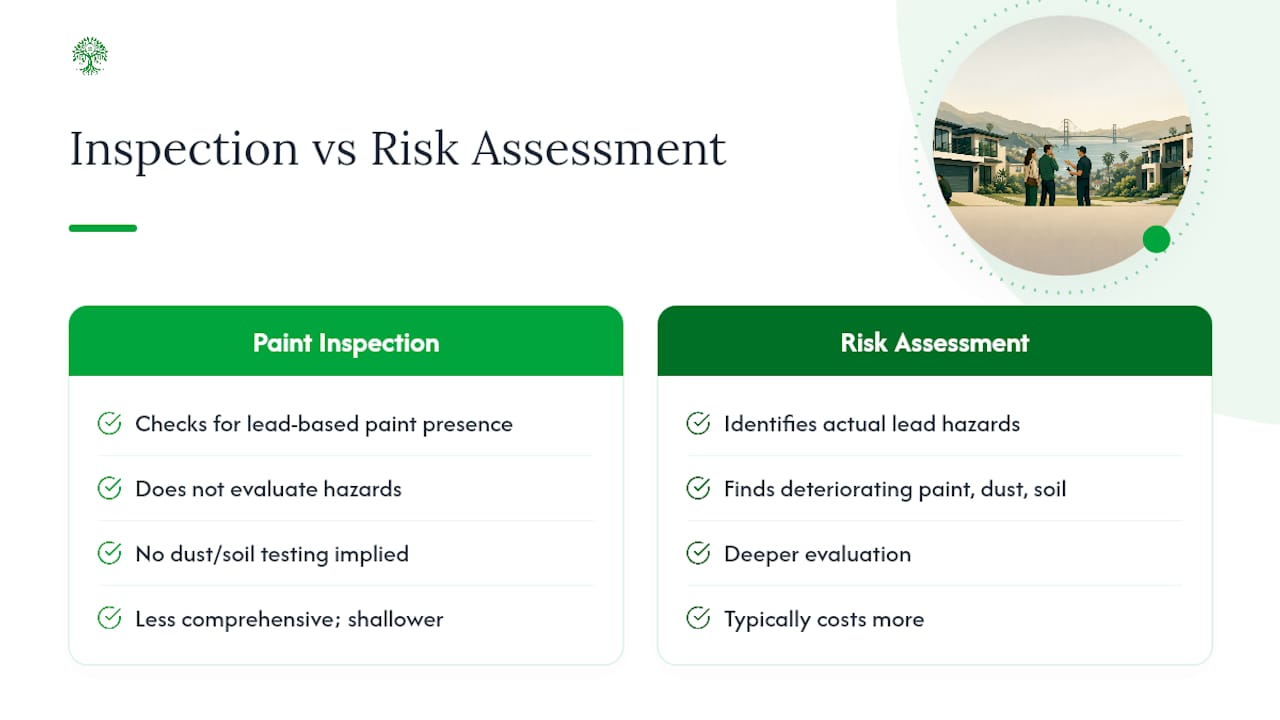
It helps to know the difference between the two kinds of testing available. A paint inspection tells you whether lead-based paint is present. A risk assessment goes further, identifying actual hazards like deteriorating paint, contaminated dust, or soil, and typically costs more because it’s a deeper evaluation. Certified inspectors for either service are listed through the CDPH.
The biggest misconception buyers carry into this process: a disclosure statement is not an inspection. A seller checking “no known lead-based paint” on a form means exactly that. They don’t know of any. It says nothing about what a certified inspector might actually find once given access to the home.
Exemptions, Common Mistakes, and Enforcement
Not every transaction falls under these rules. The main exemptions include:
- Foreclosure sales.
- Leases of 100 days or less (short-term rentals).
- Housing certified lead-free by a state-certified inspector.
- Housing designated for elderly or disabled residents where no children under six are expected to live.
The most common compliance failures are missing the EPA pamphlet entirely, skipping the signed acknowledgment, or forgetting that a lease renewal resets the clock. Violations can be reported to CDPH or EPA without needing to prove lead actually exists in the home. Missing paperwork alone is a violation, and penalties can include civil fines and, in serious cases, triple damages in a lawsuit.
A Step-by-Step Checklist and Where to Get the Forms
Run through this sequence for any pre-1978 sale or lease:
- Confirm the build date and whether the property qualifies as target housing.
- Pull together any existing lead records, reports, or inspection results.
- Deliver the EPA pamphlet and attach the Lead Warning Statement to the contract.
- Offer the buyer or tenant the 10-day inspection period, in writing.
- Collect signed acknowledgments from every party involved.
- Retain all signed documents for three years, and keep proof of delivery if anyone refused to sign.
Official materials worth bookmarking:
- The EPA’s sample Seller’s Disclosure form for exact required wording.
- The EPA pamphlet itself, available in multiple languages through the same real estate disclosures page.
- California’s TDS and environmental hazards booklet guidance, covered in more depth in our natural hazard disclosure breakdown.
If you’re mapping this against the broader offer timeline, our guide to how the offer process works in California shows exactly where disclosure deadlines fall relative to acceptance.
How Ficustree Helps Buyers Verify Disclosures
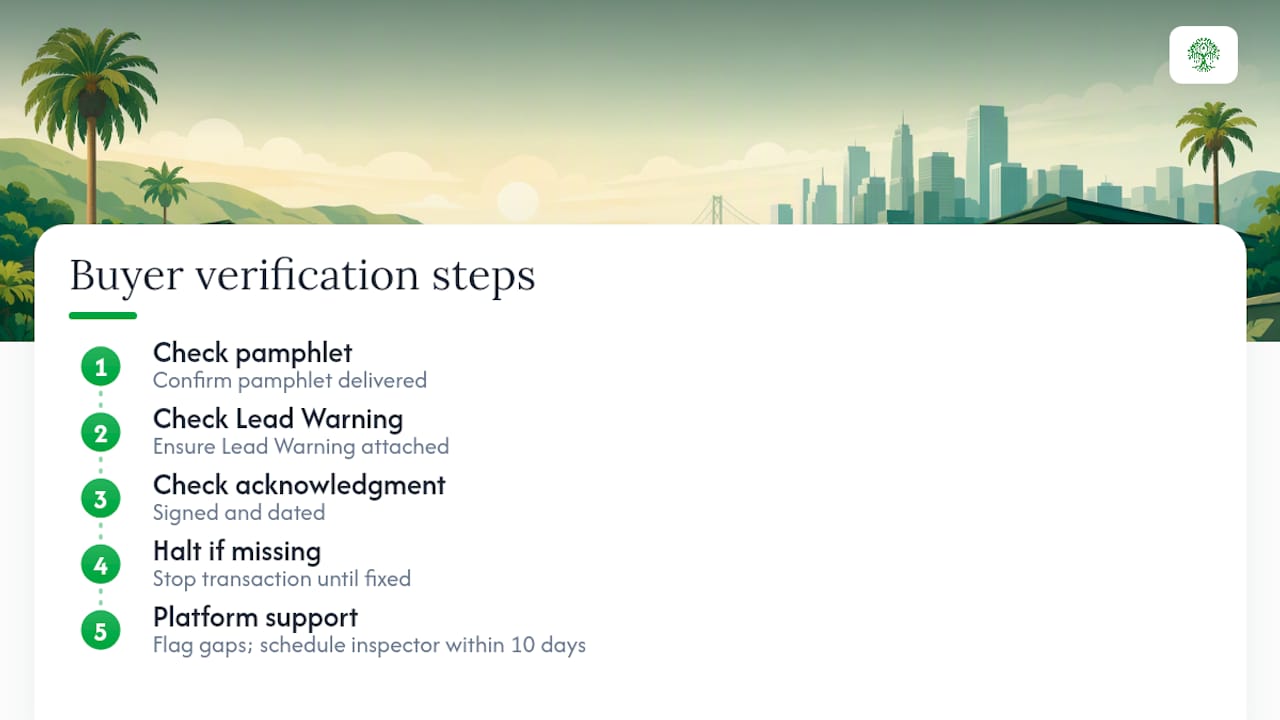
A buyer representative’s job at this stage is straightforward: check that the pamphlet was delivered, the Lead Warning Statement is attached, and the acknowledgment is signed and dated. Missing any of these should stop a transaction cold until it’s fixed. Platforms can flag gaps in disclosure packets as they come in, and assist first-time buyers in arranging certified inspectors within the 10-day window to avoid last-minute scrambling. That kind of paperwork check is exactly where first-time buyers get burned, and exactly where guided representation earns its keep.
Why Documentation Beats Verbal Assurances
A verbal “the house is fine” from a seller carries zero weight once escrow closes. A signed disclosure does. Treat every lead disclosure form as leverage, not a formality: buyers should use their inspection rights aggressively, and sellers should document delivery attempts the moment a tenant or buyer balks at signing. First-time buyers in particular benefit from having someone check this paperwork line by line, because the mistakes that trip up new buyers rarely show up until after the deal is done.
— Anand
Get Disclosure and Inspection Support From Ficustree
Reviewing lead disclosures, chasing down certified inspectors, and tracking a 10-day countdown is exactly the kind of task that eats into a first-time buyer’s bandwidth during an already stressful transaction. Ficustree is built for this. Instead of leaving you to interpret dense TDS language alone, Ficustree pairs you with direct buyer representation that checks disclosure packets for missing pieces, helps schedule certified lead inspectors before your window closes, and keeps every deadline visible in one place.

The premium platform, including affordability tools and disclosure tracking, is free to use. If you’re actively house hunting in California and want a second set of eyes on every disclosure before you sign, start with Ficustree’s buyer platform and see what’s already flagged on your next showing.
Sources
- Lead-Based Paint Disclosure Rule (Section 1018 of Title X) | US EPA
- Real Estate Disclosures about Potential Lead Hazards | US EPA
- Real Estate Disclosure and Notification – CDPH – CA.gov
- Seller’s Disclosure of Information on Lead-Based Paint and/or Lead-Based Paint Hazards | US EPA
FAQ
What Happens if I Don’t Disclose Lead Paint?
Skipping required lead disclosure exposes sellers and landlords to civil penalties and, in serious cases, lawsuits carrying triple damages under federal law. Missing paperwork alone, like a missing pamphlet or unsigned acknowledgment, counts as a violation even if no lead is ever found, and it can be reported to CDPH or the EPA.
Where Can I Find a California Lead Disclosure Pamphlet?
The EPA pamphlet, “Protect Your Family From Lead in Your Home,” is available for free download through the EPA’s real estate disclosures page in multiple languages. Sellers and landlords must provide this to buyers or tenants before finalizing a pre-1978 sale or lease.
Is California a Mandatory Disclosure State?
Yes. California requires a Real Estate Transfer Disclosure Statement under Civil Code Sections 1102 through 1102.19, and this obligation applies on top of the federal lead paint disclosure rule for any pre-1978 property.
Who Is Exempt From Lead-Based Paint Disclosure?
Exemptions include foreclosure sales, short-term leases of 100 days or less, housing officially certified lead-free by a state-certified inspector, and housing for elderly or disabled residents where no children under six are expected to live. Every other pre-1978 sale or lease in California falls under the disclosure requirement.
Do Sellers Have to Test for Lead Before Selling?
No. Sellers only have to disclose what they already know and hand over any existing records. Testing and inspection are the buyer’s choice, exercised during the 10-day inspection window described in the federal disclosure rule.
Recommended
- How to Review California Buyer Disclosures(What’s at Stake)
- First-Time Homebuyer Mistakes California Buyers Must Avoid
- How to Ask for Seller Concessions in California (2026)
- Escrow Process for First-Time Buyers: California Guide

Leave a Reply