An open house is a scheduled event where a seller’s listing agent opens a property to potential buyers for viewing without an appointment, typically lasting about two hours. Understanding how open houses work in the buying process gives first-time buyers in California and Texas a real edge. You get to walk through homes, read the market, and gather information that shapes your offer strategy. Done right, an open house is not a casual stroll. It is a structured data-gathering mission.
How open houses work: format, flow, and what to expect
An open house follows a predictable format once you know what to look for. Open houses usually last 2 hours, most commonly on Saturday or Sunday afternoons. That window is tight, so arriving early gives you the best access to the listing agent before the crowd arrives.

When you walk in, you will typically be asked to sign in. That sign-in sheet is a lead-capture tool for the listing agent. Buyers can protect their privacy by listing their buyer agent’s contact information or politely declining to share personal details. If you already have a buyer’s agent, write their name down. It signals that you are represented and discourages the listing agent from pursuing you directly.
The listing agent’s job is to represent the seller, not you. They will answer questions, hand out flyers, and point out the home’s best features. What they will not do is advocate for your interests. Keep that in mind during every conversation.
- Walk every room, including the garage, attic access, and basement if applicable
- Check water pressure by running faucets and flushing toilets
- Look at the ceiling corners and under sinks for water stains or mold
- Note the age of the HVAC system, water heater, and roof if visible
- Observe natural light, traffic noise, and the condition of neighboring properties
Pro Tip: Arrive in the first 15 minutes. The listing agent is freshest, the home is least crowded, and you can ask follow-up questions before other buyers pull their attention away.
How to prepare for an open house before you go
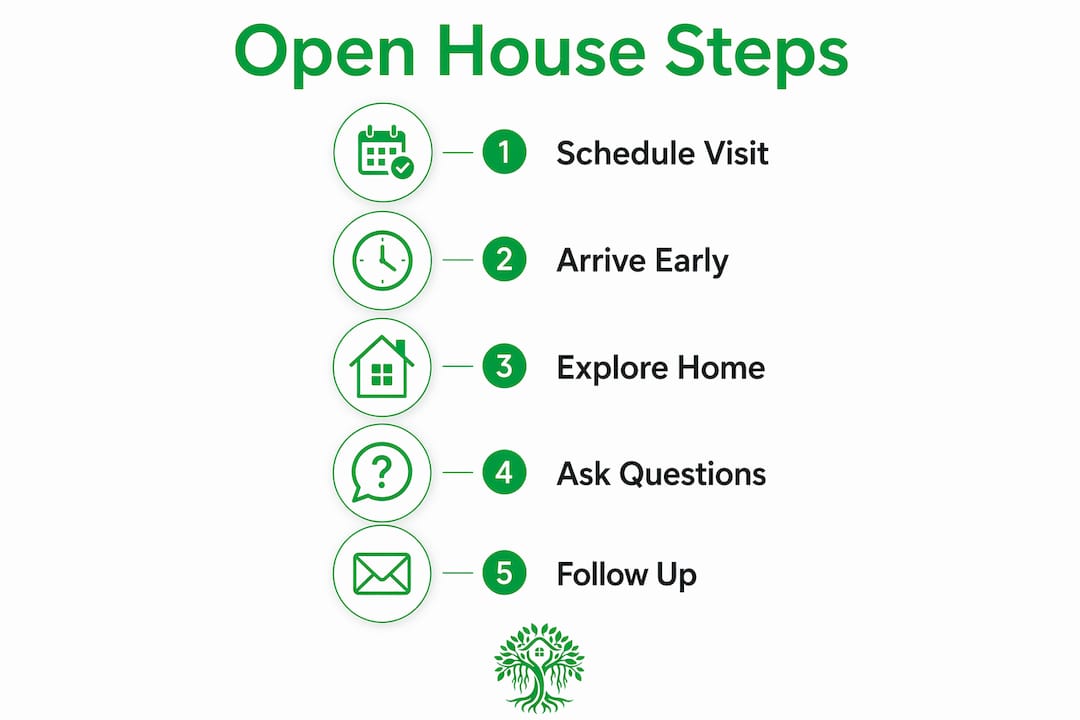
Preparation separates buyers who convert from those who just browse. Prepared buyers convert offers at rates up to 14%, while casual visitors convert at under 3%. That gap is almost entirely explained by what buyers do before they walk through the door.
Follow these steps before every open house visit:
- Get pre-approved for a mortgage. Pre-approval before open houses helps you receive more candid information from listing agents and strengthens your offer position if you decide to move quickly. In California and Texas markets, homes in desirable zip codes can receive multiple offers within days of listing.
- Research the property online. Pull the MLS sheet, check tax records, and run comparable sales in the neighborhood. You want to walk in knowing the list price history, square footage, and lot size before the agent tells you.
- Set your personal criteria. Write down your non-negotiables before you tour. Commute distance, school district, minimum bedrooms, and parking requirements should be decided before emotions enter the picture.
- Pack the right tools. Bring a smartphone, notepad, and flashlight to every visit. A tape measure helps you verify room dimensions against furniture you already own.
- Budget your time. Spend 15–30 minutes per home. Less than that and you miss details. More than that on a first pass and you are probably already emotionally attached.
Pro Tip: Read the seller’s disclosure statement before you go if it is publicly available. In California, sellers are legally required to disclose known material defects. In Texas, the seller’s disclosure notice covers structural, mechanical, and environmental issues. Knowing what is already disclosed lets you ask sharper follow-up questions at the open house.
For a broader overview of the full purchase timeline, the first-time homebuyer guide from Ficustree walks you through every step from pre-approval to closing.
What questions to ask at an open house
The right questions turn a casual tour into a negotiation advantage. Listing agents have fiduciary duties to sellers, which means they will use any information you volunteer against you in negotiations. Ask questions that reveal seller motivation without revealing yours.
Focus on these areas:
- Listing history: How long has the home been on the market? Has the price been reduced? A home sitting for 45 or more days in a hot market signals a problem worth investigating.
- Seller motivation and timeline: Is the seller flexible on closing date? Are they already under contract on another home? A motivated seller is a negotiating opportunity.
- System ages and repairs: When was the roof last replaced? How old is the HVAC? What repairs have been done in the last five years? These answers form your inspection contingency baseline.
- What is included in the sale: Appliances, window treatments, and outdoor fixtures are sometimes excluded. Confirm in writing what stays.
- HOA details: In California communities like those in Irvine or Rancho Santa Margarita, HOA fees and special assessments can add hundreds of dollars per month to your true cost. In Texas master-planned communities like Cinco Ranch or The Woodlands, the same applies.
Stay polite and conversational. Remain vague about your budget and timeline when the listing agent asks. Your answers become their leverage.
Common mistakes buyers make at open houses
Emotional overattachment is the most expensive mistake first-time buyers make. Buyers who skip financial analysis overpay by $10,000–$25,000 on average. Falling in love with a kitchen before running a PITI calculation (principal, interest, taxes, and insurance) is how buyers end up house-poor.
Experienced agents stress one rule: do not fall in love without a PITI analysis. Add HOA fees, estimated maintenance, and homeowner’s insurance to get your real monthly number. If that number exceeds 28–30% of your gross monthly income, the home is likely outside your true affordability range regardless of how it looks.
“Open houses are best used as market research and intel-gathering rather than immediate purchasing decisions.” — Barrett Sotheby’s Realty
Other common mistakes include:
- Telling the listing agent you love the home or that it is your top choice
- Skipping the exterior and only touring the interior
- Ignoring the neighborhood at the time of day you would actually live there
- Treating the open house as a final decision rather than a screening tool
- Failing to schedule a private showing before making an offer
Open houses are data-gathering opportunities. Serious buyers follow up with private showings and a comparative market analysis before writing an offer. The open house gets you in the door. The private showing is where you decide.
Understanding the emotional pitfalls of home buying helps you stay objective when a home checks most of your boxes but the numbers are not quite there.
What to do after an open house visit
Your work starts when you leave the property. Most buyers take a few photos and forget the details within 48 hours. A systematic review process keeps your search sharp and your decisions clear.
- Review your notes and photos the same day. Memory fades fast. Write a brief summary of each home while the details are fresh, including what you liked, what concerned you, and any unanswered questions.
- Contact your buyer’s agent. Share your observations and ask them to pull a comparative market analysis for any home you are seriously considering. A buyer’s agent represents your interests exclusively, unlike the listing agent you met at the open house.
- Request disclosures and inspection reports. In California, sellers must provide a Transfer Disclosure Statement. In Texas, the Seller’s Disclosure Notice is standard. Read both before scheduling a private showing.
- Prioritize homes for private showings. Rank your top two or three properties and schedule private tours within a few days. Markets in the San Francisco Bay Area, Los Angeles, Austin, and Dallas move quickly. Waiting a week can cost you the property.
- Prepare to act on offer timing. If a home fits your criteria and the numbers work, understand the offer process in California before you need it. Knowing contingency timelines and escalation clauses in advance keeps you from scrambling when the right home appears.
Top buyers inspect unseen areas during open houses promptly to detect maintenance issues early. That information becomes your inspection contingency baseline when you write an offer.
Key Takeaways
Open houses work best as structured research events, not emotional experiences. Prepared buyers with pre-approval, a clear checklist, and disciplined questioning convert at dramatically higher rates than casual visitors.
| Point | Details |
|---|---|
| Arrive prepared | Get pre-approved and research the property before you walk through the door. |
| Protect your leverage | Stay vague with listing agents about your budget, timeline, and level of interest. |
| Use a physical checklist | Bring a smartphone, notepad, flashlight, and tape measure to every visit. |
| Follow up fast | Review notes the same day and schedule private showings within 48 hours for serious contenders. |
| Run the numbers first | Calculate PITI plus HOA and maintenance before deciding a home fits your budget. |
What I have learned from watching buyers at open houses
First-time buyers in California and Texas often walk into open houses the same way they browse online listings. They look at the photos in their heads, not the actual walls in front of them. I have seen buyers spend 45 minutes admiring a renovated kitchen and never once check the water pressure or look at the electrical panel.
The buyers who get the best outcomes treat every open house like a job interview for the property. They have a list of questions. They check the crawl spaces. They drive the neighborhood at 7 a.m. on a Tuesday, not just on a sunny Sunday afternoon when everything looks perfect. That discipline is what separates a good purchase from an expensive regret.
The other thing most articles will not tell you: the sign-in sheet is not neutral. When you write your name and phone number on that sheet without noting your buyer agent, you are handing the listing agent permission to follow up with you directly. That is not in your interest. Write your agent’s contact information, or ask your agent to accompany you.
Open houses are genuinely useful tools when you use them correctly. They compress your market education faster than any app. But they only work if you show up with a plan, not just curiosity.
— Anand
Start your search smarter with Ficustree

Ficustree is an AI-powered home buying platform built specifically for first-time buyers in California and Texas. The platform helps you research properties, track open houses, and analyze disclosures before you ever walk through a door. You get hourly showing agents on demand, so you are never touring alone or unrepresented. Buyers pay $1,000 at closing plus 1% commission and keep a rebate of roughly 2% where legally permitted. The premium platform is free to use. If you are ready to turn open house visits into real decisions, start your search at Ficustree today.
FAQ
What is an open house in real estate?
An open house is a scheduled time when a home for sale is open to potential buyers for viewing without an appointment, typically lasting about two hours on weekends.
Do I need a buyer’s agent to attend an open house?
You do not need a buyer’s agent to attend, but you should note their contact information on the sign-in sheet to protect your representation and negotiation leverage.
What should I bring to an open house?
Bring a smartphone for photos, a notepad for observations, a flashlight to check dim areas, and a tape measure to verify room dimensions against your furniture.
Can I make an offer at an open house?
You can express interest, but submitting a formal offer through your buyer’s agent after a private showing and comparative market analysis is the stronger approach.
How many open houses should I attend before making an offer?
Attend enough to calibrate your expectations for the local market, then schedule private showings for the two or three homes that best match your criteria and budget.
Recommended
- First Time Homebuyer Guide: Simple Steps for Your First Home
- Home Inspector Role in the Buying Process: A First-Timer’s Guide – ficustree.ai
- Home Buying Timeline: A First-Time Buyer’s Guide – ficustree.ai
- How to Review California Buyer Disclosures(What’s at Stake)

Leave a Reply