Author: Anand

  • Top 3 Kaaboai.com Alternatives in 2026

    Top 3 Kaaboai.com Alternatives in 2026

    Finding a home buyer representation platform that truly delivers transparent savings and local support is tougher than it should be. Too many platforms restrict cashback to certain states, rely heavily on opaque commission structures, or limit human-guided service tiers by location. This comparison details pricing, support transparency, and coverage for three alternatives so you can match a platform to your region and budget.

    Table of contents

    Ficustree

    https://ficustree.ai

    At a glance

    According to the company, ficustree matches homes using AI in 30 seconds. That claim signals a fast first pass at narrowing search results for buyers who do not have time to wade through listings. The platform also advertises up to 2% cashback at closing, which the product frames as a direct savings feature for buyers.

    Core features

    Ficustree bundles several buyer focused tools into a single platform. It provides AI guided home matching, AI disclosure and risk analysis, and guided tours supported by AI assistance. The platform includes mortgage calculators, neighborhood and market insights, lender and service provider matching, and a direct buy pathway that reduces traditional commission friction.

    • AI guided home matching in 30 seconds (vendor claim).
    • AI disclosure analysis for risk spotting and plain language summaries.
    • Neighborhood and ownership cost tools combining market data with affordability models.
    • Lender and service provider matching plus hourly showing agents on demand.

    Key differentiator

    Ficustree’s defining feature is its focus on emotional intelligence in AI driven guidance. The product pairs data signals with prompts and explanations designed to reduce anxiety and cut decision time for first time buyers. That human centered approach aims to convert confusing advice into clear next steps for people unfamiliar with real estate.

    Pros

    • Human centered approach: The platform surfaces explanations and plain language around offers, disclosures, and affordability so you do not guess what matters next.
    • Direct savings at closing: The vendor advertises up to 2% cashback for buyers where allowed, which reduces net purchase cost for eligible transactions.
    • Disclosure and risk focus: AI disclosure analysis flags potential concerns in seller documents, helping you prepare inspection and negotiation priorities.
    • All in one for buyers and agents: Buyers get mortgage and affordability tools while independent realtors can replace multiple point tools with one platform.
    • Hourly showing agents on demand: The platform supports booking shorter showing sessions rather than committing to full agent retainers.

    Cons

    • Availability is initially limited to California, which restricts the platform for buyers outside that region.

    Who it’s for

    Ficustree fits first time buyers in California who want a guided, data backed experience and some cashback at closing. It also suits independent realtors who prefer one platform to replace multiple apps and spreadsheets. Investors and homeowners who want neighborhood level data will find its market tools useful.

    Unique value proposition

    Buyers pay $1,000 at closing plus 1% commission while keeping a rebate of roughly 2% where legally permitted. That structure, combined with a premium platform that buyers can use without an additional subscription fee, changes the economic trade offs of representation. For buyers weighing traditional agent commissions versus a tech first representative, ficustree makes the math explicit and shifts dollars back to the buyer in many cases.

    Real world use case

    A first time buyer in San Francisco uses ficustree to generate matches, book an hourly showing agent, and run AI disclosure checks on a chosen house. The buyer compares mortgage scenarios inside the same account and negotiates with clarity about inspection priorities. Closing happens with the platform tracking costs and applying a cashback rebate where allowed.

    Pricing

    The core premium platform is free for buyers to use. Buyers who accept representation pay $1,000 at closing plus 1% commission, with buyers keeping a rebate of roughly 2% where legally permitted. Agents and realtors select from tiered subscription plans that add agent facing features and transaction management.

    Website: https://ficustree.ai

    Homa

    https://tryhoma.com

    At a glance

    Homa claims up to 2% credited back of the home purchase price at closing. That claim pairs an AI-led property research toolkit with licensed broker review and local showing guides. The platform focuses on lowering buyer costs while keeping human support available depending on the service tier and location.

    Core features

    • AI-powered property analysis and research tools that help you compare schools, recent sales, and basic price drivers.
    • Expert human support for showings, negotiations, and closing coordination so you still talk to licensed professionals when needed.
    • Credit of up to 2% at closing that returns a portion of the buyer commission to you, subject to local rules and availability.
    • On-demand home tours with local guides who handle in-person viewings when you cannot attend.
    • Data-backed offer strategies reviewed by licensed brokers before submission.

    Key differentiator

    The model pairs algorithmic property research with licensed broker oversight and on-demand local guides. That hybrid approach aims to replace a traditional buyer agent while keeping broker review for offers. The clear financial signal is the credit at closing, which makes cost savings central to Homas pitch.

    Pros

    • Significant direct savings. The platforms credited buyer commission reduces out-of-pocket closing costs for buyers who qualify for the credit.

    • Clear, flat fee structure. Homa advertises straightforward fees instead of opaque percentage commissions, which simplifies budgeting for first-time buyers.

    • Tools that speed analysis. The AI tools help you narrow choices and compare comparable sales faster than manual searches.

    • Local showing support. On-demand tours with local guides let you see properties without relying on a full-service agents schedule.

    • Licensed broker oversight. Brokers review and refine offer strategy before submission, which reduces simple offer mistakes.

    Cons

    • Limited to Florida and Texas. Buyers outside those states cannot use Homas buyer credits and local services.

    • Sparse third-party reviews. There is limited public sentiment or extensive customer reviews to verify consistent service quality.

    • Relies on third-party data. The platform depends on external feeds that may include errors or out-of-date information.

    • Service quality may vary by market. Local guides and broker responsiveness can differ across cities.

    When it may not fit

    If you are buying outside Florida or Texas, Homa will not deliver local guides or the buyer credit. If you want a full-service agent who sources off-market listings and runs a traditional local network, this model may feel lean. If you need extensive independent user reviews before you commit, Homa currently offers limited third-party evidence.

    Who it’s for

    This fits buyers in Florida and Texas who want to reduce transaction costs and use data to make stronger choices. First-time buyers who still want licensed support but do not want full traditional commissions will find the model appealing. Buyers comfortable with some self-directed work plus on-demand human help will get the most value.

    Real world use case

    According to Homa, DJ, a Tampa first-time homebuyer, saved over $10,500 by using the platform. He used the AI research tools to shortlist properties, booked local guided tours, and had a broker review his offer before submission. The combination delivered professional oversight while returning a portion of the buyer commission at closing.

    Website: https://tryhoma.com

    Kaboodle

    https://kaboodleai.com

    At a glance

    Kaboodle’s workflow uses a layered decision process called Kaboodle Golden to pick how deep the system should reason for each query. The platform coordinates multiple specialized models to reduce blind spots in answers. That design targets complex questions that involve tradeoffs, ambiguity, or hidden assumptions.

    Core features

    Kaboodle runs coordinated reasoning across several specialist models to produce more balanced answers. The system adapts its reasoning depth per query with the Kaboodle Golden controller. It runs on AWS for scalable compute and storage. The platform emphasizes flexible architecture so teams can add or swap component models over time.

    Key differentiator

    Kaboodle uses explicit multi model coordination to surface varied perspectives before returning an answer. That coordination reduces single model bias by letting specialist models challenge and refine each other. The result is answers that aim to weigh tradeoffs and hidden assumptions rather than present a single confident view.

    Pros

    • Highly professional support reported by users. The support team often helps with technical onboarding and use questions.
    • Efficient query handling for complex scenarios. Users say the platform manages multifaceted prompts without manual orchestration.
    • Resilient answer generation through model collaboration. The coordinated approach usually produces more balanced recommendations than a single model.
    • Adaptive reasoning depth improves output quality on hard problems. The controller increases effort on ambiguous or high stakes queries.
    • Flexible architecture for model upgrades and swaps. Teams can evolve internal models without rebuilding the whole stack.

    Cons

    • Some users report inconsistent login and account access issues. That problem can block work while support intervenes.
    • Ticket release and response times have been slow for certain customers. Delays affect fast moving decision processes.
    • A minority of support responses were unhelpful. That experience varies by account and issue complexity.
    • Account management and ticketing systems show occasional technical glitches. Those glitches create extra administrative steps for teams.

    When it may not fit

    Kaboodle does not suit buyers who need a simple single model API for basic tasks. It may be excessive for low complexity applications that only need one reliable model. Organizations with strict uptime or fast support SLAs should test account access and ticket workflows before committing.

    Who it’s for

    Kaboodle fits enterprises that need nuanced decision support rather than simple answers. It matches teams evaluating tradeoffs, legal risk, or strategic scenarios. If your use requires cross model scrutiny and explainable deliberation, Kaboodle aligns with that need.

    Real world use case

    A financial services firm uses Kaboodle to evaluate risk scenarios. The firm runs several analytic models in parallel and asks Kaboodle to synthesize their assessments. That synthesis reveals conflicting assumptions and produces a more complete view for senior decision makers.

    Pricing

    The vendor describes the offering as informational only and does not list commercial pricing in public materials. Prospective buyers should contact the company for deployment, support, and licensing options. Pilot arrangements and enterprise contracts are likely handled case by case.

    Website: https://kaboodleai.com

    Comparison of alternatives

    Selecting the most suitable home-buying representation platform involves assessing individual preferences and the unique advantages each option provides. Each of the following options offers notable strengths; however, identifying the best fit is essential for an experience.

    Strengths in local expertise and support

    Homa distinguishes itself by combining advanced AI property analysis with professional oversight from licensed brokers. This unique mix allows for a streamlined experience for buyers needing human assurance while navigating complex real estate processes. Moreover, Homa’s availability for professional in-person property tours in Florida and Texas creates convenience for buyers within these regions.

    Technical configurations

    Kaboodle focuses on delivering detailed and multi-tier AI modeling to manage complex decision-making scenarios. This architecture is beneficial for professionals in strategic fields requiring AI outputs with cross-model validation. The platform’s robustness is best suited for intricate transaction requirements.

    Best fit

    • Ficustree.ai: An excellent choice for Californian buyers desires an AI-centered platform due to its highly integrated offerings and cashback.
    • Homa: Perfect for Florida and Texas residents leveraging professional guidance coupled with customer-friendly financial initiatives.
    • Kaboodle: Designed for organizations needing advanced configurational AI setups performing validation and analysis comprehensively.

    Our pick

    FicusTree.ai emerges as a market leader for Californian first-time buyers seeking an AI-enhanced, user-centric experience married to a strong emphasis on economic benefits. Buyers outside California should evaluate alternatives closely, but for those within the state, its offerings solidify its status as a go-to solution.

    Ficustree and its competitors offer distinct advantages and serve different needs within home buyer representation. This comparison helps highlight key differences:

    Product Key Feature Best For Pricing Notable Limitation
    Ficustree AI-guided home matching First-time buyers in California Buyers pay $1,000 and 1% commission Limited to availability in California
    Homa AI property analysis Buyers in Florida and Texas Flat fee structure; up to 2% credit Limited to Florida and Texas markets
    Kaboodle Multi-model reasoning Enterprises needing complex analysis Not disclosed Complexity might exceed basic needs

    Discover why Ficustree is a leading choice among Kaaboai.com alternatives

    If you find yourself overwhelmed by the complex home buying process, especially as a first-time buyer in California or Texas, Ficustree offers a clear path forward. Unlike other platforms, Ficustree combines AI-powered home matching with direct buyer representation, helping you understand affordability, reduce closing costs with up to 2% cashback, and access hourly showing agents on demand. This approach compresses months of confusion into just two months of clarity.

    https://ficustree.ai

    Start turning your uncertainty into confidence with Ficustree’s data-driven guidance tailored just for first-time buyers. Explore how AI and human-centered support simplify every step at ficustree.ai. Take charge of your home purchase and learn the Ficustree way today.

    FAQ

    What benefits does Ficustree provide for home buyers?

    Ficustree offers AI-guided home matching, allowing you to find homes quickly in just 30 seconds. This feature is designed to narrow down your search efficiently, making it easy for first-time buyers to interface with the home-buying process.

    How does homa’s cashback compare with ficustree’s?

    Homa provides a cashback of up to 2% at closing, which helps lower the overall transaction costs for buyers. While Homa’s model is beneficial, Ficustree also offers a similar cashback feature, providing competitive savings for home buyers who prefer a guided, technology-enhanced experience.

    What unique feature does Ficustree provide that homa doesn’t?

    Ficustree features AI disclosure analysis that identifies potential risks in seller documents and offers clear summaries. This capability helps you prepare for inspections and negotiations more effectively than Homa’s model, which focuses more on property analysis.

    Who is the ideal target audience for homa compared to Ficustree?

    Homa suits buyers in Florida and Texas seeking to reduce transaction costs while utilizing some licensed support. In contrast, Ficustree is tailored for first-time buyers in California who want a more comprehensive, data-informed approach with emotional intelligence in decision-making.

    How does the service area of Ficustree limit its availability?

    Ficustree is initially limited to California, which restricts its service for buyers located in other regions. While it’s ideal for California residents, those outside may want to explore alternatives like Homa, which serves Texas and Florida.

  • Role of a Real Estate Attorney at Closing: CA Guide

    Role of a Real Estate Attorney at Closing: CA Guide

    A real estate attorney at closing is a licensed legal professional who oversees the transfer of property ownership, protects your interests through document review, title assurance, and fund management, and ensures the transaction complies with applicable law. For California homebuyers, understanding the role of real estate attorney closing responsibilities is not just reassuring. It is the foundation for a legally sound purchase. Whether you are buying a single-family home in San Jose or a condo in Los Angeles, knowing what your closing attorney does, and when to hire one, can prevent costly surprises after you get the keys.

    What does a real estate closing attorney do?

    A closing attorney’s duties span three distinct phases: before closing, on closing day, and after the transaction records. Each phase carries specific legal responsibilities that go well beyond signing paperwork.

    Before closing, the attorney performs the work that prevents problems from surfacing at the worst possible time. This includes:

    • Conducting a thorough title search to identify liens, easements, or ownership disputes that could cloud your title
    • Reviewing the purchase contract for ambiguous language, unfavorable contingencies, or missing protections
    • Coordinating with your lender to confirm loan documents align with agreed terms
    • Verifying financial prorations, such as property tax credits and HOA adjustments, are calculated correctly
    • Preparing or reviewing the deed and transfer documents

    Real estate attorneys conduct title searches, review contracts, coordinate with lenders, and verify financial prorations before closing. This pre-closing work is where most legal risks are caught and resolved.

    On closing day, the attorney facilitates the signing of dozens of documents, explains what each one means in plain language, manages notarization, and oversees fund disbursement. Their presence goes beyond witnessing signatures. Attorneys interpret documents, correct errors on the spot, and resolve title defects that surface at the last minute.

    Close-up of hands examining title documents with magnifying glass

    After closing, the attorney records the deed with the county, distributes funds to the seller and other parties per the contract, and handles any required IRS filings. When acting as escrow agent, the attorney holds fiduciary duties that tightly control fund disbursement per contract terms, protecting all parties from misappropriation.

    Pro Tip: Ask your attorney to walk you through the Closing Disclosure at least three days before your scheduled closing date. Buyers receive this document with a mandatory three-day review window, and having legal counsel explain each line item prevents surprises at the table.

    How does attorney involvement vary by state, and where does California stand?

    The legal requirement for attorney involvement at closing differs significantly across the United States. Approximately 33% of U.S. states require attorneys to be directly involved in residential real estate closings by law. The remaining states fall into two broad categories.

    Infographic illustrating stages of real estate attorney duties at closing in California

    State category How closing works Examples
    Attorney-mandatory states An attorney must be present and oversee the closing by law Georgia, South Carolina, Massachusetts, New York
    Title company states A title company or escrow officer manages closing; attorney optional California, Texas, Florida, Colorado
    Escrow states An independent escrow company handles closing; no attorney required Oregon, Washington, Nevada

    California is a title company state, meaning attorney involvement is optional but frequently recommended for complex transactions. In practice, most California closings are managed by a title company or escrow officer who handles document processing and fund transfers. This does not mean you have no legal exposure. It means no one at the table is legally obligated to represent your interests unless you hire them.

    The distinction matters more than most buyers realize. In attorney-mandatory states, legal compliance liability during ownership transfer is clearly assigned to a licensed attorney. In California, that responsibility defaults to you unless you proactively engage counsel.

    Pro Tip: In California, hire your real estate attorney before you sign the purchase agreement, not after. Early attorney involvement enables resolution of title clouds and contract issues well before closing day. Waiting until the week of closing limits what any attorney can realistically fix.

    Why should California homebuyers hire a real estate attorney?

    No law requires you to have an attorney at your California closing. That is precisely why hiring one is a strategic decision, not a formality. The attorney’s role focuses on liability protection by scrutinizing contract language and compliance to reduce post-closing disputes. Real estate agents manage deal logistics. Attorneys handle legal risk. These are fundamentally different functions.

    Legal experts emphasize that buyers consistently underestimate the value personal legal counsel provides in preempting costly post-closing disputes. A title defect discovered after recording, a contract clause you did not understand, or an undisclosed lien can cost far more to resolve than attorney fees ever would.

    Here is where an attorney’s presence makes a measurable difference for California buyers:

    • Title defects: An attorney’s rigorous title search identifies hidden clouds, such as liens, easements, or ownership disputes, that can disrupt or invalidate your ownership transfer if not resolved before closing. Learn more about why title searches matter before you close.
    • FSBO and non-standard transactions: When buying directly from a seller without agent representation, no one is reviewing contract terms on your behalf. An attorney fills that gap.
    • Probate and estate sales: These transactions carry unique legal complexities around court approvals and title chains that standard escrow officers are not equipped to resolve.
    • Disclosure review: California law requires extensive seller disclosures. An attorney can flag legally significant items that a buyer might overlook. Understanding how to review California buyer disclosures is a skill most first-time buyers do not have on day one.
    • Custom contract protections: Attorneys customize contract terms with protective clauses tailored to your specific circumstances, something a generic agent-supplied contract form cannot do.

    Attorneys serve as legal advocates distinct from neutral title companies. They proactively identify liabilities and tailor protections in complex transactions like probate, divorce, or FSBO sales. A title company’s job is to process the transaction. An attorney’s job is to protect you.

    What should you expect when working with a closing attorney in California?

    Knowing the workflow reduces anxiety and helps you prepare. Here is a practical timeline of what attorney involvement looks like from contract to close.

    1. Contract phase (weeks 1 to 2): Your attorney reviews the purchase agreement, flags unfavorable terms, and may negotiate protective language before you sign. This is the highest-leverage point in the process.
    2. Due diligence period (weeks 2 to 4): The attorney orders or reviews the title search, examines preliminary title reports, and coordinates with your lender on loan document requirements.
    3. Pre-closing review (3 to 5 days out): Your attorney reviews the Closing Disclosure and confirms all numbers match the agreed terms. The closing process generally takes 30 to 60 days, and buyers receive the Closing Disclosure at least three days before the signing meeting.
    4. Closing day (1 to 2 hours): You will sign dozens of documents. Your attorney explains each one, manages notarization, and confirms funds are disbursed correctly. The residential closing meeting involves signing multiple documents, notarization, and final fund disbursement.
    5. Post-closing (days 1 to 5 after signing): The attorney records the deed with the county recorder’s office and confirms title has transferred cleanly.

    To prepare for closing day, bring two forms of government-issued ID, a certified or cashier’s check for your closing costs (or confirm wire transfer details directly with your attorney), and documentation of your final walkthrough. Real estate attorney fees are included in closing costs, which typically total 3 to 5% of the sale price. Budget for them early so they do not catch you off guard.

    California also permits remote online notarization, which means you may be able to complete your closing electronically if you cannot attend in person. Remote online notarization is becoming a widespread option, with many states authorizing permanent laws for e-notarization. For California buyers with scheduling constraints, this is worth discussing with your attorney early.

    Pro Tip: Prepare a short list of questions for your attorney before closing day. Ask specifically about any title exceptions listed in your preliminary report, what happens if a document error is found at the table, and how long post-closing recording typically takes in your county.

    Key takeaways

    A real estate attorney at closing is your legal advocate, and in California, where no law requires one, hiring an attorney is the single most effective way to protect your investment from title defects, contract ambiguities, and post-closing disputes.

    Point Details
    Attorney duties span three phases Pre-closing, closing day, and post-closing tasks each carry distinct legal responsibilities.
    California is a title company state Attorney involvement is optional but provides legal protection no escrow officer is obligated to give you.
    Early hiring is more effective Engaging an attorney before signing the purchase agreement allows contract and title issues to be resolved proactively.
    Attorneys protect against specific risks Title defects, FSBO transactions, probate sales, and disclosure gaps all benefit from dedicated legal review.
    Fees are part of closing costs Attorney fees are included in the 3 to 5% closing cost range and should be budgeted from the start.

    Why I think California buyers underestimate the closing attorney’s value

    From everything I have seen in how California homebuyers approach closing, the most common mistake is treating the attorney as optional paperwork insurance rather than a proactive legal strategist. Buyers often assume the title company or escrow officer is looking out for them. They are not. Those professionals are neutral facilitators. They process the transaction. They do not represent you.

    The buyers who avoid post-closing headaches are almost always the ones who hired an attorney early, before the contract was signed, not after the inspection period closed. By the time most buyers think to call an attorney, the leverage to fix problematic contract language has already passed. A clause you did not understand in week one becomes a legal dispute in month six.

    There is also a misconception that attorneys are only necessary for complicated deals. I would argue the opposite. Standard transactions move fast in California’s competitive market, and speed creates pressure to skip legal review. That pressure is exactly when you need someone in your corner whose only job is to read the fine print. The escrow process in California is already complex enough without navigating it without legal counsel.

    Attorneys also catch things no one else is looking for. A lien from a contractor the seller hired three years ago. An easement that restricts your ability to build an addition. A title chain gap from a divorce that was never properly recorded. These are not rare edge cases. They are the kinds of issues that surface regularly in California title searches, and they are exactly what a good attorney resolves before you sign anything.

    View your closing attorney as a proactive protector, not a passive presence. The cost is predictable. The risk of going without one is not.

    — Anand

    Find your California home with Ficustree

    https://ficustree.ai

    Ficustree is an AI-powered real estate platform built specifically for first-time homebuyers in California. From your first property search to the final closing step, Ficustree guides you through every stage on a single platform, with hyper-personalized recommendations and resources matched to your situation. You can explore neighborhoods, understand local market conditions, and access guidance on legal and inspection resources connected to your listings. Start your California home search with Ficustree’s buyer tools and get the support you need to close with confidence. Browse properties across 467 California cities and find the right home for your next chapter.

    FAQ

    What is the role of a real estate attorney at closing?

    A real estate attorney at closing reviews and explains all legal documents, conducts title searches, manages fund disbursement, and serves as your legal advocate throughout the transaction. Their role goes beyond witnessing signatures to actively protecting your interests.

    Is a real estate attorney required in California?

    California is a title company state, so attorney involvement is not legally required. However, hiring one is strongly recommended for complex transactions, FSBO purchases, probate sales, or any deal where contract terms need independent legal review.

    How much does a real estate closing attorney cost in California?

    Attorney fees are included in closing costs, which typically total 3 to 5% of the sale price. The exact fee varies by attorney and transaction complexity, so ask for a fee estimate before engaging counsel.

    What is the difference between a closing attorney and a title company?

    A title company is a neutral processor that facilitates the transaction without representing either party. A closing attorney is your legal advocate, obligated to protect your specific interests, identify risks, and customize contract terms on your behalf.

    When should I hire a real estate attorney in California?

    Hire your attorney before signing the purchase agreement. Attorneys are most effective when engaged early, enabling them to resolve title clouds and contract issues well before closing day rather than scrambling to fix problems at the last minute.

  • California First-Time Buyer Programs Explained for 2026

    California First-Time Buyer Programs Explained for 2026

    California first-time buyer programs are state-supported assistance options administered primarily by the California Housing Finance Agency (CalHFA) that reduce upfront homeownership costs through down payment loans, closing cost grants, and federal tax credits. With the median California home price exceeding $800,000 in most coastal counties, these programs exist because the gap between what buyers can save and what lenders require is simply too wide for most first-time buyers to close alone. Understanding how each program works, who qualifies, and how to combine them is the difference between waiting another five years and closing this year.

    What are the main California first-time homebuyer assistance programs?

    California homebuyer assistance comes in three structural forms: deferred loans, shared appreciation loans, and non-repayable grants. Each works differently, and choosing the wrong one can cost you tens of thousands of dollars in equity over time.

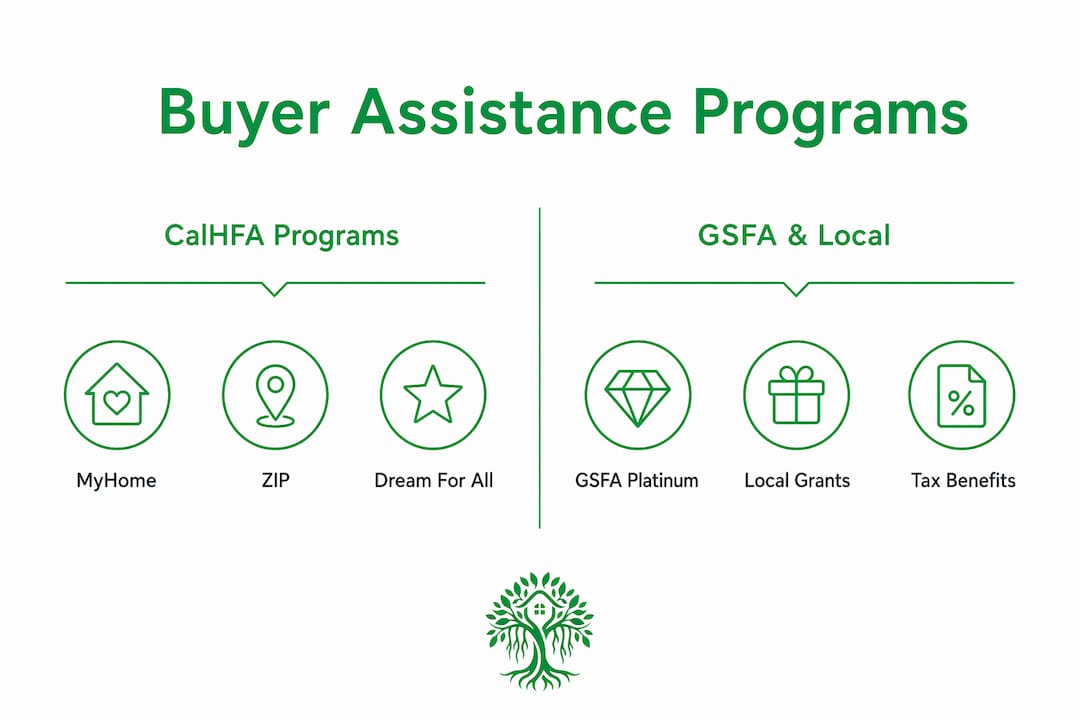
    CalHFA MyHome Assistance Program is the most widely used option. It provides a deferred junior loan of up to 3.5% of the purchase price for FHA loans or 3% for conventional loans. You make no monthly payments. Repayment is triggered only when you sell, refinance, or pay off your first mortgage. On a $700,000 home, that translates to up to $24,500 in upfront help with zero monthly obligation.

    Couple discussing CalHFA MyHome loan paperwork

    CalHFA ZIP (Zero Interest Program) covers closing costs only, not the down payment. It is a zero-interest, deferred-payment second loan. The real power of ZIP is in combination: MyHome and ZIP stacked together can deliver approximately 6.5% of the loan amount in total assistance, roughly $32,500 on a $500,000 home, with no monthly payments on either loan.

    Dream For All is CalHFA’s most aggressive program. It provides a shared appreciation second loan of up to 20% of the purchase price, capped at $150,000. There are no monthly payments, but when you sell or refinance, you repay the original loan amount plus a proportional share of your home’s appreciation. Access is lottery-based and requires first-generation buyer status, meaning neither of your parents owned a home during your childhood.

    GSFA Platinum Program operates differently from CalHFA products. It offers a non-repayable grant of up to 5.5% of the loan amount and is available to both first-time and repeat buyers who meet income limits. Because it is a true grant, there is no repayment obligation at all.

    Program Assistance type Amount Repayment
    CalHFA MyHome Deferred junior loan Up to 3.5% (FHA) / 3% (conventional) On sale or refinance
    CalHFA ZIP Zero-interest deferred loan Closing costs only On sale or refinance
    Dream For All Shared appreciation loan Up to 20%, max $150,000 Loan + appreciation share
    GSFA Platinum Non-repayable grant Up to 5.5% Never

    Infographic comparing California buyer assistance programs

    Pro Tip: Stack MyHome with ZIP from day one. Most buyers focus only on the down payment and forget that closing costs on a California home routinely run $8,000 to $15,000. ZIP covers that gap with zero interest.

    How to qualify and apply for California first-time buyer programs

    Qualifying for California housing programs for beginners requires meeting criteria across four categories: buyer history, income, credit, and education.

    1. First-time buyer definition. You qualify as a first-time buyer if you have not owned and occupied a primary residence in the past three years. This rule applies to all CalHFA programs. A prior homeowner who sold three or more years ago is eligible again.

    2. First-generation buyer definition. Dream For All adds a stricter layer. First-generation status requires that no parent or guardian owned residential property during your childhood. If either parent currently owns property anywhere, you are disqualified. Documentation proving this is mandatory, and misunderstanding this rule is the most common reason applicants are rejected.

    3. Credit score minimums. CalHFA programs generally require a minimum 660 credit score for most loan types, though FHA-backed options may allow scores as low as 640. GSFA Platinum has its own lender-specific thresholds. Check with your lender before assuming you qualify.

    4. Income limits. Limits vary by county and household size. In high-cost counties like Santa Clara and San Francisco, income limits are higher than in inland counties. CalHFA publishes updated county-by-county income tables annually.

    5. Homebuyer education. All CalHFA programs require completion of an approved homebuyer education course before closing. CalHFA accepts courses from HUD-approved counseling agencies and online providers like eHome America.

    6. Apply through an approved lender. CalHFA does not lend directly. You access every program through one of over 200 CalHFA-approved lenders statewide. Your lender submits the application on your behalf. Not every approved lender participates in every program, so confirm program availability before committing to a lender.

    7. Dream For All lottery timing. Dream For All opens a registration window, typically a few weeks, during which you must submit your application. Missing that window means waiting for the next cycle. Prepare your pre-approval and documentation well before the window opens.

    Pro Tip: Get your pre-approval letter from a CalHFA-approved lender at least 60 days before you plan to make an offer. For Dream For All, treat the lottery deadline like a tax filing deadline. Late preparation is the single biggest reason qualified buyers miss out.

    Comparing CalHFA MyHome and Dream For All: which fits your situation?

    These two programs serve different buyer profiles, and picking the wrong one is a costly mistake.

    MyHome is available year-round on a first-come, first-served basis. It works with both FHA and conventional loans. The assistance is a deferred loan with simple interest accruing, but no monthly payments. You repay the original amount plus accrued interest when you sell or refinance. MyHome and Dream For All differ significantly in both access method and long-term cost structure.

    Dream For All is lottery-based and available only to first-generation buyers. It works exclusively with conventional loans. The upside is substantial: up to $150,000 in assistance. The trade-off is that you share your home’s appreciation with the state when you exit. If your home appreciates 40% over seven years, you owe the state 20% of that gain on top of the original loan.

    • Choose MyHome if you do not meet first-generation requirements, need FHA financing, or want predictable repayment terms without an equity-sharing component.
    • Choose Dream For All if you qualify as first-generation, are buying a higher-priced home where 20% assistance makes a material difference, and plan to hold the property long enough that the appreciation share is worth the upfront benefit.
    • Stacking rules: MyHome can be combined with ZIP for closing cost coverage. Dream For All cannot be stacked with MyHome but can be paired with other programs depending on lender approval. Verify stacking eligibility with your lender before structuring your offer.

    Shared appreciation loans balance large upfront assistance against a reduction in future equity gains. Buyers who expect to sell within five to seven years in a rising market should calculate the total cost of appreciation sharing before committing.

    What local programs complement CalHFA assistance?

    State programs are not the only source of help. County and city programs often fill gaps that CalHFA leaves open, and local programs like Los Angeles’s LIPA and Berkeley’s local assistance can be layered with CalHFA or GSFA for expanded total aid.

    Key facts about local programs:

    • Los Angeles LIPA (Low Income Purchase Assistance) provides deferred loans for down payment and closing costs to low-income buyers purchasing in the City of Los Angeles. Income and property location restrictions apply.
    • Berkeley and other Bay Area cities offer first-generation and low-income buyer assistance programs with their own eligibility criteria, often targeting buyers below 80% of Area Median Income.
    • Stacking potential is real but complex. Combining a local program with CalHFA MyHome and ZIP can push total assistance above 10% of the purchase price on qualifying properties. That is a material reduction in cash needed at closing.
    • Geographic restrictions matter. Local programs apply only to properties within city or county boundaries. A buyer targeting a home in Pasadena cannot use a City of Los Angeles program.

    The most reliable way to identify local programs available to you is to ask a CalHFA-approved lender who specializes in first-time buyer transactions. These lenders track local program availability as part of their practice. You can also search the California Association of Realtors’ housing assistance database or contact your county housing authority directly.

    What tax benefits apply to California first-time buyers?

    Beyond loans and grants, two tax-based incentives reduce the ongoing cost of homeownership for qualifying buyers.

    CalHFA Mortgage Credit Certificate (MCC) converts a portion of your annual mortgage interest into a direct federal tax credit of up to $2,000 per year. This is not a deduction. It reduces your federal income tax bill dollar for dollar. The credit continues every year you live in the home and pay mortgage interest, making it one of the most durable financial benefits available to California first-time buyers.

    AB 1714 is a proposed California law that would create a 40% tax credit on repair costs up to $25,000 for sellers who close sales to buyers using first-time homebuyer assistance programs. The credit would apply to taxable years 2028 through 2032. This matters to buyers because sellers currently have little financial incentive to make repairs when selling to assisted buyers. AB 1714 changes that calculus and could make more properties accessible to program users.

    Key points on California first-time buyer tax benefits:

    • The MCC is issued at closing and filed annually with your federal tax return.
    • MCC income and purchase price limits apply and vary by county.
    • AB 1714 benefits the seller, but the downstream effect is a more cooperative transaction for the buyer using assistance programs.
    • Consult a tax professional to calculate your specific MCC benefit based on your loan amount and interest rate.

    Key takeaways

    California first-time buyer programs provide the most value when you combine a deferred loan like CalHFA MyHome with ZIP for closing costs, add the Mortgage Credit Certificate for ongoing tax savings, and verify local program availability before submitting your offer.

    Point Details
    MyHome is the most accessible program Available year-round through 200+ CalHFA-approved lenders with no monthly payments.
    Dream For All requires first-generation proof Parents must not have owned residential property during your childhood; documentation is mandatory.
    Stack MyHome and ZIP together Combined assistance reaches approximately 6.5% of loan amount with zero monthly obligation on either loan.
    MCC delivers annual tax savings Up to $2,000 per year in federal tax credits for the life of your mortgage.
    Local programs expand total assistance City and county programs like LIPA can layer with state programs to increase total buying power.

    What I’ve learned about navigating these programs

    By Anand

    After working with hundreds of California first-time buyers, the pattern I see most often is this: buyers spend weeks researching programs online and then lose their spot because they picked a lender who is not set up to process CalHFA applications efficiently. Verifying your lender’s specific program eligibility is not a formality. It is the first real decision you make, and the wrong choice costs you months.

    The Dream For All program is genuinely powerful, but the first-generation requirement trips up more applicants than any other rule. I have seen buyers who were certain they qualified get rejected because a parent owned a vacation property decades ago. Read the Dream For All guidelines carefully and gather your documentation before the lottery window opens, not during it.

    On shared appreciation loans: the math looks great at closing and can look painful at sale. If you buy a $600,000 home with $120,000 from Dream For All and sell five years later at $800,000, you owe the state $40,000 of that $200,000 gain on top of the original $120,000. That is still a net positive in most scenarios, but buyers who do not model this out in advance feel blindsided. Run the numbers with your lender before you commit.

    Finally, stacking multiple programs adds weeks to your closing timeline. Budget for it. Tell your agent. Set expectations with the seller. The paperwork coordination between a first mortgage, a CalHFA second, a ZIP loan, and a local program is real work, and it moves at government speed.

    — Anand

    How Ficustree helps you find and use the right programs

    Ficustree is an AI-powered home buying platform built specifically for California first-time buyers, and it does the program matching work for you.

    https://ficustree.ai

    When you start your search on Ficustree, the platform identifies which CalHFA programs, GSFA options, and local assistance programs you qualify for based on your income, location, and loan type. It connects you with CalHFA-approved lenders who actively participate in the programs you need, not just lenders who are technically approved. Ficustree also tracks application deadlines, including Dream For All lottery windows, so you never miss a registration period. If you want to understand your FHA loan options alongside your assistance program choices, the platform guides you through both in one place. Start your search on Ficustree and know exactly what you qualify for before you make your first offer.

    FAQ

    What counts as a first-time buyer in California?

    You qualify as a first-time buyer if you have not owned and occupied a primary residence in the past three years. Prior homeowners who sold more than three years ago are eligible for CalHFA programs.

    Can I combine multiple California assistance programs?

    Yes. CalHFA MyHome and ZIP can be stacked for combined assistance totaling approximately 6.5% of the loan amount. Local programs like LIPA can layer on top, but verify stacking rules with your lender before structuring your financing.

    What is the Dream For All first-generation requirement?

    Dream For All requires that neither of your parents owned residential property during your childhood. First-generation status must be documented, and applicants whose parents currently own property are disqualified.

    What is the CalHFA Mortgage Credit Certificate?

    The Mortgage Credit Certificate converts up to 20% of your annual mortgage interest into a federal tax credit of up to $2,000 per year. It reduces your tax bill dollar for dollar every year you live in the home.

    How do I apply for CalHFA programs?

    CalHFA does not accept direct applications. You apply through one of over 200 CalHFA-approved lenders statewide, and your lender submits the program paperwork on your behalf. Confirm that your specific lender participates in the program you want before starting the process.

  • The Role of a Title Company in Real Estate Explained

    The Role of a Title Company in Real Estate Explained

    A title company in real estate is the neutral third party responsible for verifying legal ownership, managing closing funds, and guaranteeing that property transfers to you free of hidden claims. Every residential and commercial transaction depends on this function. Whether you are buying your first home or adding to an investment portfolio, understanding the role of title company real estate professionals play protects your money and your ownership rights from day one.


    What does a title company do in a real estate transaction?

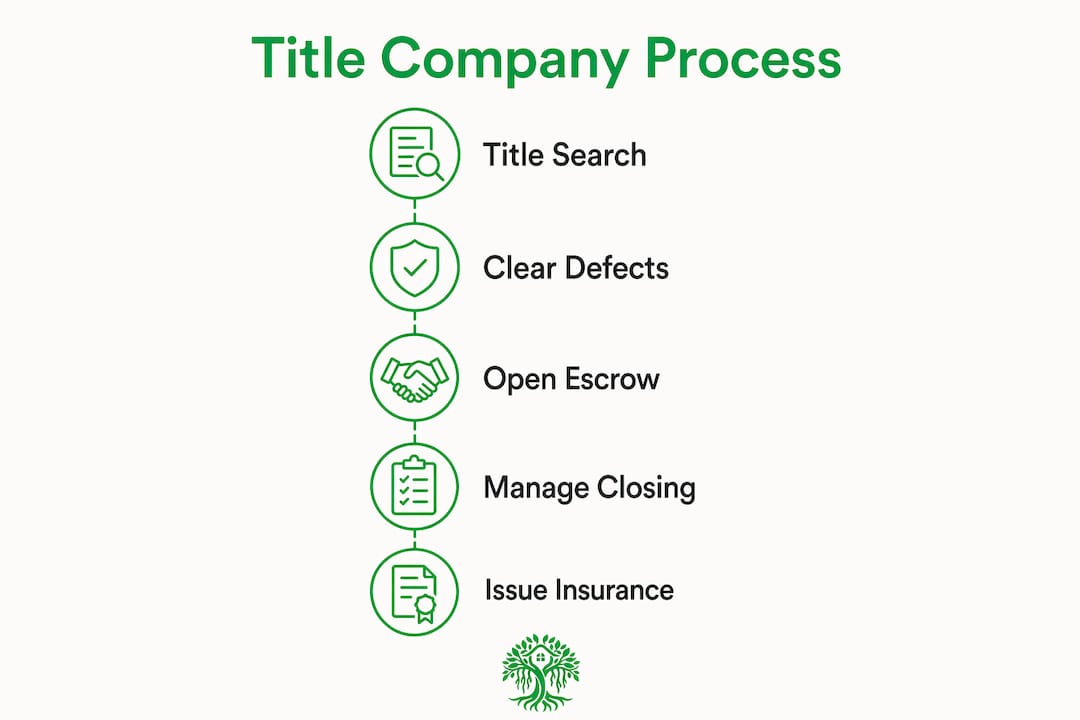
    A title company serves as the operational backbone of any property sale, handling four core functions: title research, escrow management, closing coordination, and title insurance issuance. Title company work is a comprehensive risk-management process that runs before, during, and after closing. Most buyers only see the company at the closing table, but the real work starts weeks earlier.

    Two men discussing title company processes in conference room

    The company’s first job is confirming that the seller actually owns the property and has the legal right to sell it. This sounds straightforward, but property records stretch back decades, sometimes centuries, and errors accumulate. Liens from unpaid contractors, judgments from old lawsuits, and improperly recorded deeds can all cloud ownership. The title company finds these problems before they become your problems.

    Once ownership is verified, the company opens an escrow account, collects funds from the buyer and lender, and holds everything in trust until every closing condition is satisfied. At closing, it prepares and reviews all documents, coordinates signatures, and disburses funds to every party. After closing, it records the new deed and mortgage with the county and delivers your title insurance policy.


    What does the title search involve and why is it critical?

    The title search is the foundation of every clean real estate closing. A title examiner traces the chain of title, reviewing public records to confirm an unbroken line of ownership from the original grant to the current seller. Title defects typically appear during this detailed search, not at the offer stage, which is why starting early matters.

    Here is what the title search uncovers:

    • Liens and judgments. Unpaid contractor bills, IRS tax liens, and court judgments attach to property and must be paid off before or at closing.
    • Easements and encroachments. A neighbor’s driveway crossing your lot or a utility easement can restrict how you use the land.
    • Ownership gaps. A missing heir, a forged signature on a past deed, or an estate that was never properly settled can break the chain of title.
    • Unpaid property taxes. Back taxes follow the property, not the seller. You could inherit a tax bill if the search misses it.
    • Mis-recorded documents. A deed filed in the wrong county or with a misspelled name can create legal ambiguity that takes weeks to resolve.

    Each defect found must be cleared before closing. The title company contacts sellers, lenders, and attorneys to resolve exceptions. Missing releases get obtained. Liens get paid. Corrective deeds get filed. Understanding why title search matters before you close can save you from inheriting someone else’s financial dispute.

    Pro Tip: Submit your vesting information and contract terms to the title company as early as possible. Seasoned buyers who provide accurate details upfront give the examiner time to clear exceptions before closing, avoiding last-minute delays that can push your move-in date back by days or weeks.

    Infographic illustrating title company process steps


    How do title companies manage escrow and facilitate the closing process?

    Escrow management is where the title company’s role shifts from researcher to financial custodian. Title companies serve as escrow agents holding funds securely and managing disbursement only after all closing conditions are met. One critical distinction: this escrow account is separate from the mortgage servicer escrow that handles your future tax and insurance payments. The title company escrow strictly holds closing and sale funds until the transaction is complete.

    The closing coordination process follows a clear sequence:

    1. Open escrow. The title company receives the signed purchase agreement and opens an escrow account. Earnest money deposits go in first.
    2. Collect lender instructions. The lender sends a closing package specifying exactly how funds must be disbursed and what documents must be signed.
    3. Prepare the Closing Disclosure. The title company prepares and reconciles settlement statements, ensuring title charges and insurance fees match lender requirements. This document lists every dollar flowing in and out of the transaction.
    4. Conduct the closing. All parties sign the deed, mortgage, and loan documents. A notary witnesses signatures. The title company confirms every document is complete and correctly executed.
    5. Disburse funds. Once the lender releases funds, the title company pays the seller, satisfies existing mortgages, pays real estate agents their commissions, and covers all closing costs and fees.
    6. Record the deed. The company files the new deed and mortgage with the county recorder, officially transferring ownership.

    Errors in fund disbursement can cause serious legal complications for all parties. A single transposed account number or a missed lien payoff can unwind an entire closing. This is why reviewing your Closing Disclosure carefully before the closing date is non-negotiable.

    Pro Tip: Review your settlement statement at least 24 hours before closing. Compare every line item against your Loan Estimate. If a title fee increased or a new charge appeared, ask the title company for a written explanation before you sign anything.


    What is title insurance and how does it protect buyers and lenders?

    Title insurance protects buyers and lenders from financial loss due to undiscovered title defects that surface after the sale closes. Unlike homeowner’s insurance, which covers future events, title insurance covers past events that were not discovered during the title search. You pay a one-time premium at closing, and the coverage lasts as long as you own the property.

    There are two distinct policies:

    • Owner’s title insurance. This protects your financial interest in the property. If a long-lost heir files a claim against your ownership two years after closing, your policy covers legal defense costs and any financial loss up to the policy amount. It is technically optional in most states but strongly recommended.
    • Lender’s title insurance. This protects the mortgage lender’s interest in the property. Nearly every lender requires it as a condition of the loan. The buyer pays for it, but it only protects the lender.

    Before issuing either policy, the title company issues a title commitment document. This document outlines what the policy will cover, what it excludes, and what conditions must be met before coverage takes effect. The title commitment sets coverage expectations and requires good communication between all parties to keep the transaction on schedule.

    Common title defects covered by insurance include forged deeds, undisclosed heirs, errors in public records, and boundary disputes. Common exclusions include defects you created yourself, zoning violations you were aware of, and environmental hazards. After closing, title companies send the final policies to buyers and lenders. Store yours in a safe place. You may need it years from now.


    Why is recording the deed essential and what role does the title company play?

    Recording the deed is the true legal milestone of ownership transfer, not the moment you sign at the closing table. Until the deed is recorded with the county recorder’s office, the transfer is not public knowledge, which means a dishonest seller could theoretically sell the same property to someone else. The title company coordinates closings so funds disburse only when recording can proceed smoothly.

    The title company’s recording responsibilities include:

    • Filing the deed. The company submits the executed deed to the county recorder, paying the required recording fees.
    • Filing the mortgage or deed of trust. The lender’s security interest must also be recorded to be legally enforceable.
    • Confirming receipt. The company tracks the filing and confirms the county has stamped and indexed the documents correctly.
    • Notifying all parties. Once recording is confirmed, the title company notifies the buyer, seller, lender, and agents that the transaction is officially complete.

    State-specific practices add complexity here. In some states, attorneys participate in closing or document preparation, while title companies still handle most title and escrow duties. In California, for example, escrow companies and title companies often operate as separate entities, though many buyers work with a combined service. Confirm local customs before closing so you understand who is responsible for what and what fees apply. The escrow process for first-time buyers in California has specific nuances worth understanding before you reach the closing table.


    Key takeaways

    A title company’s role in real estate spans the entire transaction, from ownership verification and escrow management to closing facilitation, title insurance issuance, and deed recording.

    Point Details
    Title search protects ownership The search uncovers liens, gaps, and defects before they transfer to the buyer.
    Escrow keeps funds secure The title company holds all closing funds in trust and disburses only when conditions are met.
    Two types of title insurance Owner’s policies protect buyers; lender’s policies protect the mortgage lender. Both are issued at closing.
    Recording finalizes the transfer The deed and mortgage must be filed with the county to make ownership legally public and enforceable.
    State rules vary Some states require attorneys at closing; confirm local practices to avoid unexpected fees or delays.

    What I’ve learned about title companies that most buyers miss

    Most buyers treat the title company as a formality, a box to check on the way to getting keys. That mindset costs people time and money. The title company is the only party in a real estate transaction with no financial stake in whether the deal closes. Your agent earns a commission when it closes. Your lender earns origination fees when it closes. The title company gets paid either way, which makes it the most objective set of eyes in the room.

    I have seen transactions fall apart two days before closing because a lien from a 15-year-old home equity line was never formally released. The seller thought it was paid off. The bank thought it was paid off. The title search proved otherwise. A diligent title company caught it, tracked down the release, and saved the deal. That is not paperwork. That is risk management.

    The single most underrated factor when choosing a title company is lender relationships. Experienced title companies with strong lender relationships facilitate smoother closings by reducing delays and errors. When a title officer and a loan processor have worked together on 200 closings, they communicate faster, catch discrepancies earlier, and solve problems before they escalate. Ask your agent which title companies they have seen perform well under pressure, not just which ones offer the lowest fees.

    One more thing: do not ignore the title commitment document when it arrives. Most buyers file it away unread. That document tells you exactly what your insurance will and will not cover. Reading it takes 20 minutes and can prevent a very expensive surprise years down the road.

    — Anand


    How Ficustree helps you navigate the closing process with confidence

    Understanding every step of a real estate transaction is exactly what Ficustree was built for. The platform guides first-time buyers from property search through closing on a single AI-powered platform, so you always know what is coming next and why it matters.

    https://ficustree.ai

    Ficustree’s tools give you hyper-personalized guidance on transaction milestones, including how to work with your title company, what to review before closing, and how to protect your ownership rights after the deal is done. You do not have to figure this out alone. Start your home search with Ficustree and get the support you need from search to settlement.


    FAQ

    What is the main role of a title company in real estate?

    A title company verifies legal ownership, manages escrow funds, facilitates closing, issues title insurance, and records the deed with the county. Its core function is ensuring the buyer receives clean, unencumbered ownership.

    Is title insurance required when buying a home?

    Lender’s title insurance is required by nearly all mortgage lenders. Owner’s title insurance is technically optional in most states but strongly recommended, since it protects your financial interest against past defects that surface after closing.

    How long does a title search take?

    A title search typically takes a few days to two weeks, depending on the property’s history and local record-keeping systems. Complex ownership histories or unresolved liens can extend the timeline.

    What happens if a title defect is found after closing?

    Your owner’s title insurance policy covers legal defense costs and financial losses up to the policy amount if a covered defect surfaces after closing. This is why storing your policy documents safely is so important.

    Can you choose your own title company?

    Yes. In most states, buyers have the right to choose their title company. Comparing experience, lender relationships, and fee structures before selecting one can meaningfully affect how smoothly your closing goes.

  • Sustainable Home Features California Buyers Need in 2026

    Sustainable Home Features California Buyers Need in 2026

    Sustainable home features are the single most consequential category of specifications California buyers evaluate today, directly affecting energy costs, code compliance, and long-term resale value. The industry term for this category is “high-performance home design,” and it covers everything from photovoltaic solar systems to low-VOC interior finishes. California’s Title 24 building code, Berkeley’s Building Emissions Saving Ordinance (BESO), and the state’s aggressive electrification push have made green home features less optional and more mandatory with each passing year. If you are buying in California right now, understanding these features before you make an offer is the difference between a smooth transaction and a costly surprise in escrow.

    1. Photovoltaic solar systems sized to Title 24

    Solar power is the most visible and financially significant sustainable home feature for California buyers. The 2025 Title 24 code requires photovoltaic systems sized to offset annual electricity use on most new single-family homes, with systems typically ranging from 2.5 to 5 kW depending on home size and climate zone. That sizing requirement means a home in San Diego’s climate zone 7 will carry a different PV spec than one in Sacramento’s zone 12.

    For buyers, the practical implication is straightforward: a compliant new home already includes solar, and that system should be sized correctly per the code. When evaluating resale homes, verify whether the existing system meets current output requirements or whether an upgrade will fall to you after closing. Owned systems add more value than leased ones, and transferring a solar lease can complicate financing.

    Technician installing photovoltaic solar panels on roof

    2. Heat pump space and water heating

    Heat pumps are now the baseline HVAC specification for new California construction, replacing gas furnaces as the default. Builder upgrade costs range from $2,500 for a standard heat pump package to $14,000 for a premium variable-speed system with zoning and heat recovery ventilation. The gap between those tiers is significant, and what you get at the builder base level is not what most buyers assume.

    A mid-tier upgrade typically adds a two-stage heat pump and a smart thermostat. A premium package adds variable-speed operation, HVAC zoning, and an HRV ventilation system. For buyers purchasing new construction, negotiating these upgrades at contract signing is far cheaper than retrofitting after move-in. Installing a heat pump water heater during construction saves $1,200 to $2,500 compared to a post-close retrofit, with additional incentives available through programs like the federal Inflation Reduction Act tax credits.

    3. Energy-efficient windows and building envelope

    Windows are a primary driver of heating and cooling load in California homes, and Title 24 specifies maximum U-factor and Solar Heat Gain Coefficient (SHGC) values by climate zone. Low U-factor windows reduce heat transfer; low SHGC values limit solar heat gain in warmer inland zones. A home in Palm Springs needs a very different window spec than one in San Francisco.

    Beyond windows, Quality Insulation Installation (QII) requires HERS-rater verification of properly installed insulation in walls and ceilings. QII certification means a third-party inspector confirmed the insulation was installed without gaps or compression, which directly improves thermal performance. When reviewing a new construction home, ask specifically whether QII was completed and documented.

    4. Smart thermostats and HVAC controls

    Smart thermostats are a standard feature in California’s high-performance home category, not a luxury upgrade. Devices like the ecobee and Honeywell T10 adjust heating and cooling based on occupancy patterns and user preferences, reducing energy consumption without sacrificing comfort. In California’s variable climate zones, that adaptive control matters more than in states with more uniform weather.

    HVAC zoning takes this further by allowing different temperature settings in different rooms or floors. A two-story home in the Central Valley, where summer temperatures regularly exceed 100°F, benefits enormously from zoning that keeps the upstairs cooler without overcooling the ground floor. These controls also integrate with utility time-of-use rate programs, automatically shifting energy consumption away from peak pricing windows.

    Pro Tip: Ask your builder or listing agent for the HERS (Home Energy Rating System) score on any home you are seriously considering. A lower HERS score means better energy performance. New California homes typically score between 0 and 50; anything below 30 represents genuinely high performance.

    5. Indoor air quality systems and low-VOC materials

    Green homes prioritize indoor air quality through low-VOC materials, heat-recovery ventilation, and air filtration systems, reducing pollutants and health risks that align directly with buyer wellness priorities. This is one of the most underappreciated categories in eco-friendly homes California buyers evaluate, because the effects are invisible until they are not.

    Low-VOC paints, adhesives, and flooring materials reduce off-gassing of volatile organic compounds, which are linked to respiratory irritation and long-term health effects. MERV 13 filters in the HVAC system capture fine particulate matter, including wildfire smoke, which is a genuine seasonal concern across most of California. Energy Recovery Ventilators (ERVs) bring in fresh outside air while recovering the energy from exhaust air, maintaining air quality without spiking the utility bill.

    6. Water-saving fixtures and drought-tolerant landscaping

    Water efficiency is a defining characteristic of California eco homes, given the state’s persistent drought conditions. Low-flow faucets, drought-tolerant landscaping, and greywater recycling are standard features in well-designed California properties, reducing both water bills and environmental impact. A home with WaterSense-labeled fixtures and a native plant landscape can cut outdoor water use by 50% or more compared to a conventional lawn setup.

    Greywater systems, which redirect water from sinks and showers to irrigation, are legal in California with proper permitting and are increasingly common in new construction. Dual-flush toilets reduce indoor water consumption without any change in daily habits. For buyers in Southern California especially, these features carry real financial weight as tiered water pricing makes high consumption increasingly expensive.

    7. Green certifications as buyer verification tools

    LEED (Leadership in Energy and Environmental Design) and Passive House certifications give buyers a third-party verified signal that a home meets specific sustainability standards. LEED certification covers energy, water, materials, and indoor air quality across a point-based system. Passive House focuses specifically on airtightness, insulation, and mechanical ventilation to achieve ultra-low energy use.

    Neither certification is required by California law, but both add measurable resale value and provide documentation that simplifies future transactions. High-performing homes cost 5 to 10% more upfront but deliver lower total cost of ownership through reduced monthly energy expenses. That premium shrinks further when you factor in available federal tax credits and California utility rebates.

    8. How California’s 2026 building codes shape your purchase

    The 2025 Title 24 code, effective January 1, 2026, sets the floor for what new California homes must include. PV systems, heat pump heating, and QII-verified insulation are all baseline requirements, not optional upgrades. For buyers of new construction, this means the home you are buying already meets these standards. For resale buyers, the picture is more complicated.

    Berkeley’s BESO policy is the most aggressive local mandate in the country. Berkeley requires homes sold to meet a minimum of 6 credits through emissions-reducing upgrades, including heat pump water heaters, solar panels, and wall insulation. If a seller has not completed those upgrades, the buyer and seller can agree to deposit funds in escrow for deferred compliance, with the buyer then having 2 years to complete the required work. This policy directly affects your negotiating position and your post-close budget.

    Verifying BESO compliance status before making an offer in Berkeley is not optional. It is the kind of detail that first-time buyers in California frequently overlook, and it can add tens of thousands of dollars in post-close obligations if missed. Other cities are watching Berkeley’s model closely, and similar ordinances are likely to spread across the Bay Area.

    Pro Tip: When buying in any California city, request the property’s energy disclosure documents and any local green compliance records before your inspection period ends. This gives you time to negotiate credits or repairs rather than discovering obligations after closing.

    9. Sustainable materials and construction practices

    The materials inside a California home matter as much as the mechanical systems. Recycled content flooring, locally sourced lumber, and formaldehyde-free cabinetry reduce both environmental impact and indoor chemical exposure. Builders using these materials often pursue LEED points for materials and resources, which creates a documented record you can reference during resale.

    Here is a quick comparison of common sustainable material choices:

    Feature Standard Option Sustainable Option
    Flooring Vinyl or carpet Bamboo, cork, or recycled-content tile
    Cabinetry Particleboard with formaldehyde binders Formaldehyde-free plywood or solid wood
    Insulation Fiberglass batts Recycled denim or cellulose
    Paint Standard latex Zero-VOC or low-VOC formulations
    Landscaping Conventional turf Native plants and drip irrigation

    Choosing sustainable materials during new construction is significantly cheaper than replacing them later. If you are buying new construction and the builder offers a materials upgrade package, evaluate it against the cost of retrofitting after move-in. The construction financing landscape for sustainable new builds in California has also expanded, with lenders increasingly offering products that account for energy savings in qualifying calculations.

    Key takeaways

    California buyers who prioritize solar, heat pumps, smart controls, and water efficiency from the start pay less over time and face fewer compliance surprises at resale.

    Point Details
    Solar is now baseline Title 24 requires PV systems on most new California homes; verify sizing and ownership status on resale properties.
    Heat pumps replaced gas New construction uses heat pump heating as standard; negotiate upgrades at contract signing to save $1,200 or more.
    Berkeley BESO affects escrow Sellers must meet 6 credits or fund escrow for deferred compliance; verify status before making an offer.
    Certifications add resale value LEED and Passive House certifications document performance and simplify future transactions.
    Materials and water matter Low-VOC finishes and WaterSense fixtures reduce health risks and ongoing utility costs.

    Why I tell buyers to ask about HVAC before anything else

    When buyers ask me what to prioritize when evaluating a California home, most expect me to say solar. I say HVAC. Here is why.

    Solar is visible, marketable, and increasingly standardized by code. The HVAC system is where the real variation lives. I have seen new construction homes in San Diego where the builder base package included a single-stage heat pump with no zoning and a basic thermostat, while the premium package in the same development included variable-speed operation, three zones, an ERV, and a MERV 13 filtration setup. The difference in monthly comfort and utility cost between those two homes is substantial, and most buyers never ask the question.

    The shift to heat pump heating as the California baseline has cascaded through builder specs and rebate programs in ways that make HVAC questions more critical than ever. A buyer who understands the difference between a two-stage and a variable-speed heat pump is in a much stronger negotiating position than one who just checks the “has heat pump” box.

    I also push buyers to take indoor air quality seriously as a sustainability issue, not just an energy one. California’s wildfire seasons have made MERV 13 filtration and ERV systems genuinely important for health, not just efficiency metrics. A home with a premium ventilation setup is meaningfully different from one without it, and that difference does not show up in a standard listing description.

    Finally, on timing: if you are buying new construction, the window to negotiate sustainable upgrades is at contract signing, not after framing. Once the walls are up, the cost of adding insulation, upgrading HVAC, or switching to a heat pump water heater increases dramatically. The construction phase savings on electrification upgrades alone can justify a careful review of every builder option sheet before you sign.

    — Anand

    Find your next sustainable home with Ficustree

    Searching for eco-friendly homes in California means sorting through listings, decoding energy disclosures, and tracking local code requirements across dozens of cities. Ficustree’s AI-powered platform does that work for you.

    https://ficustree.ai

    With Ficustree, you can search California homes filtered by energy-efficient features, get guidance on Title 24 compliance status, and access hyper-personalized recommendations that match your sustainability priorities and budget. The platform covers all 467 California cities, so whether you are buying in Berkeley with its BESO requirements or in San Diego with its heat pump mandates, you get relevant, localized insight at every step. Learn how Ficustree works and start your search today.

    FAQ

    What sustainable features does California’s Title 24 require in 2026?

    The 2025 Title 24 code, effective January 1, 2026, requires photovoltaic solar systems, heat pump heating, and HERS-verified Quality Insulation Installation on most new single-family homes. PV systems typically range from 2.5 to 5 kW depending on home size and climate zone.

    What is Berkeley’s BESO and how does it affect home buyers?

    Berkeley’s Building Emissions Saving Ordinance requires homes sold to earn a minimum of 6 credits through emissions-reducing upgrades like heat pump water heaters and solar panels. If upgrades are not complete at sale, funds are held in escrow and the buyer has 2 years to comply.

    Do sustainable home features increase resale value in California?

    High-performing homes cost 5 to 10% more upfront but deliver lower total cost of ownership through reduced energy bills, and LEED or Passive House certifications provide documented performance records that support stronger resale pricing.

    When is the best time to add sustainable upgrades to a new construction home?

    The best time is at contract signing, before construction begins. Installing a heat pump water heater during construction saves $1,200 to $2,500 compared to a post-close retrofit, and HVAC upgrades are significantly cheaper before walls are framed.

    What smart home technologies qualify as sustainable features in California?

    Smart thermostats like the ecobee and Honeywell T10, HVAC zoning systems, ERV ventilation, and MERV 13 air filtration all qualify as sustainable living solutions that reduce energy use and improve indoor air quality in California homes.

  • Real Estate API Integration for Home Search in 2026

    Real Estate API Integration for Home Search in 2026

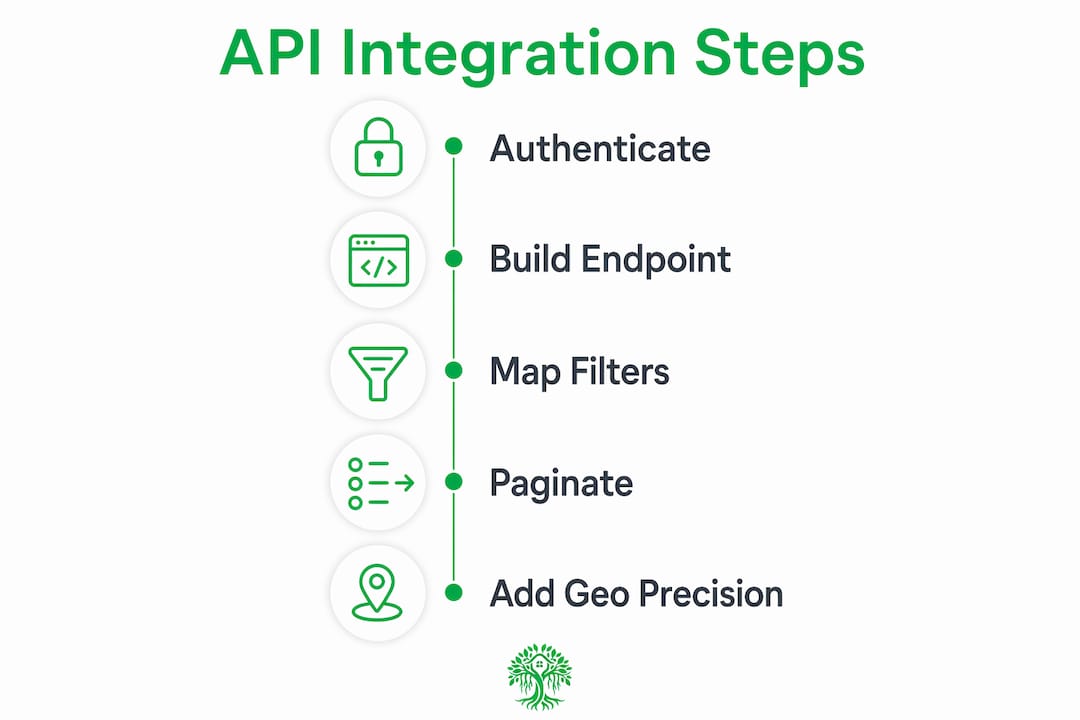
    Real estate API integration for home search is the process of connecting a property platform to MLS and third-party data sources through standardized RESTful APIs, with authentication, licensing compliance, and data management as the true engineering challenges. The RESO Web API is the recognized industry standard for this work, built on OData over REST with OAuth2 authorization. In 2026, developers also have access to aggregator platforms like Trestle and Bridge Interactive, plus third-party wrappers like Zillapi for teams without direct MLS affiliation. What most teams underestimate is that MLS licensing and entitlement rules create far more complexity than the HTTP calls themselves. This guide covers every layer of that complexity, from source selection to performance architecture.

    The property search API ecosystem in 2026 splits into three distinct tiers, and choosing the wrong one early costs months of rework.

    Tier 1: Direct RESO Web API access. The RESO Web API is the industry-standard protocol, using OData-style REST endpoints with OAuth2 authorization. Direct MLS integrations give you maximum control over data freshness and field access, but they require individual agreements with each MLS board, separate entitlement reviews, and ongoing compliance maintenance. For teams covering a single metro market, this is often the right call.

    Developer hands typing RESO API code close-up

    Tier 2: Aggregator platforms. Services like Trestle and Bridge Interactive normalize data across multiple MLS boards and handle much of the licensing complexity on your behalf. Aggregators simplify multi-MLS coverage but introduce dependency risks and potential service limitations you do not control. Bridge Interactive specifically requires MLS affiliation and approval before granting access, which rules it out for many independent teams.

    Tier 3: Third-party REST wrappers. Zillow’s public home search API was retired by 2021, so developers who need Zillow-sourced data now rely on third-party wrappers like Zillapi, which provide REST endpoints accessible without MLS affiliation. These are faster to integrate but carry data freshness and terms-of-service considerations you must evaluate before production use.

    Authentication across all three tiers follows a consistent pattern: OAuth2 for RESO-compliant sources, API key or token-based access for third-party wrappers. Before writing a single query, confirm your entitlement scope in writing. Entitlement defines which fields, which boards, and which media assets you are licensed to display, and that scope must be enforced at every layer of your stack.

    • Confirm OAuth2 scopes match your licensed data fields before development begins
    • Store credentials in environment variables or a secrets manager, never in source code
    • Request sandbox or staging credentials from your MLS or aggregator for safe testing
    • Document entitlement boundaries per board in a shared internal reference

    Pro Tip: When evaluating aggregators, ask specifically about their SLA for field additions when an MLS board updates its data dictionary. Some aggregators lag by weeks, which breaks your field mapping silently.

    How to structure API calls and implement effective search queries

    A well-structured property search API call has four components: authentication header, search endpoint, filter parameters, and pagination controls. Getting all four right from the start prevents the most common performance and accuracy failures.

    Infographic showing key API integration steps

    Step 1: Authenticate and obtain a token. Send a POST request to the OAuth2 token endpoint with your client credentials. Store the returned bearer token and refresh it before expiry. Most RESO-compliant sources issue tokens with a 3,600-second TTL.

    Step 2: Build your search endpoint URL. A standard API call uses a base URL plus a resource path such as "/Property, followed by OData query parameters. For RESO sources, this looks like: GET /odata/Property?$filter=City eq ‘Austin’ and ListPrice le 750000 and BedsTotal ge 3&$top=25&$skip=0`.

    Step 3: Map UI filters to query parameters. Every filter control in your search UI corresponds to one or more API parameters. The table below shows the most common mappings.

    UI Filter RESO OData Parameter Notes
    Price range ListPrice ge X and ListPrice le Y Use integer values, no currency symbols
    Bedrooms BedsTotal ge N Minimum value filter is most common
    Bathrooms BathroomsTotalInteger ge N Confirm field name per MLS board
    Property type PropertyType eq 'Residential' Enum values vary by board
    Location Bounding box coordinates Preferred over city/ZIP strings

    Step 4: Implement pagination correctly. Cursor-based pagination with opaque tokens is the right choice for large real estate datasets. Offset pagination times out on deep pages and produces inconsistent results when listings are added or removed mid-session. Cursor pagination gives you stable, sequential retrieval regardless of dataset churn.

    Step 5: Add geo precision. Geographic bounding boxes produce more accurate location constraints than city name or ZIP code strings. Pass latitude and longitude bounds as filter parameters to tighten results and improve ranking relevance.

    Pro Tip: Throttle your outbound requests to stay below the rate limit of your API source. Build exponential backoff into your retry logic from day one. A 429 response at 2 AM on a Saturday should not require a manual fix.

    What are best practices for data handling, compliance, and field mapping?

    The hardest part of any home search API integration is not fetching data. It is managing what happens to that data after it arrives.

    Field variance is the first problem. MLS boards use the RESO Data Dictionary as a shared standard, but local custom fields, non-standard enumerations, and board-specific naming conventions mean the same concept appears under different field names across boards. A field called GarageSpaces in one board may be ParkingTotal in another. Your integration breaks silently if you hardcode field names.

    The solution is a configurable field mapping layer stored as database configuration rather than application code. Storing field mappings as database configuration with transformation functions lets you accommodate new or changed MLS fields without a code deploy. When a board updates its data dictionary, you update a config record, not a codebase.

    Compliance is not optional. Media and licensing permissions must be treated as first-class data, not an afterthought. Permission metadata must travel with listing records through every index, cache, and render pipeline. Displaying a photo you are not licensed to show is a compliance violation with legal consequences.

    The table below compares two approaches to compliance enforcement.

    Approach When enforced Risk level
    Render-time permission check At display, every request Low: always current
    Index-time permission filter At ingestion, cached Medium: stale if permissions change
    No enforcement layer Never High: compliance and legal exposure

    Real-time updates require webhooks or EntityEvent resources. Polling for listing changes every few minutes wastes API quota and still misses rapid status changes like a listing going under contract. RESO-compliant sources expose EntityEvent resources that let you subscribe to change notifications. Pair this with a lightweight ingestion worker that processes events and updates your local index within seconds of a change at the source.

    • Validate every inbound record against your expected schema before writing to your database
    • Log field-level validation failures by board to identify data quality patterns over time
    • Carry entitlement metadata as a field on every indexed listing record
    • Enforce media permissions at render time, not just at ingestion

    How can developers optimize home search API performance and scalability?

    A home search feature that takes four seconds to return results loses users. Performance optimization in real estate API solutions is an architecture decision, not a tuning exercise.

    Caching is the highest-leverage optimization available. Caching frequently accessed property details can reduce database load by 50% to 80%, with cache hit rates reaching 70% to 90% under normal traffic. That reduction directly translates to faster response times and lower infrastructure cost. The key is using differentiated TTL strategies: static fields like year built, lot size, and school district can cache for hours or days. Dynamic fields like list price, days on market, and listing status need TTLs measured in minutes.

    Index only what the search results page needs. Indexing only essential data fields for listing cards and deferring full detail hydration until a user opens a specific listing reduces both latency and API cost. Your search results index should contain address, price, beds, baths, primary photo URL, and listing status. Everything else loads on demand.

    Scale horizontally with container orchestration. Microservice architecture with horizontal pod autoscaling handles the unpredictable load spikes that real estate search generates during peak hours and market events. Kubernetes lets you scale your search service independently of your ingestion pipeline and your user-facing API gateway.

    Additional architecture patterns worth implementing:

    • Read replicas on your listing database to distribute query load without affecting write performance
    • A dedicated search index (Elasticsearch or OpenSearch) for full-text and geo queries, separate from your primary database
    • Rate limiting at the API gateway layer to protect backend services from traffic spikes
    • Circuit breakers on outbound calls to MLS sources so a slow upstream does not cascade into a full outage

    Pro Tip: Build a synthetic monitoring job that runs a representative search query every five minutes and alerts on response time degradation. You will catch performance regressions before your users do.

    What are common mistakes to avoid during real estate API integration?

    Most integration failures are predictable. The teams that avoid them have seen them before.

    “The API call is the easy part. The hard part is everything that happens to the data before it reaches the user.”

    • Deep offset pagination. Requesting page 500 of a result set with offset pagination causes query timeouts and returns inconsistent data. Switch to cursor-based pagination before you hit production scale.
    • Hardcoded field names. A field name change at one MLS board silently breaks your integration for that board’s listings. Use the configurable mapping layer described in the compliance section.
    • Missing retry logic. Real estate data APIs return transient errors. Without exponential backoff and retry logic, your ingestion pipeline stalls on the first 503 response.
    • Ignoring data freshness metrics. Track the lag between a listing change at the source and its appearance in your index. If that lag exceeds your SLA, your users see stale data without knowing it.
    • Treating compliance as a launch checklist item. Entitlement rules change. MLS boards update their data dictionaries. Compliance must be a continuous process with automated validation, not a one-time review.

    Key takeaways

    Effective real estate API integration for home search requires selecting the right data source tier, enforcing compliance at every layer, and building performance architecture before you need it.

    Point Details
    Choose your API tier deliberately Direct RESO, aggregators like Trestle, and wrappers like Zillapi each carry different control and compliance tradeoffs.
    Store field mappings as config Database-driven mapping lets you adapt to MLS field changes without code deploys or downtime.
    Use cursor pagination at scale Cursor-based pagination prevents timeouts and data inconsistency on large listing datasets.
    Cache with differentiated TTLs Static fields cache for hours; dynamic fields like price and status need short TTLs to stay accurate.
    Enforce media permissions at render Carrying entitlement metadata through your pipeline and checking it at display prevents compliance violations.

    Why ecosystem complexity is the real integration challenge

    I have worked through enough MLS integrations to say this clearly: the OAuth2 handshake takes an afternoon. The field mapping, entitlement logic, and compliance layer take months, and they never stop needing attention.

    The teams I have seen struggle most are the ones who treated licensing as a legal formality rather than a technical requirement. Entitlement metadata has to live in your data model from day one. If you bolt it on later, you will rebuild half your pipeline.

    My honest recommendation on the direct versus aggregator question: start with an aggregator like Trestle if you need multi-MLS coverage quickly. Accept the dependency. Then, as your volume and compliance requirements grow, evaluate which boards justify a direct integration. The AI-driven home search use case is also changing this calculus. When AI agents mediate queries rather than users typing filters, MCP server architecture becomes relevant because it isolates AI requests from direct MLS API calls, which is both a security and compliance win.

    Caching and deferred hydration are not premature optimization in this domain. Real estate search users abandon slow results pages fast. Build the caching layer before you launch, not after your first traffic spike.

    The teams that succeed treat their field mapping configuration and compliance automation as living systems with owners, not documentation artifacts. That mindset is the difference between an integration that works at launch and one that still works two years later.

    — Anand

    Build smarter home search with Ficustree

    https://ficustree.ai

    Ficustree is an AI-powered real estate platform built on the same API integration architecture this article describes, with real-time MLS data, compliance enforced at every layer, and a search experience designed for first-time buyers. If you are a developer or product manager evaluating what a production-grade property search API solution looks like in practice, the Ficustree platform is worth a close look. The platform handles entitlement, field mapping, and data freshness so your team can focus on the user experience. You can also explore the buyer search experience directly to see how these integration principles translate into a fast, accurate, and personalized home search tool.

    FAQ

    What is the RESO Web API?

    The RESO Web API is the industry-standard protocol for accessing MLS listing data, using OData-style REST endpoints with OAuth2 authorization. It is the foundation for most production-grade home search API integrations in 2026.

    Is the Zillow API still available for developers?

    Zillow’s public home search API was retired by 2021. Developers now use Bridge Interactive for MLS-affiliated access or third-party wrappers like Zillapi for REST-based access without MLS affiliation.

    Cursor-based pagination avoids query timeouts and data inconsistencies that occur when paginating deep into large listing datasets. It provides stable, sequential retrieval even as listings are added or removed mid-session.

    How often should cached listing data be refreshed?

    Static fields like year built or lot size can cache for hours or days. Dynamic fields like list price and listing status require short TTLs, typically measured in minutes, to prevent users from seeing stale data.

    What happens if you ignore media licensing compliance in a real estate API integration?

    Displaying listing photos or data without proper entitlement verification can result in compliance violations and legal liability. Permission metadata must be carried through every layer of your pipeline and enforced at render time.

  • First-Time Buyer Emotional Pitfalls: Your 2026 Guide

    First-Time Buyer Emotional Pitfalls: Your 2026 Guide

    First-time buyer emotional pitfalls are cognitive and emotional traps that cloud judgment and push buyers toward decisions they later regret. 76% of first-time homebuyers experience regret, most often from paying too much or failing to negotiate effectively. That number is not a coincidence. It reflects what behavioral finance researchers call decision contamination: the point where fear, attachment, and social pressure override rational analysis. The good news is that recognizing these patterns before you start house hunting gives you a real advantage. This guide names each pitfall, explains the psychology behind it, and gives you concrete tools to stay grounded.

    1. The top first-time buyer emotional pitfalls to know

    The emotional challenges for first-time buyers are well-documented, and they follow predictable patterns. Understanding them by name is the first step to catching them in real time.

    • Overattachment to the first home you love. The endowment effect causes buyers to assign inflated personal value to a property simply because they have imagined living there. Once you picture your furniture in the living room, objective evaluation becomes much harder.
    • FOMO-driven rushed offers. Fear of missing out leads buyers to overbid and skip inspections. The urgency feels real, but it is often manufactured by market noise rather than genuine scarcity.
    • Confirmation bias and ignored red flags. 42% of buyers ignored red flags during their purchase. Confirmation bias causes buyers to seek information that supports their desire for a specific home while dismissing evidence that contradicts it.
    • Loss aversion and overbidding. The psychological pain of losing a bid feels more intense than the rational cost of overpaying. This asymmetry pushes buyers to exceed their budgets just to avoid the feeling of defeat.
    • Imposter syndrome during the process. Imposter syndrome is common among first-timers navigating legal and financial terminology they have never encountered before. The anxiety comes from unfamiliar language, not personal inadequacy.
    • Overconfidence and skipped due diligence. Some buyers, energized by excitement, waive inspections or skip title searches to win a competitive offer. This is one of the most expensive common first-time buyer financial mistakes you can make.

    Pro Tip: Write down your three non-negotiable deal-breakers before you attend a single showing. When you are standing in a beautiful kitchen, that list is the only thing standing between you and an emotional decision.

    2. How emotional pitfalls damage your finances and mental health

    Man writing home buying checklist at kitchen table

    The financial and psychological consequences of unmanaged emotions in home buying are severe and often long-lasting. Understanding the real cost makes it easier to take the guardrails seriously.

    36% of buyers acted against their better judgment because of emotional pressure during the purchase process. That means more than one in three buyers knowingly made a choice they suspected was wrong. The financial result is overpaying, accepting unfavorable contract terms, or buying a home that needs far more repair than budgeted. Experts recommend budgeting 1% to 3% of a home’s value annually for maintenance, a figure most emotionally rushed buyers never factor in.

    The mental health toll is equally real. 44% of buyers felt like failures during the mortgage application process, and 41% felt embarrassed by their budget constraints. These feelings compound stress and can push buyers toward impulsive decisions just to end the discomfort. When two partners are buying together, differing emotional responses to the same property frequently create relationship tension that outlasts the transaction itself.

    “The home buying process is one of the most emotionally loaded financial decisions most people will ever make. Treating it like a purely rational exercise is unrealistic. Treating it like a purely emotional one is dangerous.”

    Emotional pitfall Financial or mental consequence
    Overattachment to one property Overbidding, poor negotiation, inflated purchase price
    FOMO-driven rushed offers Skipped inspections, hidden repair costs discovered post-close
    Confirmation bias Ignored structural issues, unexpected maintenance expenses
    Loss aversion overbidding Long-term financial strain from exceeding budget ceiling
    Imposter syndrome Decision paralysis, reliance on unqualified opinions

    The pattern across all five pitfalls is the same: short-term emotional relief creates long-term financial pain. Recognizing that trade-off while you are still in the search phase is what separates buyers who close with confidence from those who close with regret.

    Practical strategies for overcoming buyer’s remorse start before you ever walk into a showing. The buyers who manage their emotions best are the ones who set their decision framework in advance, not in the moment.

    1. Set a firm budget ceiling and treat it as a hard rule. Loss aversion causes overbidding when buyers enter negotiations without a ceiling. Write your maximum number down before you make any offer, and commit to walking away if the bidding exceeds it.
    2. Use a decision journal. Before submitting an offer, write down why you want the property, what concerns you have, and whether those concerns would matter in five years. This slows the emotional momentum and forces you to articulate your reasoning. Cognitive biases like anchoring are unconscious processes, and writing creates the deliberate pause needed to catch them.
    3. Delay major offers by 24 to 48 hours when possible. Urgency is the enemy of good decisions. Unless a market situation genuinely requires an immediate response, a short delay lets the initial emotional charge dissipate.
    4. Ask your agent direct, uncomfortable questions. Ask why the sellers are moving, how long the property has been listed, and what the inspection history looks like. Active questioning reduces uncertainty, and uncertainty is the primary driver of buying anxiety.
    5. Bring a trusted skeptic to second viewings. A friend or family member with no emotional stake in the property will notice things you have already rationalized away. Their observations are data, not criticism.
    6. Work with a financial planner or HUD-approved housing counselor. An objective third party who reviews your full financial picture before you make an offer is one of the most underused tools in advice for new homebuyers.
    7. Prepare for the post-purchase emotional dip. Hedonic adaptation explains the flat or let-down feeling many buyers experience after closing. Knowing this response is normal and temporary prevents it from being misread as a sign that you made the wrong choice.

    Pro Tip: Before your first showing, create a simple scorecard with five criteria that matter most to you: location, size, condition, price, and one personal priority. Score every property the same way. Numbers cut through emotion faster than memory does.

    4. Behavioral finance traps that escalate emotional pitfalls

    Behavioral finance is the study of how psychological factors in home buying, and in financial decisions generally, cause people to act against their own interests. For first-time buyers, six specific traps are most likely to cause damage.

    Anchoring occurs when the first price you hear becomes the reference point for all future evaluations. If a seller lists at $650,000, you may perceive $620,000 as a deal even when comparable sales suggest $580,000 is fair. Always pull market comps before you form an opinion on price.

    Herd mentality amplifies FOMO. When you hear that three other offers came in over the weekend, the instinct is to match or exceed them without independent analysis. Market fluctuations are normal, and understanding this reduces the power of competitive pressure over your decisions.

    The endowment effect inflates how much you value a property once you have emotionally claimed it. The fix is to evaluate every home as if you were advising a friend, not buying it yourself.

    Confirmation bias is the tendency to seek information that confirms what you already want to believe. A buyer who loves a house will minimize a cracked foundation and magnify the updated kitchen. Skipping a home inspection is the most expensive version of this bias in action.

    Bias How it shows up Countermeasure
    Anchoring Treating list price as fair market value Pull three comparable sales before forming a price opinion
    Herd mentality Overbidding because others are competing Set your ceiling independently before learning about other offers
    Endowment effect Overvaluing a home you have emotionally claimed Evaluate as if advising a friend, not buying yourself
    Confirmation bias Ignoring red flags on a favorite property Require a full inspection regardless of emotional attachment
    Loss aversion Exceeding budget to avoid losing the bid Write your hard ceiling before negotiations begin
    • Familiarity with behavioral finance biases empowers buyers to slow their decision-making and avoid costly emotional mistakes.
    • 89% of home buyers develop emotional attachment during the process, and 20% avoid negotiating entirely out of fear of losing the home.
    • 56% felt pressured by economic fears to buy quickly, and 21% submitted their strongest bid immediately without negotiating.

    Each of these statistics points to the same root cause: buyers who have not built a decision framework in advance default to emotional responses when pressure arrives. The countermeasures in the table above are not complicated. They require preparation, not willpower.

    Key takeaways

    First-time buyer emotional pitfalls are predictable, well-documented, and preventable when you build a decision framework before the search begins.

    Point Details
    Emotional regret is widespread 76% of first-time buyers experience regret, most tied to overpaying or poor negotiation.
    Six core pitfalls dominate Overattachment, FOMO, confirmation bias, loss aversion, imposter syndrome, and overconfidence cause the most damage.
    Financial consequences are real Skipped inspections, overbidding, and ignored red flags create costs that outlast the excitement of closing.
    Preparation beats willpower Setting a budget ceiling, using a decision journal, and bringing a skeptic to viewings are more reliable than in-the-moment self-control.
    Post-purchase dips are normal Hedonic adaptation after closing is a documented psychological response, not a signal that you made the wrong decision.

    What I have learned watching buyers navigate this process

    By Anand

    The emotional rollercoaster of buying your first home is not a character flaw. It is a predictable response to one of the largest financial decisions most people will ever make. What I have observed, though, is that the buyers who struggle most are not the ones who feel anxious. They are the ones who feel anxious and then try to outrun that anxiety by moving faster.

    Rushing an offer to end the uncertainty does not end the uncertainty. It just moves it to a more expensive stage of the process. The buyers I have seen handle this well share one habit: they slow down at exactly the moment when everything in them wants to speed up.

    The concept of emotionally intelligent home buying is not about suppressing what you feel. It is about building enough structure around your decision-making that your feelings inform the process without controlling it. That means having the hard conversation with your partner before you fall in love with a property. It means telling your agent your real budget ceiling, not the number you are willing to stretch to. It means accepting that the flat feeling after closing, what psychologists call hedonic adaptation, is your nervous system recovering from months of sustained stress. It is not regret. It is rest.

    The most reassuring thing I can tell you is this: the fact that you are reading about these pitfalls before you experience them puts you ahead of the majority of first-time buyers. Awareness is not a guarantee, but it is the most powerful tool you have.

    — Anand

    How Ficustree helps you buy with clarity, not just confidence

    Emotional decisions are harder to make when you have objective data in front of you. Ficustree is an AI-powered home buying platform built specifically for first-time buyers, designed to reduce the guesswork that feeds anxiety and impulsive choices.

    https://ficustree.ai

    With Ficustree, you set your criteria before you start searching, so every listing you see is already filtered against your priorities, not your emotions. The platform guides you from search to closing on a single interface, with personalized insights that help you evaluate properties on facts rather than feelings. If you want to understand how AI can support a calmer, more grounded buying experience, learn more about Ficustree and see how the platform is built to work for buyers like you.

    FAQ

    What are first-time buyer emotional pitfalls?

    First-time buyer emotional pitfalls are psychological traps, including overattachment, FOMO, and confirmation bias, that cause buyers to make decisions based on emotion rather than objective criteria. They are the leading driver of post-purchase regret.

    How common is buyer’s remorse among first-time homebuyers?

    76% of first-time homebuyers experience regret after their purchase, with the most common causes being overpaying and failing to negotiate effectively.

    How do I manage buying anxiety during the mortgage process?

    Set clear criteria and a firm budget before searching, use a decision journal to slow emotional momentum, and prepare for the 2 to 6 week mortgage waiting period by understanding that the anxiety it creates is normal and temporary.

    What is hedonic adaptation in home buying?

    Hedonic adaptation is the flat or let-down emotional response many buyers feel after closing. It is a normal psychological adjustment after months of sustained stress and does not indicate the purchase was a mistake.

    Can behavioral finance biases be overcome?

    Yes. Familiarity with biases like anchoring, loss aversion, and confirmation bias allows buyers to apply deliberate countermeasures, such as pulling market comps, setting hard price ceilings, and requiring full inspections regardless of emotional attachment.

  • What Is E-Closing in Real Estate: 2026 Guide

    What Is E-Closing in Real Estate: 2026 Guide

    E-closing in real estate is defined as the process of completing a home purchase or mortgage closing electronically, replacing paper documents with digital signatures, electronic notarization, and secure online document delivery. As of 2026, 90% of mortgage lenders offer some form of digital closing option, making this the new standard rather than the exception. The three core formats are hybrid e-closing, In-Person Electronic Notarization (IPEN), and Remote Online Notarization (RON). Platforms like Snapdocs have driven adoption across lenders, title companies, and settlement agents. Whether you are a first-time buyer or a seasoned real estate professional, understanding how e-closing works puts you ahead of the process before you ever sit down to sign.

    What is e-closing in real estate and how does it work?

    E-closing in real estate, also called online closing or virtual real estate closing, is the digital execution of all documents required to transfer property ownership and fund a mortgage loan. The process relies on three technology pillars: eClose (the digital signing platform), eNote (the electronic promissory note), and eVault (the secure digital storage system). Together, these components replace the traditional stack of paper documents that once required a physical room, a notary, and two to three hours of your afternoon.

    The e-closing process follows a clear sequence regardless of which format your lender uses:

    1. Document preparation. Your lender and title agent prepare all closing documents digitally and upload them to an eClose platform such as Snapdocs or Stavvy.
    2. Pre-closing review. You receive a secure link to review documents before closing day, often 24 to 48 hours in advance. This alone eliminates the “surprise stack of paper” problem at the table.
    3. Electronic signing. On closing day, you sign documents using an electronic signature tool. The platform flags any missing signatures or initials before you can submit, which is the error-proofing advantage that paper closings simply cannot replicate.
    4. Notarization. Depending on your closing type, a notary is either present in person (IPEN), or joins via video call under RON. RON allows borrowers and notaries to meet remotely via live video, with documents digitally signed and legally notarized in real time.
    5. Funding and recording. Once all signatures are confirmed, the eNote is transmitted to the lender’s eVault, the loan funds, and the deed is recorded electronically with the county.

    Pro Tip: Review every document during the pre-closing window, not just on signing day. Ask your lender or title agent to walk you through the loan estimate versus the closing disclosure line by line before you log in to sign.

    Benefits of e-closing and why adoption is accelerating in 2026

    Hands reviewing mortgage documents in office

    The operational case for e-closing is no longer theoretical. Transitioning to RON-based e-closings saves up to 70 minutes of internal work per loan, reduces total transaction time by 157 minutes, and cuts document errors by 31%. For a lender closing hundreds of loans per month, those numbers translate directly into cost savings and faster funding cycles.

    The borrower experience tells the same story. According to Snapdocs research, 83% of lenders report improved borrower satisfaction after adopting e-closing technology, 82% note greater staff efficiency, and 79% observe fewer document errors. That trifecta of outcomes explains why lender investment in digital closing platforms has continued to grow even as mortgage volume has fluctuated.

    “Usability and security have overtaken cost as the primary decision factors for lenders selecting eClosing platforms.” — Snapdocs 2025 Industry Study

    That shift in priorities matters for buyers too. When your lender chooses an eClose platform based on borrower usability rather than just price, the signing experience is cleaner, the interface is intuitive, and the support is more responsive. The gap between a well-implemented digital closing and a poorly designed one is significant.

    Despite these gains, the adoption gap is real. Only 14% of lenders with eClosing technology actually close more than 80% of their loans digitally. The remaining 86% offer the capability but rely on it inconsistently. The barriers include staff training gaps, inconsistent state laws, and secondary market requirements that still demand wet signatures on certain loan types. This means your access to a fully digital closing depends heavily on which lender you choose and where you are buying.

    Infographic showing key e-closing benefits and adoption stats

    Hybrid vs. full digital e-closing: which one applies to you?

    The distinction between hybrid and fully digital e-closing is the most misunderstood part of the entire process, and it has real consequences for how you plan your closing day.

    Hybrid e-closing is currently the most common format. Hybrid e-closing combines electronic signing for the majority of documents with wet signatures on a small set of critical instruments, most commonly the Deed of Trust or Mortgage and the Promissory Note. The reason is legal and fraud-related. Certain documents carry such significant financial and legal weight that many states and loan investors still require a physical signature and in-person notarization. You still attend a closing in person or with a notary present, but the bulk of the paperwork is handled digitally before you arrive.

    Full digital e-closing via RON eliminates the in-person requirement entirely. You sign every document electronically, and a commissioned RON notary verifies your identity and witnesses your signatures via live video. The session is recorded, and the documents are tamper-evident from the moment they are sealed. This format offers maximum flexibility, particularly for buyers relocating from another state or purchasing investment property remotely.

    The practical differences come down to three factors:

    • Scheduling. RON closings can happen evenings or weekends since the notary is remote. Hybrid closings still require coordinating with a local title office.
    • Questions. In a hybrid closing, your agent or attorney is physically present to answer questions. In a full RON session, you need to schedule legal or financial consultations in advance since no one is in the room with you.
    • Eligibility. E-closing eligibility depends on your lender’s technology, your state’s RON laws, and the requirements of the secondary market investor purchasing your loan. All three must align before a fully remote closing is possible.

    Pro Tip: Before assuming you qualify for a RON closing, ask your lender three direct questions: Does your platform support RON? Does my state authorize it? And does the loan investor allow it? Missing any one of these means you will need a hybrid or in-person closing instead.

    Understanding the role of a real estate attorney in your closing is especially relevant here. In attorney-required states like Massachusetts, Georgia, and South Carolina, an attorney must supervise the closing regardless of whether it is digital or in person.

    How eVault and eNote transform mortgage funding

    The e-closing process does not end when you click “sign.” What happens in the minutes after your last signature determines how quickly your loan funds and your deed records. This is where eNote and eVault become critical.

    An eNote is a legally binding electronic promissory note, the document in which you promise to repay your mortgage. Unlike a paper note, an eNote is registered on the MERS eRegistry, a national database maintained by Mortgage Electronic Registration Systems, Inc. that tracks ownership and transfer of electronic notes. This registration makes the eNote instantly transferable between lenders and investors without physical delivery.

    An eVault is a secure digital repository that stores the eNote and other critical closing documents. It maintains a tamper-evident audit trail and controls who can access, transfer, or modify the document. When your lender sells your loan on the secondary market, the eNote transfers from one eVault to another in minutes rather than days.

    Component Function Key Benefit
    eClose Digital signing platform for all closing documents Eliminates paper, catches errors before submission
    eNote Electronic promissory note registered on MERS eRegistry Enables instant loan transfer and funding
    eVault Secure digital storage and custody system Tamper-proof audit trail, faster secondary market sale

    The integration of eClose, eNote, and eVault enables real-time mortgage funding, which means your loan can fund the same day you sign rather than waiting 24 to 48 hours for paper documents to be couriered and reviewed. For buyers in competitive markets, same-day funding can be the difference between getting the keys and waiting another business day. The digital mortgage stack also reduces fraud exposure because every document interaction is logged, timestamped, and cryptographically sealed.

    Key takeaways

    E-closing is the most significant operational shift in residential real estate since the introduction of online mortgage applications, and the lenders who implement it fully are delivering measurably better outcomes for borrowers.

    Point Details
    Three e-closing formats exist Hybrid, IPEN, and RON serve different eligibility situations and buyer needs.
    Adoption gap is wide 90% of lenders offer e-closing, but only 14% use it for more than 80% of loans.
    RON saves significant time Remote Online Notarization reduces transaction time by 157 minutes and errors by 31%.
    Eligibility has three gates Lender technology, state law, and loan investor policy must all permit digital closing.
    eNote and eVault enable same-day funding The full digital mortgage stack allows real-time loan transfer and faster key delivery.

    Why the adoption gap tells you more than the technology does

    I have spent years watching technology get adopted in real estate, and the pattern is always the same. The tool arrives, the early adopters love it, and then the majority stalls. E-closing is no different. The 14% high-adoption figure is not a technology failure. It is a change management failure.

    The lenders closing more than 80% of loans digitally are not using better software. They are running better training programs, setting clearer borrower expectations, and choosing platforms based on usability scores rather than contract price. The buyers who have the smoothest e-closing experiences are the ones who reviewed their documents 48 hours before signing day, not the ones who opened the link for the first time at the virtual table.

    My honest observation after watching this space closely: hybrid e-closing is not a stepping stone to full RON. For many transactions, it is the right permanent answer. The Deed of Trust carries legal weight that some states will not digitize for years, and that is not a problem to solve. It is a boundary to respect. What matters is that the 200-plus pages of supporting documents are handled digitally, error-proofed, and delivered to you in advance.

    The next five years will not be about whether e-closing exists. Every lender will offer it. The real competition will be over which platforms make the experience genuinely easy for buyers who are not tech-savvy, and which lenders invest in the training to back it up. If you are buying a home today, ask your lender not just whether they offer e-closing, but what percentage of their loans actually close digitally. That number tells you everything about their commitment to the process. You can also explore AI-powered home search tools that are already integrating closing-stage guidance into the buyer experience.

    — Anand

    Ready to close smarter with Ficustree?

    Ficustree is an AI-powered real estate platform built specifically for buyers who want guidance from search to closing on a single platform.

    https://ficustree.ai

    When your lender offers e-closing, you want to arrive prepared, not surprised. Ficustree guides you through every stage of the home buying process, including what to expect at closing, how to review your documents, and how to ask the right questions before you sign. The platform pairs AI-driven home matching with personalized closing-stage support so nothing falls through the cracks. Learn more about how Ficustree works and start your search today.

    FAQ

    What is e-closing in real estate?

    E-closing is the process of completing a real estate or mortgage closing using electronic signatures, digital documents, and online or video notarization instead of paper-based, in-person methods. The three main formats are hybrid e-closing, IPEN, and Remote Online Notarization (RON).

    What is the difference between hybrid and RON e-closing?

    Hybrid e-closing uses electronic signatures for most documents but still requires wet signatures on critical instruments like the Deed of Trust, while RON allows the entire closing to happen remotely via video call with a commissioned electronic notary.

    How do I know if I qualify for an e-closing?

    E-closing eligibility depends on three factors: your lender’s technology capabilities, your state’s authorization of RON, and the requirements of the secondary market investor purchasing your loan. Ask your lender directly before assuming remote closing is available.

    What are the main benefits of e-closing for homebuyers?

    E-closing reduces total transaction time by up to 157 minutes, cuts document errors by 31%, and allows you to review all closing documents before signing day. It also enables same-day loan funding when the full eClose, eNote, and eVault stack is in place.

    Is e-closing secure?

    Yes. RON sessions are recorded and documents are cryptographically sealed, creating a tamper-evident audit trail. eNotes are registered on the MERS eRegistry, and eVaults maintain strict access controls that exceed the security of physical document storage.

  • How the Real Estate Offer Process Works in California

    How the Real Estate Offer Process Works in California

    The real estate offer process is the step-by-step procedure where a buyer submits a formal written proposal to purchase a home, the seller responds by accepting, rejecting, or countering, and both parties negotiate until they reach a legally binding agreement. For first-time buyers in California, understanding how this process works is the difference between a confident, protected purchase and a costly mistake. California’s legal framework adds specific requirements around contract delivery, contingency deadlines, and earnest money that you won’t find in most other states. This guide walks you through every stage, from submitting your first offer to closing day.

    How the real estate offer process works in California

    The formal term for your written offer in California is the California Residential Purchase Agreement, or RPA. Published by the California Association of Realtors (C.A.R.), the RPA is the standard contract used in nearly every residential transaction across the state. It covers purchase price, contingencies, closing timeline, and dozens of other terms that define your rights as a buyer.

    One fact that surprises many first-time buyers: signing the offer yourself does not make the deal binding. In California, your offer becomes legally binding only when both parties have signed and a copy has been delivered to the buyer. That delivery requirement is unique and matters enormously. Until that moment, either party can walk away without legal consequence.

    Buyer signing real estate offer at dining table

    The key players in this process are the buyer, the seller, and their respective real estate agents. Your agent submits the offer package on your behalf through a licensed broker. The seller’s agent presents it to the seller, who then has a set window to respond.

    What happens when you submit a real estate offer

    Your offer package is more than just a price. A complete submission through the RPA typically includes:

    • Purchase price and the financing terms you’re relying on
    • Earnest money deposit amount and the timeline for delivery
    • Contingencies covering inspection, appraisal, and loan approval
    • Proposed closing date, usually 30 to 45 days from acceptance
    • Proof of funds or preapproval letter from your lender

    Earnest money deposits in California typically range from 1% to 3% of the purchase price, due within 3 business days of acceptance. In competitive Bay Area or Los Angeles markets, buyers sometimes offer 5% to 10% to signal serious intent. That deposit is refundable while contingencies are active, but it becomes at risk the moment you remove them.

    A complete offer package submitted as a single, organized PDF with all documentation reduces seller hesitation and avoids back-and-forth delays. Sellers in competitive markets treat incomplete packages as a red flag. Your preapproval letter, proof of funds, and signed RPA should all arrive together.

    Pro Tip: Ask your lender for an updated preapproval letter dated within the last 30 days. Sellers and their agents notice the date, and a fresh letter signals you’re actively ready to buy, not just browsing.

    Infographic showing key steps in California real estate offer process

    How sellers respond: acceptance, rejection, and counteroffers

    Once your offer lands, the seller has three options. They can accept your terms as written, reject the offer outright, or issue a counteroffer. Most transactions in California involve at least one round of negotiation before both sides agree.

    Counteroffers typically adjust one or more of these terms:

    • Purchase price, either higher or lower than your initial bid
    • Earnest money deposit, often increased to reduce seller risk
    • Closing date, adjusted to fit the seller’s moving timeline
    • Contingency terms, such as shortening the inspection period

    When you receive a counteroffer, you have the same three options the seller had: accept, reject, or counter again. This back-and-forth continues until both parties agree on every term or one side walks away. There is no legal limit on the number of rounds, but most negotiations resolve within two or three exchanges.

    Understanding seller priorities in competitive markets helps you respond strategically. Sellers weigh certainty and risk as much as price. A buyer offering $10,000 less with a clean preapproval and flexible closing date often beats a higher offer loaded with contingencies. When evaluating a counteroffer, focus on the total risk picture, not just the number. You can also learn more about asking for seller concessions when the negotiation moves in your favor.

    What are contingencies and why do they matter?

    Contingencies are conditions written into the RPA that allow you to cancel the contract and recover your earnest money if specific situations arise. They are your primary legal protection as a buyer, and California law takes them seriously.

    The three most common contingencies in California residential transactions are:

    1. Inspection contingency: Gives you the right to have the property professionally inspected and to cancel or renegotiate based on findings. The standard timeline under the RPA is 17 days from acceptance.
    2. Appraisal contingency: Protects you if the home appraises below the purchase price. Also typically 17 days. Without this, you’re on the hook to cover any gap between the appraised value and your offer price.
    3. Loan contingency: Allows you to cancel if your lender cannot approve your financing. Loan contingencies run approximately 21 days from acceptance under the standard RPA.

    Here is where many first-time buyers make a critical error. Completing your inspection does not automatically remove the inspection contingency. You must submit a written contingency removal form by the deadline. If you miss that deadline, you risk losing your earnest money even if you never intended to waive your rights. The contract operates on written acts and delivery, not assumptions or verbal agreements.

    Pro Tip: Set calendar reminders for every contingency deadline the moment your offer is accepted. Missing a removal deadline by even one day can shift your deposit from protected to at risk. Your agent should track these, but you should track them too.

    California law also gives buyers statutory rights tied to seller disclosures, including the Transfer Disclosure Statement. These disclosures can extend your cancellation window beyond the standard contingency period, giving you additional protection if the seller reveals material defects late in the process. Review the California buyer disclosures guide to understand exactly what you’re entitled to receive and when.

    What happens after offer acceptance

    Acceptance triggers a series of deadlines that run simultaneously. Managing them well is what separates a smooth closing from a stressful one.

    Here is what typically happens in the 30 to 45 days between acceptance and closing:

    • Days 1 to 3: Deliver your earnest money deposit to escrow
    • Days 1 to 5: Submit your full loan application to your lender
    • Days 1 to 17: Schedule and complete your home inspection and appraisal
    • Days 17 to 21: Submit written contingency removals as each deadline passes
    • Days 21 to 30: Lender orders title report, underwriting begins
    • Days 30 to 45: Final walkthrough, loan funding, and closing

    The RPA contract dates are your source of truth. Every deadline flows from the acceptance date, not the calendar date you signed. Cash buyers can often close in 10 to 14 days because they skip the loan approval timeline entirely. If you’re financing, your lender’s speed directly affects whether you close on time.

    Coordination between your escrow officer, lender, and agent is constant during this phase. A delay from any one party can push your closing date and potentially trigger contract penalties. Stay in contact with all three at least twice a week.

    Strategies for making a competitive offer in California

    California’s housing market, particularly in cities like San Francisco, San Jose, Los Angeles, and San Diego, regularly produces multiple-offer situations. Price alone rarely wins. Here is how different offer strategies compare:

    Strategy What it signals to the seller Risk to buyer
    Higher earnest money (5%+) Strong commitment, financial stability Deposit at risk if contingencies waived
    Flexible closing date Reduces seller’s logistical stress Minor scheduling inconvenience
    Shorter contingency periods Faster deal certainty for seller Less time to uncover property issues
    Escalation clause Automatic price increase over competing offers May overpay if not capped carefully
    Clean preapproval letter Reduces financing risk perception None, always recommended

    In multiple-offer situations, sellers weigh risk and certainty alongside price. A preapproval from a well-known lender like Wells Fargo or a local credit union carries more weight than a generic online prequalification. Acting quickly also matters. Homes in competitive California zip codes often receive offers within 48 to 72 hours of listing. Waiting three days to “think about it” frequently means losing the property.

    Escalation clauses can give you an edge without blindly overbidding. You set a base offer price, a maximum cap, and an increment above any competing offer. For example, $850,000 base, escalating $5,000 above any competing offer, up to $900,000. This approach is covered in detail in the competitive offer strategies guide from Lo Fi Rate.

    Key takeaways

    The real estate offer process in California requires written acts, precise deadlines, and strategic positioning at every stage, from the initial RPA submission through contingency removal and closing.

    Point Details
    Binding moment requires delivery Your offer is not legally binding until both parties sign and a copy is delivered to the buyer.
    Earnest money becomes at risk Deposits of 1% to 3% are refundable during contingencies but become at risk after written removal.
    Written removal is mandatory Completing an inspection does not remove the contingency. You must submit a written removal form by the deadline.
    Sellers value certainty over price Strong preapproval, flexible closing dates, and higher deposits often outperform higher prices in competitive markets.
    Post-acceptance timeline is tight Most California closings run 30 to 45 days, with simultaneous deadlines for inspections, appraisals, and loan approval.

    What I’ve learned watching first-time buyers navigate California offers

    Most first-time buyers focus almost entirely on price. That’s understandable. But in my experience, the buyers who run into serious trouble are almost never the ones who offered too little. They’re the ones who missed a contingency removal deadline, submitted an incomplete offer package, or didn’t understand that their deposit was no longer protected the moment they signed that removal form.

    California’s RPA is a detailed contract, and it rewards buyers who treat it that way. I’ve seen buyers lose their full earnest money deposit, sometimes $15,000 to $25,000, because they assumed their agent had submitted the removal paperwork when it hadn’t been filed. That’s not a price negotiation problem. That’s a deadline management problem.

    The other pattern I see consistently: buyers who work closely with their lender before submitting an offer, not after. Getting a full underwriting approval rather than a basic prequalification changes how sellers perceive your offer. It’s the single highest-leverage move a first-time buyer can make before writing a single dollar on the RPA.

    California’s market in 2026 continues to reward preparation and speed. The buyers who win are the ones who understand the process before they need it, not while they’re in the middle of it.

    — Anand

    How Ficustree helps you submit stronger offers

    Ficustree is an AI-powered home buying platform built specifically for first-time buyers in California. From your first property search to the moment you close, Ficustree keeps your offer timeline, contingency deadlines, and negotiation data in one place.

    https://ficustree.ai

    The platform gives you real-time market data to inform your offer price, tracks every RPA deadline automatically, and surfaces seller responsiveness signals that help you time your submission. You won’t need to chase your agent for updates or build your own spreadsheet to track contingency dates. Ficustree does that work for you. If you’re preparing to make your first offer in California, explore the Ficustree buyer platform and see how AI-guided support changes the experience. You can also learn more about how Ficustree works and what makes it different from a traditional home search.

    FAQ

    When does a real estate offer become legally binding in California?

    A real estate offer in California becomes legally binding only when both the buyer and seller have signed the agreement and a copy has been delivered to the buyer. Signing alone is not sufficient under California law.

    How much earnest money should I offer in California?

    Standard earnest money deposits range from 1% to 3% of the purchase price, due within 3 business days of acceptance. In competitive markets like the Bay Area or Los Angeles, deposits of 5% or more are common.

    What is a contingency removal in California?

    A contingency removal is a written form submitted by the buyer that formally waives a specific protection, such as the inspection or loan contingency. Completing an inspection does not remove the contingency. The written form must be submitted by the RPA deadline.

    How long does it take to close after offer acceptance in California?

    Most California closings take 30 to 45 days from acceptance when financing is involved. Cash buyers can often close in 10 to 14 days because they skip the loan underwriting timeline.

    What happens if a seller rejects my offer?

    If a seller rejects your offer outright, you are free to submit a new offer or move on to another property. A rejection is not a counteroffer, and your earnest money is not at risk since no contract was formed.

  • Questions to Ask a Real Estate Agent in California

    Questions to Ask a Real Estate Agent in California

    Asking the right questions to ask a real estate agent is the single most effective way for first-time California homebuyers to separate a skilled professional from a smooth talker. The California real estate market operates under specific rules, including post-National Association of Realtors (NAR) settlement disclosure requirements that took effect in 2024 and reshaped how buyer-agent compensation works. Interviewing 2 to 3 agents before committing is the standard practice, and the questions you ask during those conversations determine everything. This guide gives you the exact inquiries that reveal experience, integrity, and fit.

    1. Questions to ask a real estate agent about local experience

    Your agent’s familiarity with a specific California market is more valuable than their total years in the industry. An agent with 15 years of experience in Sacramento may be nearly useless to you in San Jose, where pricing dynamics, inventory levels, and buyer competition operate completely differently.

    Ask these questions directly:

    • How many homes have you closed in this specific city or neighborhood in the past 12 months?
    • What is your average list-to-sale price ratio for buyers you’ve represented?
    • Can you walk me through current pricing trends in the ZIP codes I’m targeting?
    • Do you have references from buyers who purchased in this area recently?

    Strong agents combine comps with local economic factors, like job growth corridors or school district rezoning, to explain home values. An agent who only quotes Zillow estimates is not giving you real market intelligence.

    Pro Tip: Ask specifically about their buyer-side experience, not just listings. Some agents specialize in sellers and will be less effective negotiating on your behalf.

    Female agent explaining California local market map

    2. How to question an agent about fees, commissions, and contracts

    The post-NAR settlement rules require that buyer-agent compensation be transparent and negotiable, documented in writing before you tour any home. Any agent who deflects or gets vague when you ask about fees is showing you a red flag before you’ve even signed anything.

    Ask these questions in this order:

    1. What is your commission rate, and is it negotiable?
    2. What specific services are included in that fee?
    3. Will the seller cover your commission, or will I pay it directly?
    4. Are there any additional costs I should expect, such as transaction fees or administrative charges?
    5. What are the cancellation terms if I’m not satisfied with your service?
    Question What a strong answer looks like
    Commission rate Gives a specific percentage and explains what it covers
    Services included Lists showings, negotiation, contract review, and closing support
    Seller coverage Explains how the NAR settlement affects this on a deal-by-deal basis
    Exit clause Confirms you can cancel with little or no penalty

    Exit clauses in representation agreements protect you if the relationship stops working. An agent who refuses to include one is prioritizing their contract over your interests. You can also review how seller concessions in California interact with agent compensation to understand the full cost picture.

    Pro Tip: Get every fee and service commitment in writing before signing a buyer representation agreement. Verbal promises disappear at closing.

    3. What to ask about communication style and availability

    Communication alignment prevents frustration more reliably than any other factor in the buyer-agent relationship. California transactions move fast, especially in competitive markets like the Bay Area or Los Angeles. If your agent prefers email and you need same-day text responses, that mismatch will cost you offers.

    Ask these questions before you commit:

    • Do you prefer phone calls, texts, or email for routine updates?
    • How quickly do you typically respond to client messages?
    • Will I be working directly with you, or will an assistant handle most of my communication?
    • How often will you proactively update me on my search progress?
    • What happens if you’re unavailable during a critical negotiation window?

    Knowing an agent’s current client load is equally important. An agent managing 20 active buyers simultaneously cannot give your search the attention it requires. Ask directly: “How many active buyers are you working with right now?” A number above 10 to 12 warrants a follow-up about how they manage their time. For more on aligning your emotional expectations with the process, Ficustree’s guide on emotionally intelligent home buying is worth reading before your first agent interview.

    4. Which negotiation questions reveal real problem-solving skill

    Top agents stand out through problem-solving, not transaction volume. The best inquiry for real estate is one that forces an agent to tell you a story about a deal that nearly collapsed and how they saved it.

    “Tell me about a transaction that almost fell apart and what you did to keep it together.” This single question reveals more about an agent’s competence than any credential or sales volume statistic.

    Follow that with these targeted questions:

    • How do you handle a low appraisal when the seller won’t budge on price?
    • What is your strategy when my offer is competing against multiple others?
    • How do you approach inspection findings that the seller refuses to repair?
    • Have you ever had to renegotiate terms after a buyer’s financing changed? What happened?

    Problem-solving and negotiation skills are especially critical in California, where appraisal gaps, competitive bidding, and disclosure disputes are routine. An agent who gives you a vague or generic answer to any of these questions has likely not navigated many difficult deals. You can also explore how agent negotiation skills translate across competitive markets to benchmark what strong answers look like.

    5. How to evaluate agent transparency and integrity

    Dual agency is legal in California, but it creates a direct conflict of interest. Dual agency means one agent represents both buyer and seller in the same transaction, making it structurally impossible to fully advocate for either party. You need to know upfront how your agent handles this situation.

    Ask these questions to assess honesty:

    1. Do you ever represent both the buyer and seller in the same transaction?
    2. If dual agency arises, how do you handle it, and will you disclose it immediately?
    3. Do you receive any referral fees or financial incentives from lenders, inspectors, or title companies you recommend?
    4. Can you provide contact information for three recent buyer clients I can speak with directly?
    5. What would you do if you discovered something about a property that I might not want to hear?

    The last question is the most revealing. An agent who says they would tell you immediately, with specifics about how they’ve done it before, is demonstrating the kind of transparency in disclosure handling that protects first-time buyers. An agent who hedges or pivots to positivity is telling you something important about their priorities. Watch for evasive answers to questions about financial incentives. Referral arrangements with preferred vendors are common and not inherently wrong, but an agent who won’t disclose them is not operating with full transparency.

    Key takeaways

    Asking targeted, specific questions is the most reliable method for evaluating a real estate agent’s experience, integrity, and fit for your California home purchase.

    Point Details
    Local market knowledge Ask for closed transactions in your specific ZIP code, not general years of experience.
    Fee transparency Post-NAR settlement rules require all compensation to be documented in writing before touring homes.
    Communication fit Confirm who your primary contact is and how fast they respond before signing anything.
    Negotiation skill Ask agents to describe a deal that nearly failed to reveal real problem-solving ability.
    Dual agency risk California allows dual agency, but it limits an agent’s ability to fully represent your interests.

    What I’ve learned from watching buyers skip these questions

    Most first-time buyers I’ve seen go through the California market make the same mistake. They choose an agent based on a referral from a friend or a polished website, ask two or three surface-level questions, and sign a representation agreement within 20 minutes. Then they spend the next three months frustrated by slow responses, surprise fees, or an agent who clearly doesn’t know the neighborhood.

    The questions about fees and exit clauses matter more than almost anything else. Clients should be able to cancel contracts with little or no penalty if they’re dissatisfied. If an agent pushes back hard on that, take it seriously. It tells you they’re more focused on locking you in than earning your loyalty through performance.

    The dual agency question is the one most buyers skip entirely because it feels awkward. Don’t skip it. In California’s competitive markets, situations arise where your agent may also represent the seller of a home you want to buy. Knowing their policy in advance, before emotions and offer deadlines are involved, is the only time you can make a clear-headed decision about whether to proceed.

    My honest recommendation: weight communication style and problem-solving examples above sales volume. A high-volume agent with 50 closings a year who assigns you to a junior assistant is less valuable than a focused agent with 15 closings who knows your target neighborhood and answers your texts within the hour. The first-time homebuyer mistakes that hurt buyers most are almost always relationship failures, not market failures.

    — Anand

    How Ficustree helps you find the right agent faster

    Finding an agent who checks every box on experience, communication, fees, and integrity used to require hours of research and multiple awkward interviews. Ficustree changes that for California buyers.

    https://ficustree.ai

    Ficustree’s AI-powered platform screens agents using localized California market data, so you start with candidates who already match your neighborhood, budget, and communication preferences. The platform surfaces fee structures and past performance transparently, so you walk into every conversation informed. From your first search to closing day, Ficustree keeps everything on one platform with guidance built specifically for first-time buyers. Start your search and see which agents match your criteria, or learn how Ficustree works before your first interview.

    FAQ

    How many agents should I interview before choosing one?

    Interview at least 2 to 3 agents before making a decision. Comparing responses to the same questions reveals meaningful differences in experience, communication style, and fee transparency.

    Dual agency is legal in California but creates a conflict of interest because one agent cannot fully advocate for both buyer and seller simultaneously. Always ask your agent upfront how they handle dual agency situations.

    Can I negotiate my agent’s commission in 2026?

    Yes. Post-NAR settlement rules require that all buyer-agent compensation be negotiable and documented in writing. Any agent who refuses to discuss their fee structure is not following current disclosure standards.

    What is an exit clause in a buyer representation agreement?

    An exit clause allows you to cancel your agreement with an agent with little or no financial penalty if you’re not satisfied with their service. Every first-time buyer should request one before signing.

    What is the most important question to ask a real estate agent?

    Ask them to describe a transaction that nearly fell apart and how they resolved it. This question reveals negotiation skill, composure under pressure, and real-world problem-solving ability better than any credential or sales statistic.